

Tearout calm
Read the grain, then choose the plane.
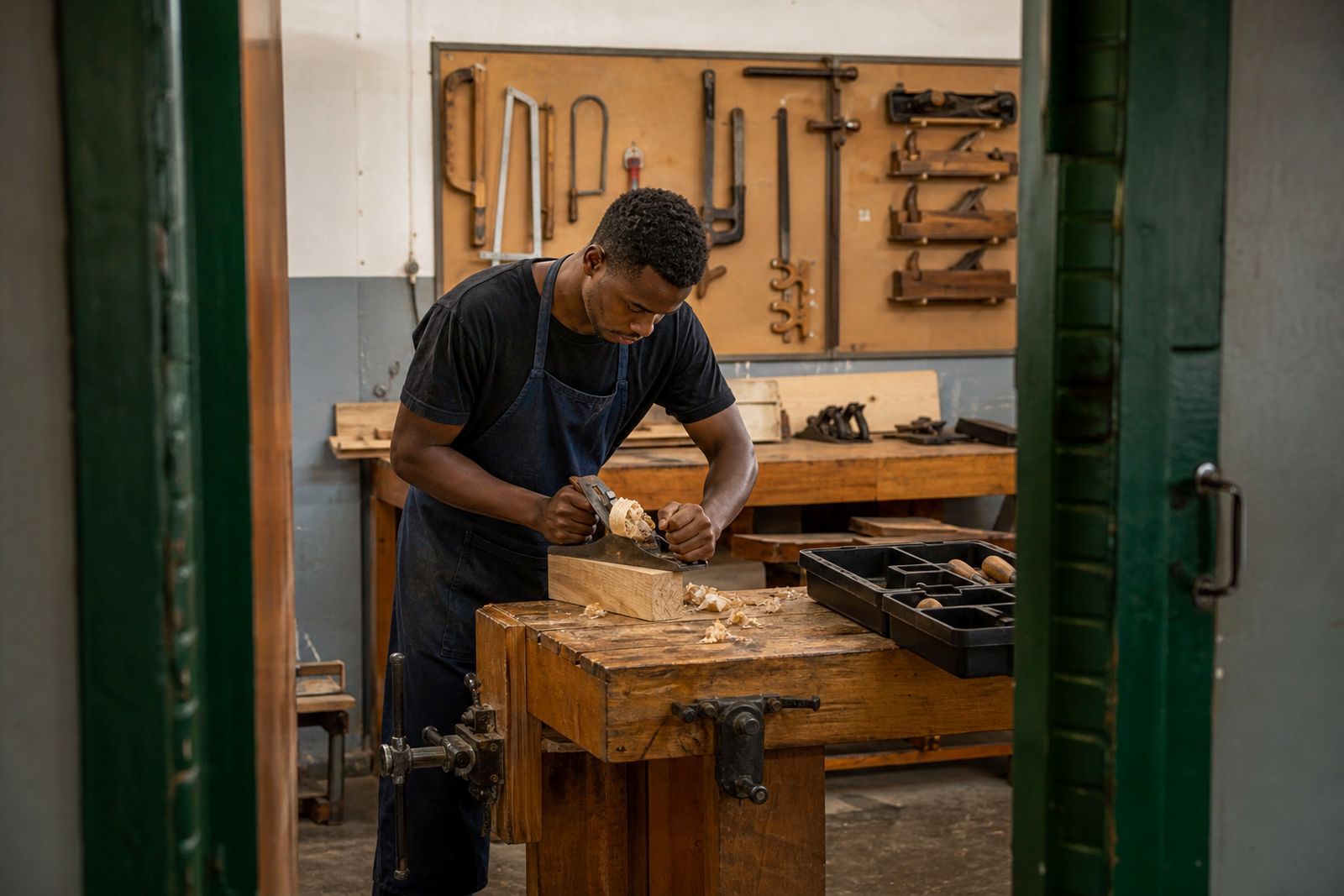
tearout
Expect plain wording, countable steps, and a clear next move: a kit, a bench, or a booked hour through the contact form.
When the board starts lifting
Tearout usually shows itself at the worst spot on the job, often near a visible edge or where grain reverses without warning. On a mixed stack of pine, saligna, or meranti, one board can plane cleanly while the next pulls fibres up in short craters. In a busy workshop, the useful move is to stop, read the surface, and change either direction, mouth opening, or cutting angle.
Bench habits that prevent lifting
Start by marking the grain direction on the face with chalk so the next person does not guess. Close the plane mouth for fine work, sharpen before you chase a dull edge across knotty stock, and take a lighter shaving where the figure turns. If the surface still breaks up, move to a higher cutting angle or a scraper instead of forcing another full-length stroke. When the problem needs a second set of eyes, use our contact form with the timber species, the machine or plane used, and a clear photo of the torn area.
Quick checks at the timber face
When tearout shows up, look at grain direction, cutter sharpness and where the breakout starts rather than blaming the whole board. Mention whether it happened on veneer ply, melamine or solid timber, because the fix is not the same for each one.
Conditions around Gauteng and the coast
A board that behaved in Sunnyrock can act differently after damp coastal air or a wet delivery morning. Highveld dryness can leave timber crisp at the edges, while humidity nearer Durban can raise fibres enough to change the cut. Dust in the mouth, a nicked iron, and rushed machine feeding all make the tear worse. Check moisture movement, check sharpness, then check whether the board should be planed, scraped, or sanded instead.
What to check after the grain
For a next step, use /kit when the issue points to missing holding or packing pieces, and /benches when the bench setup is causing the fibres to lift. Keep the note with the board species, cutter direction, and the face that chipped so the next person sees the pattern. A booked hour through the contact form works better when the photo shows the torn edge, the plane used, and the timber stack nearby.
Choose kit for hold-downs, benches for setup checks, or use the contact form with a clear bench photo.
What our Workshop Tool customers say
Verified Google reviews
Also worth a look
Tell us about your bench
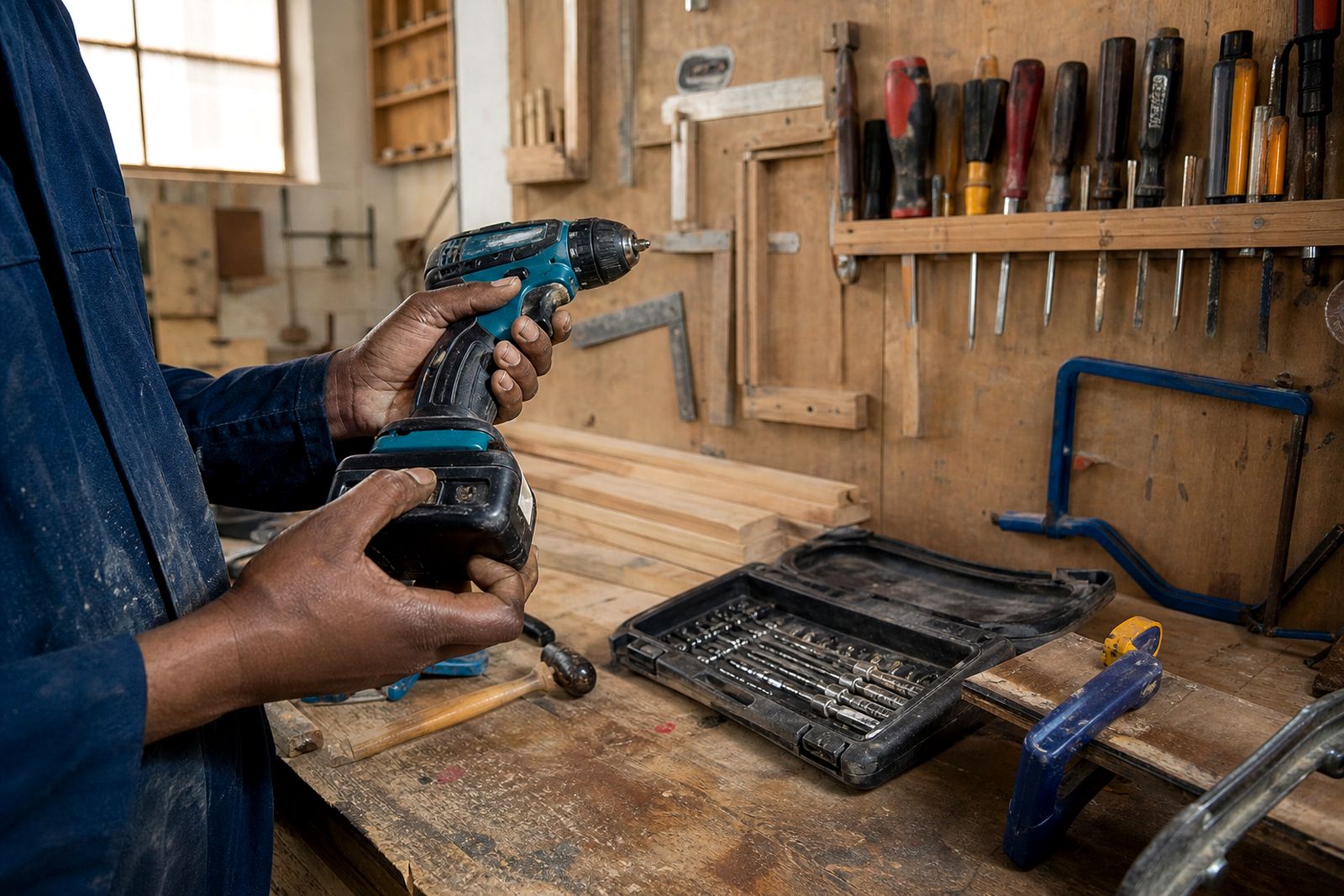
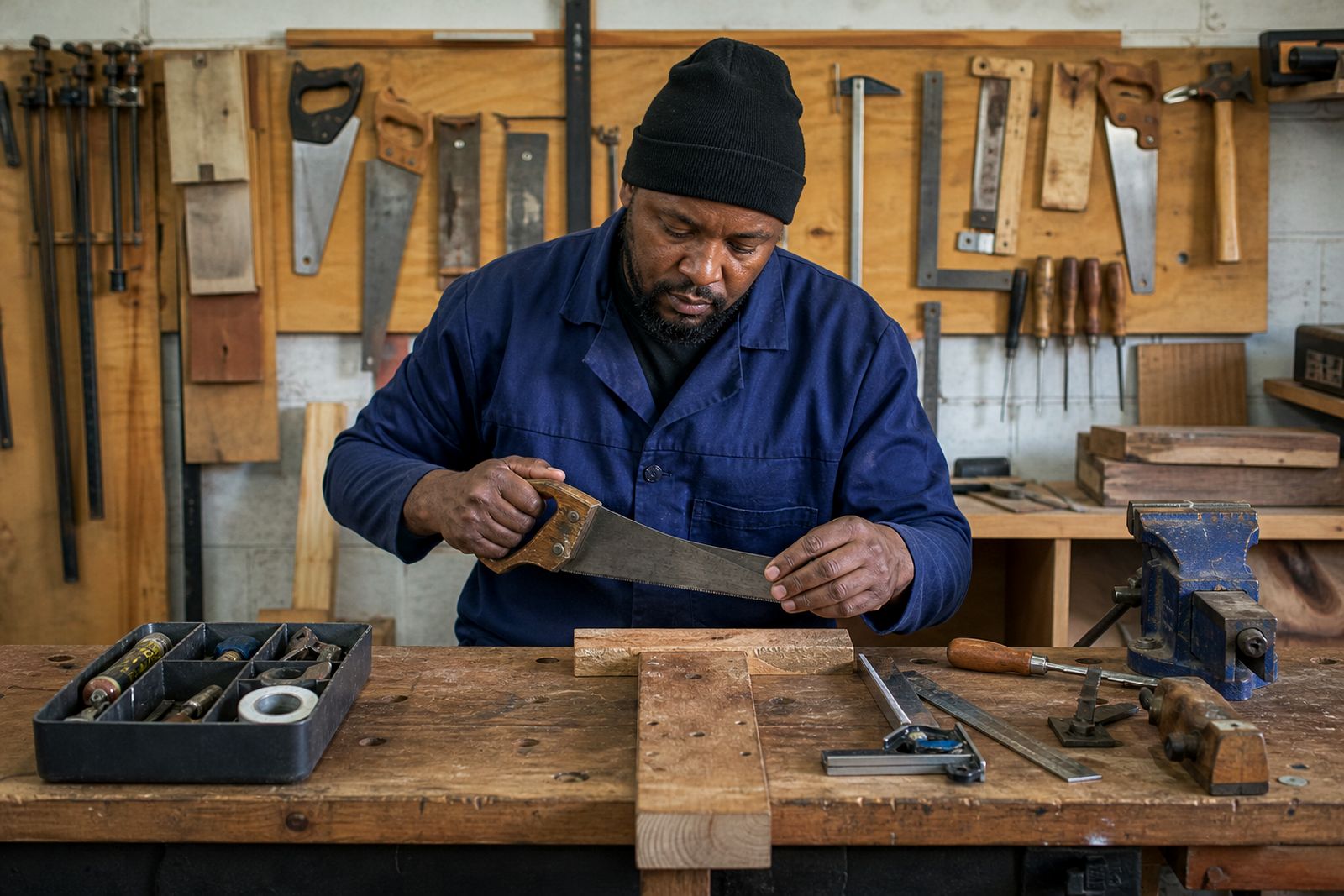
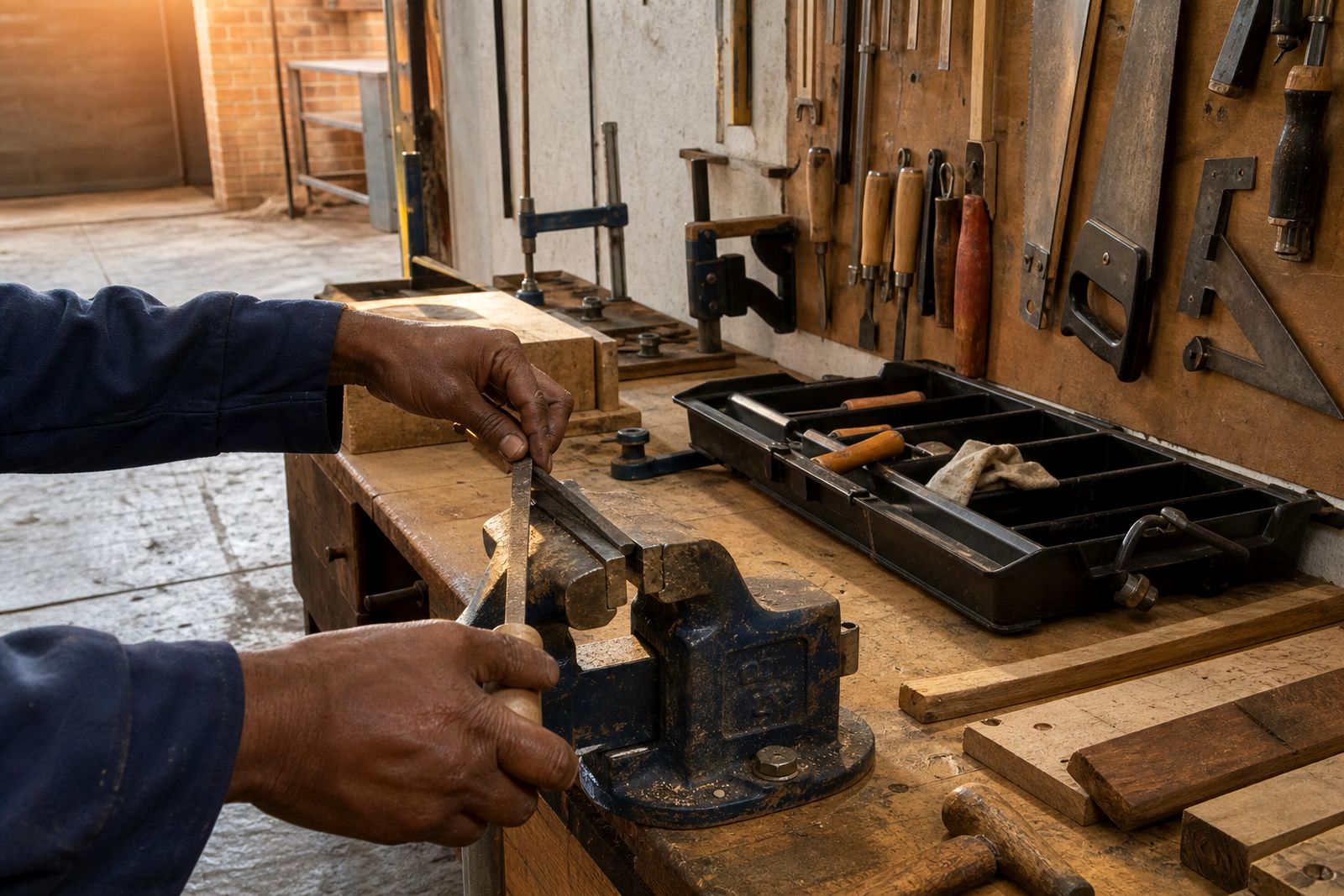
Send a note through our contact form with the work you do, your bench and wall space, the tools you already have and your town, and we will come back with a practical shortlist and a quote.
Open the contact form