

Bench hook calm
A hook that stays on the bench beats a fancy vice you never clamp.
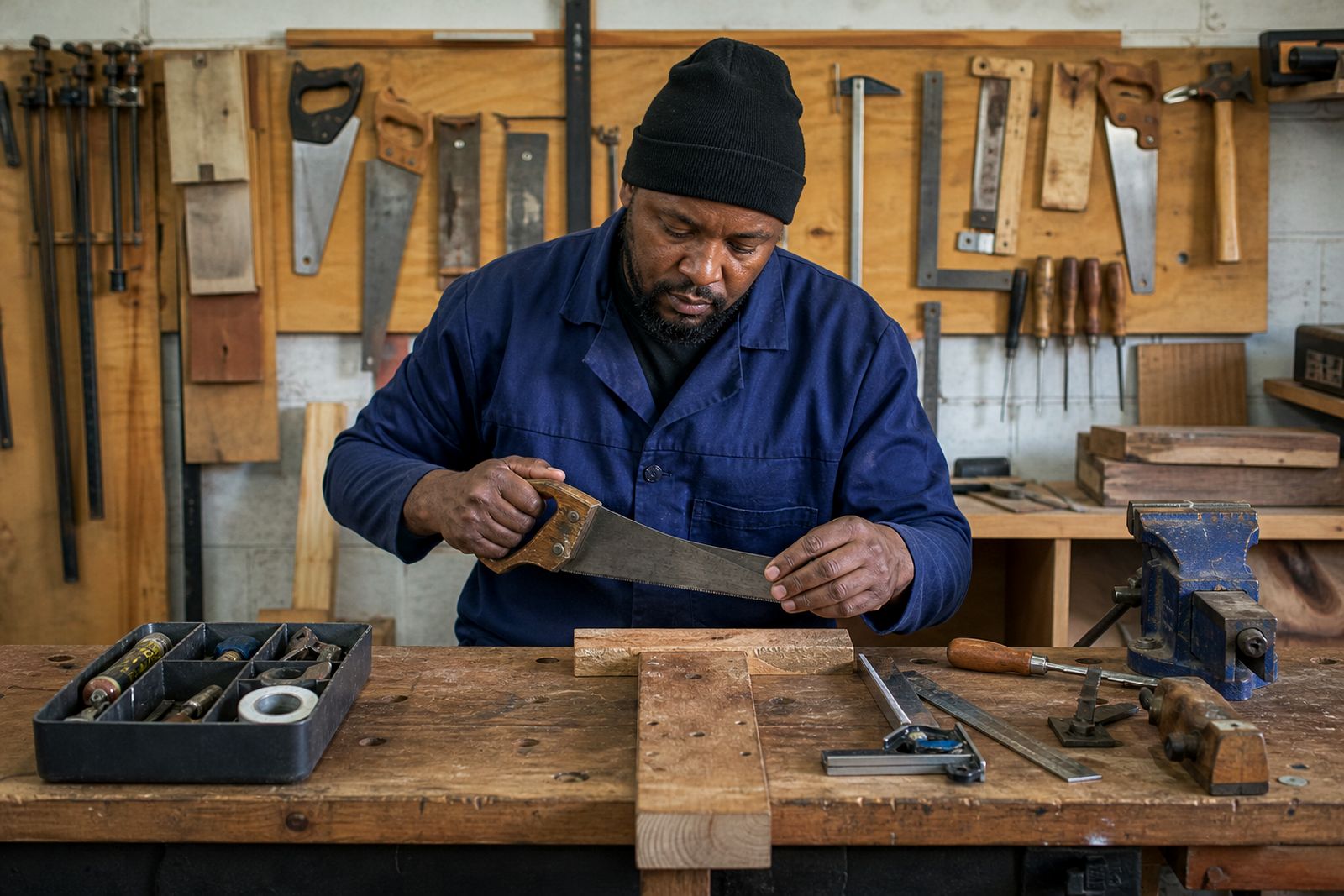
Hlengiwe on bench hooks
Bench-hook notes from Sunnyrock, tuned for shared benches and school wood rooms.
Expect plain wording, countable steps, and a clear next move: a kit route, a bench, or a booked hour through the contact form.
When the saw station slips
A bench hook earns its keep when small cuts keep creeping across the day. In many Gauteng workshops, the trouble starts with offcuts skidding, a learner borrowing the only square, or a top that was never brushed clear after MDF work. Use these checks where one bench serves several people and the setup must be restored quickly after each job.
Bench-hook habits worth keeping
Check the fence face first, because a nicked edge transfers error straight into repeat cuts. Brush off dust, set the hook against the bench front, and test it with one scrap before the marked piece goes down. If the stop keeps lifting, note the bench top, the timber width, and the saw being used, then send that with our contact form. Keep the note beside the bench hook, not buried in a shared phone album.
Checks beside the saw
For a bench hook, check which edge is failing you: the fence, the stop, or the base that creeps on the bench. Note your saw type, the board thickness you cut most often, and whether the hook is set up for right-handed or left-handed use.
Highveld and coast conditions
Dry Highveld air can shrink a wooden hook just enough to introduce rattle at the bench edge. On the coast, swelling and rust marks show up faster, especially where tools are stored against a wall overnight. Shared school benches need extra watching because hardboard tops, paint drips, and loose front lips can defeat a good hook. Power cuts also matter here, because hand-saw stations often pick up the overflow when powered tools stand idle.
Next move from this note
Go to /kit if you need the supporting pieces around marking, holding, and repeat cuts. Open /benches when the trouble is the bench edge itself, the top material, or how many users share one station. Pass the note on with a photo of the hook in place, the saw used, and the cut that wandered so the next step starts from evidence.
Compare the next step against the bench in front of you. Open kit for small holding parts, check benches for bench-top layouts, or use the contact form when a photo of the stop block and stock tells the story better.
What our Workshop Tool customers say
Verified Google reviews
Also worth a look
Tell us about your bench
Send a note through our contact form with the work you do, your bench and wall space, the tools you already have and your town, and we will come back with a practical shortlist and a quote.
Open the contact form