

Dust before polish
Polish on dust is a Friday tax you pay twice.
Finish bench note
Expect plain wording, countable steps, and a clear next move: a kit route, a bench, or a booked hour through the contact form.
Friday polish rework
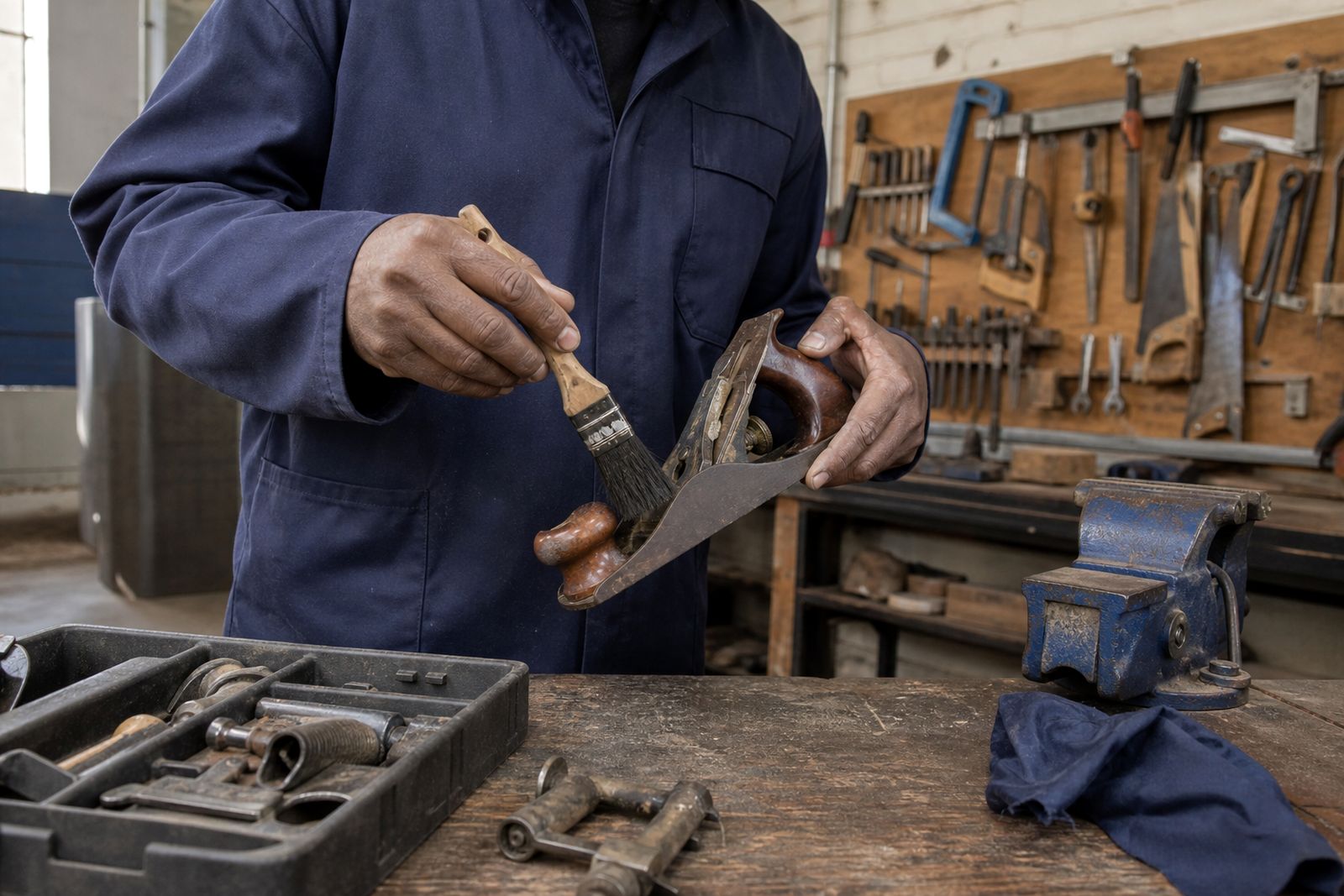
Dust before polish matters most at the last metre of a job, when a tray front, counter edge, or display panel looks ready enough to rush. Fine sanding dust sits in corners, hinge rebates, and around handles, then turns into paste the moment polish hits it. In Gauteng workshops, that residue often comes back after a sweep because doors stand open, stock moves all day, and compressed air throws more into the light. The fix is not another coat. It is a wipe sequence, a fresh cloth, and one inspection under hard light before any tin opens.
Wipe order that sticks
Finish sanding first, then vacuum the piece, the bench edge, and the cloth area before any polish comes out. Use a brush for routed grooves and drilled holes where powder packs tight. Keep one rag for dust removal and another for finish so the first pass does not grind residue back into the surface. If the team needs a bench change or a kit check, use our contact form with the city, the item name, and a photo of the surface in side light.
Checks before the first coat
Dust before polish matters most when the surface looks clean but still grabs grit. Check your rag, air line, and corners first, then note whether the trouble showed up before finish, between coats, or during rub-down.
Highveld dust and coast air
On the Highveld, dry dust hangs around longer and settles again while you fetch polish from the shelf. Along the coast, humidity can make fine residue cling to edges and slow your final wipe. School jobs, mall fit-outs, and shared factory benches add another problem: someone else uses the space between sanding and finishing. Mark the piece, clear the bench, and cover only after the dust check is done.
Next step from this tip
Open /kit when the problem is mixed consumables and nobody knows which cloths or brushes are clean. Visit /benches for bench layouts that separate sanding mess from finishing work. Use /trays if small parts and finish items keep sharing the same space. When the note needs a real example, send the bench photo and exception through the contact form.
After the wipe-down check, compare your bench setup with kit options that keep cloths, tack rags, and abrasives in one place. If the dust keeps returning, review benches that suit sanding and finishing work, or use our contact form with the bench name and a photo of the residue line.
What our Workshop Tool customers say
Verified Google reviews
Also worth a look
Tell us about your bench
Send a note through our contact form with the work you do, your bench and wall space, the tools you already have and your town, and we will come back with a practical shortlist and a quote.
Open the contact form