

Trays
Choose tray layouts that handle dust, mixed fasteners, chargers, measuring gear, clamps, abrasives and PPE in busy sheds.
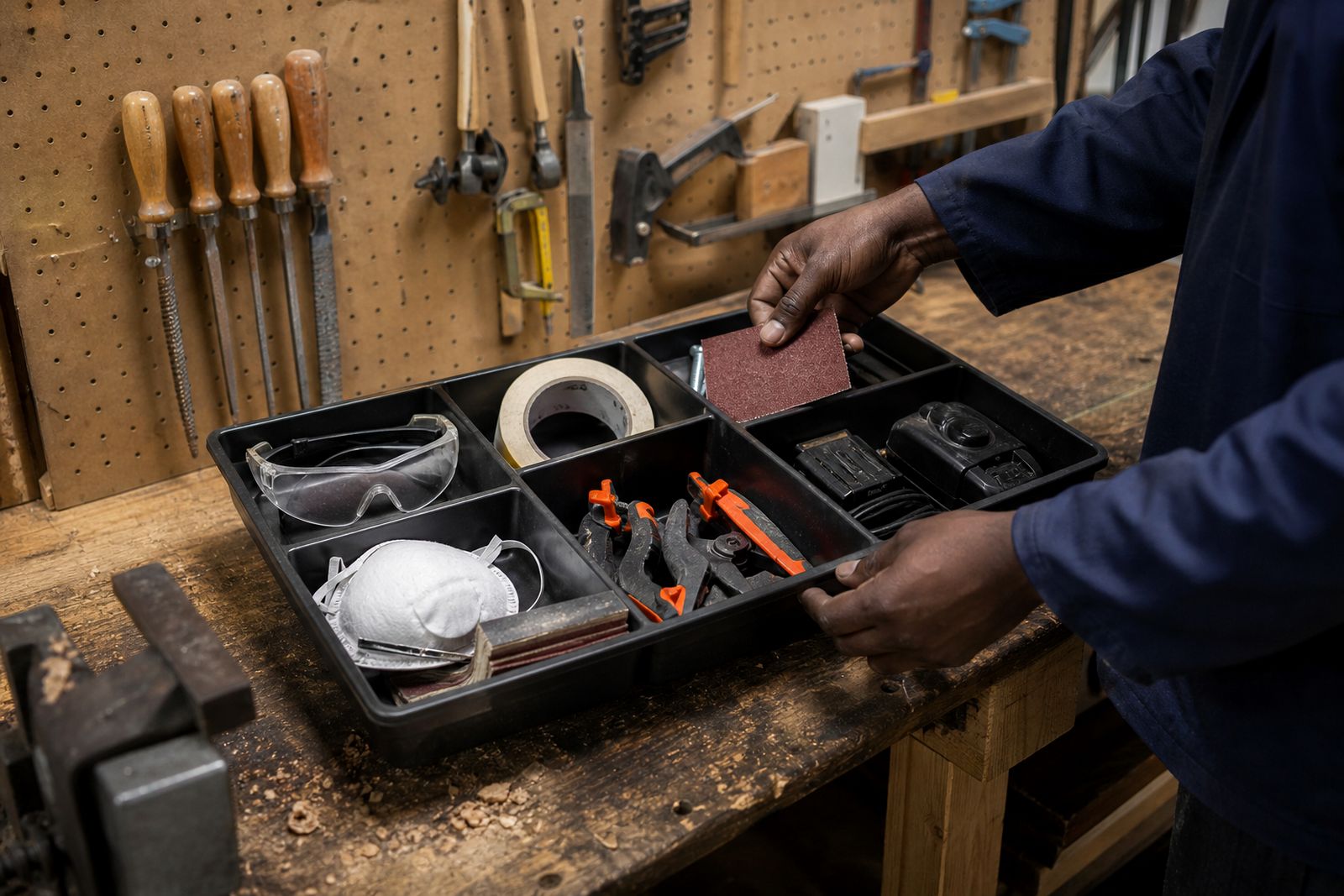
Tray reset points for SA benches
In Sunnyrock, Germiston, tray layouts need to cope with dust, mixed fasteners, and chargers that wander between benches. A useful set usually separates hand tools, measuring gear, drill bits, clamps, abrasives, and PPE so reset checks take minutes, not a full sweep of the shop. Use our contact form if you need notes on labels, peg spacing, or tray sizes that suit South African workshop routines.
Tray sizes that stay useful
Pick tray widths and depths that suit the bench top they live on. Shallow trays help when you want fast scanning for bits, blades, scribers, pencils and small fasteners. Deeper trays suit clamp pads, consumables and mixed hand tools that tend to wander after a busy shift.
For shared workshops, keep one tray for each task group so people can reset the space without guessing. A practical set often includes a hand tool tray, a measure tray and a fastener tray, with larger trays reserved for clamps or safety gear. In garage sheds and school workshops, smaller modules are easier to carry, clean and return to the same spot.
Dividers that make sense
Dividers should stop mix-ups without turning the tray into a maze. Use simple sections for rulers, squares, marking knives and gauges, then separate drill bits from drivers and fasteners from loose consumables. If a tray carries sharp tools, give each item enough room that it can be lifted out cleanly and put back without forcing a hand around an edge.
Think about whether the tray sits on a bench, in a drawer, or on a pegboard edge. Bench trays need a base that grips and a layout that works from the front. Pegboard trays should hang where the most-used tools are easy to reach, not above a crowded vice or under a shelf that catches dust.
Keep the reset simple
Good tray habits are about easy return points. Label the spaces, keep like with like, and remove broken consumables before they build up. In Highveld dust or coastal rust, wipe trays during the reset so grit does not move onto measuring tools, saws or chisels.
If you are building a setup around a starter bench, make the tray set match the work you do most, then add other storage as needed. Layout trays, reset trays and safety trays help keep a working bench ready for the next job. If you need help choosing tray sizes or divider ideas, use the contact form and ask for a quote or a layout note.
Trays
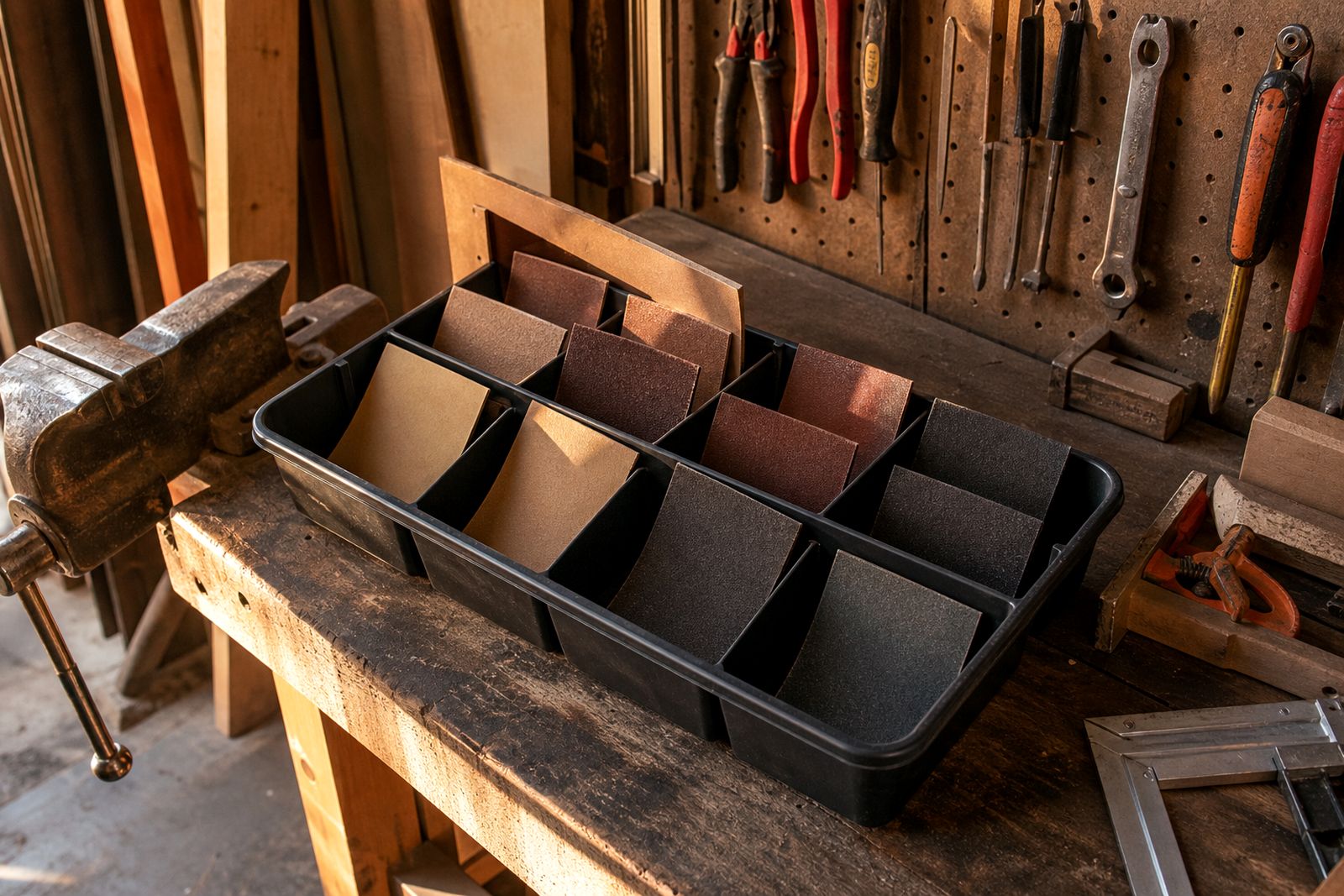
Abrasive tray
Grit ladder sheets without mystery leftovers.
Read more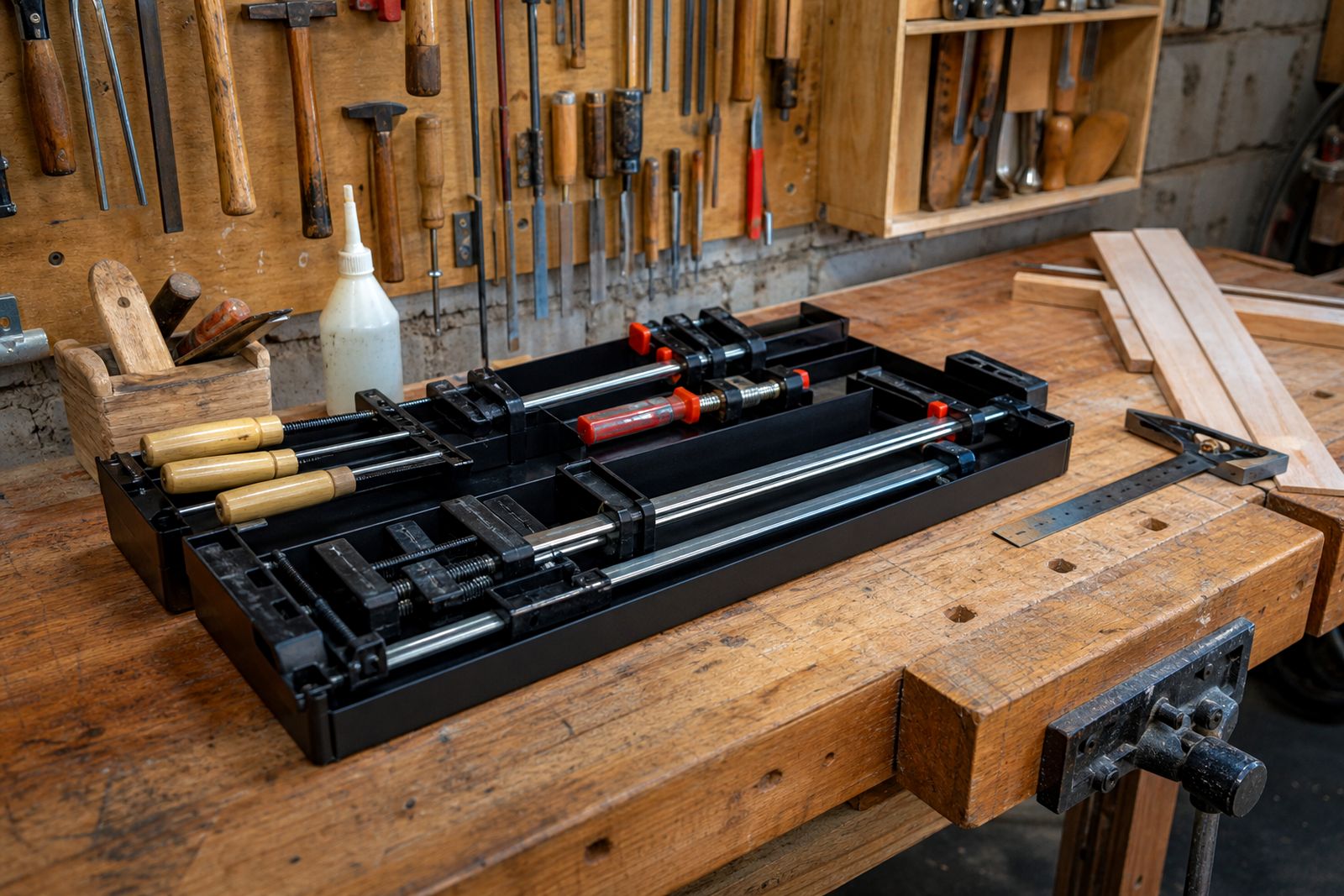
Clamp tray
Pads and spans ready for a glue-up window.
Read more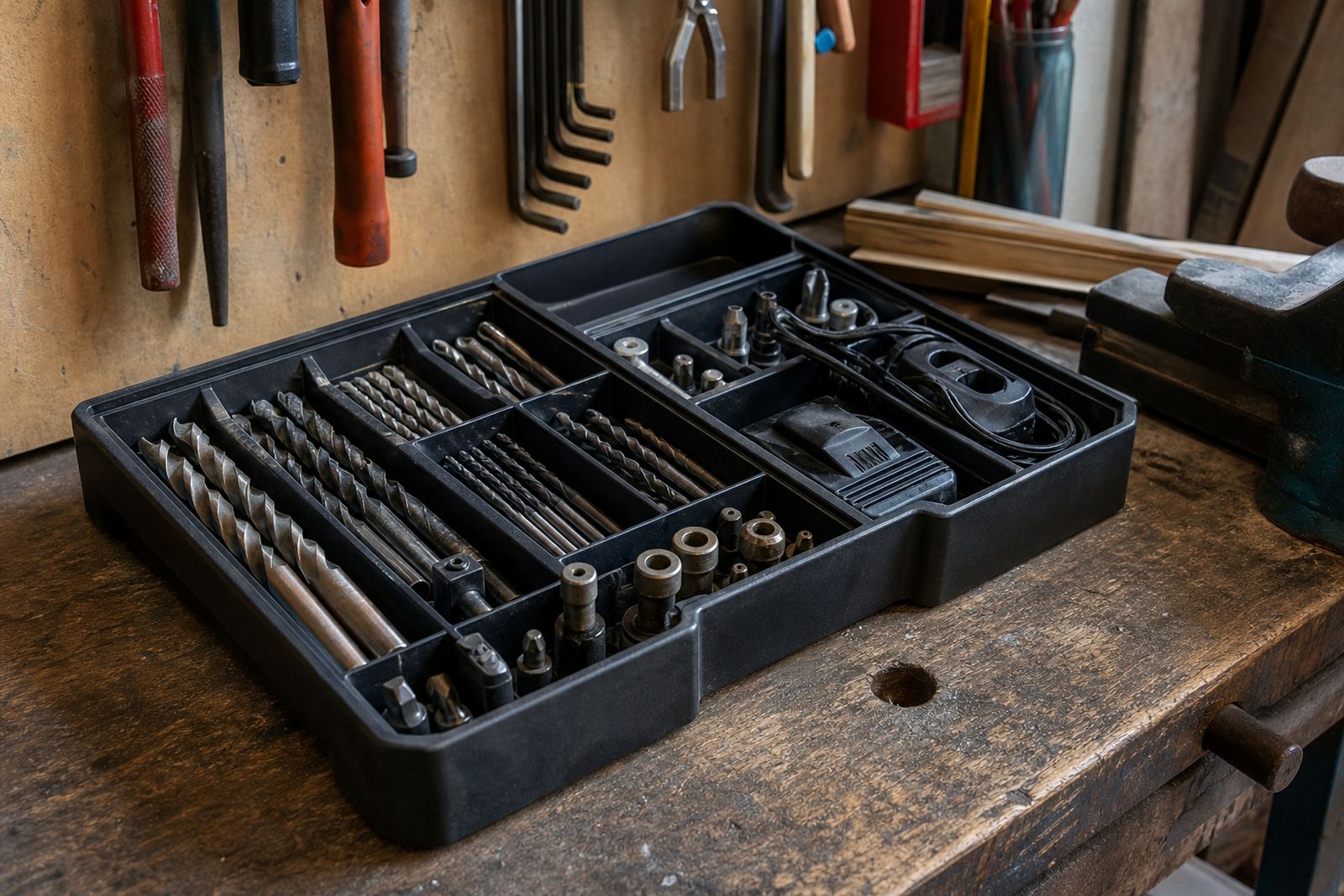
Drill tray
Bits, stops, and chargers that stay together.
Read more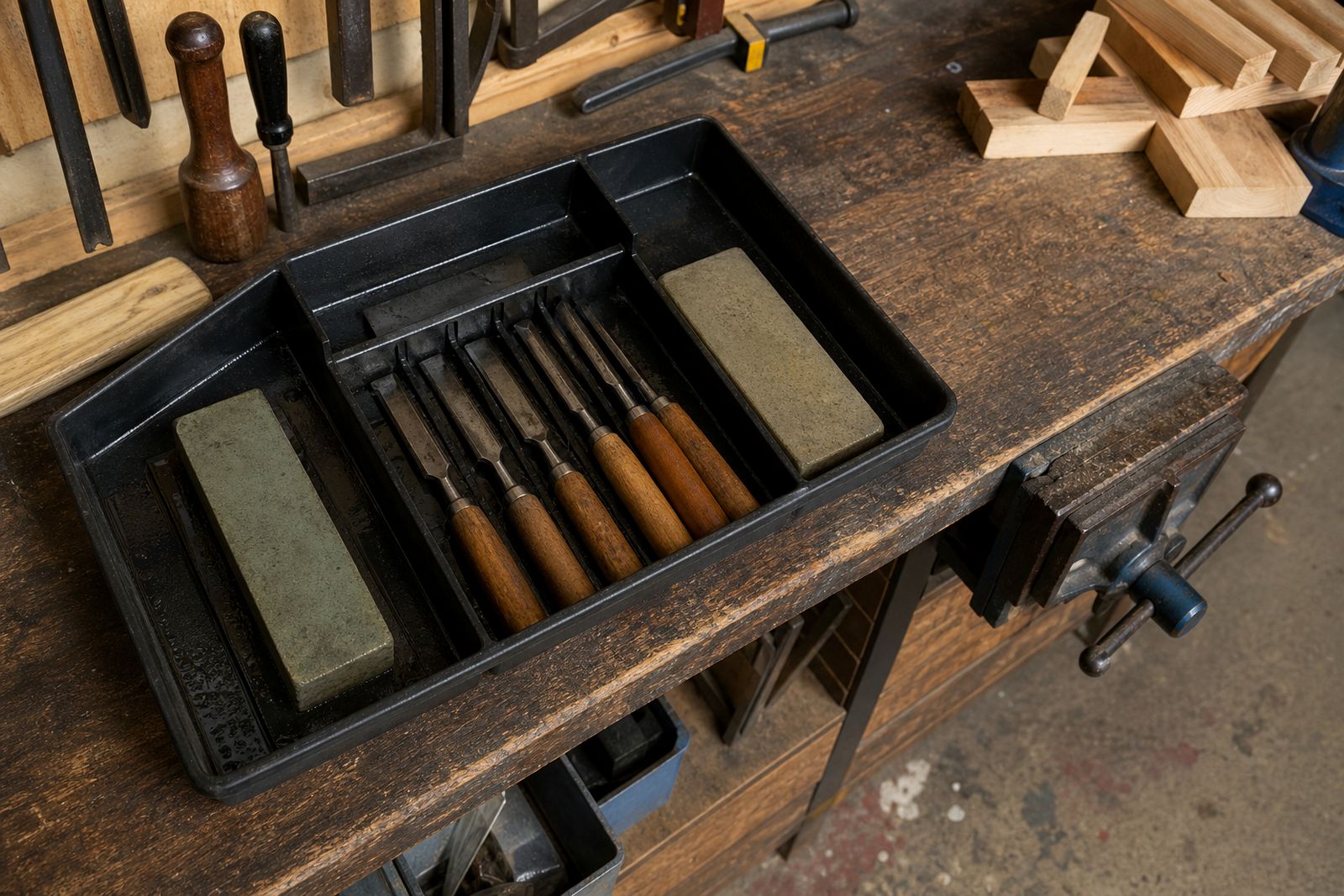
Edge tray
Chisels and stones that stay oiled.
Read more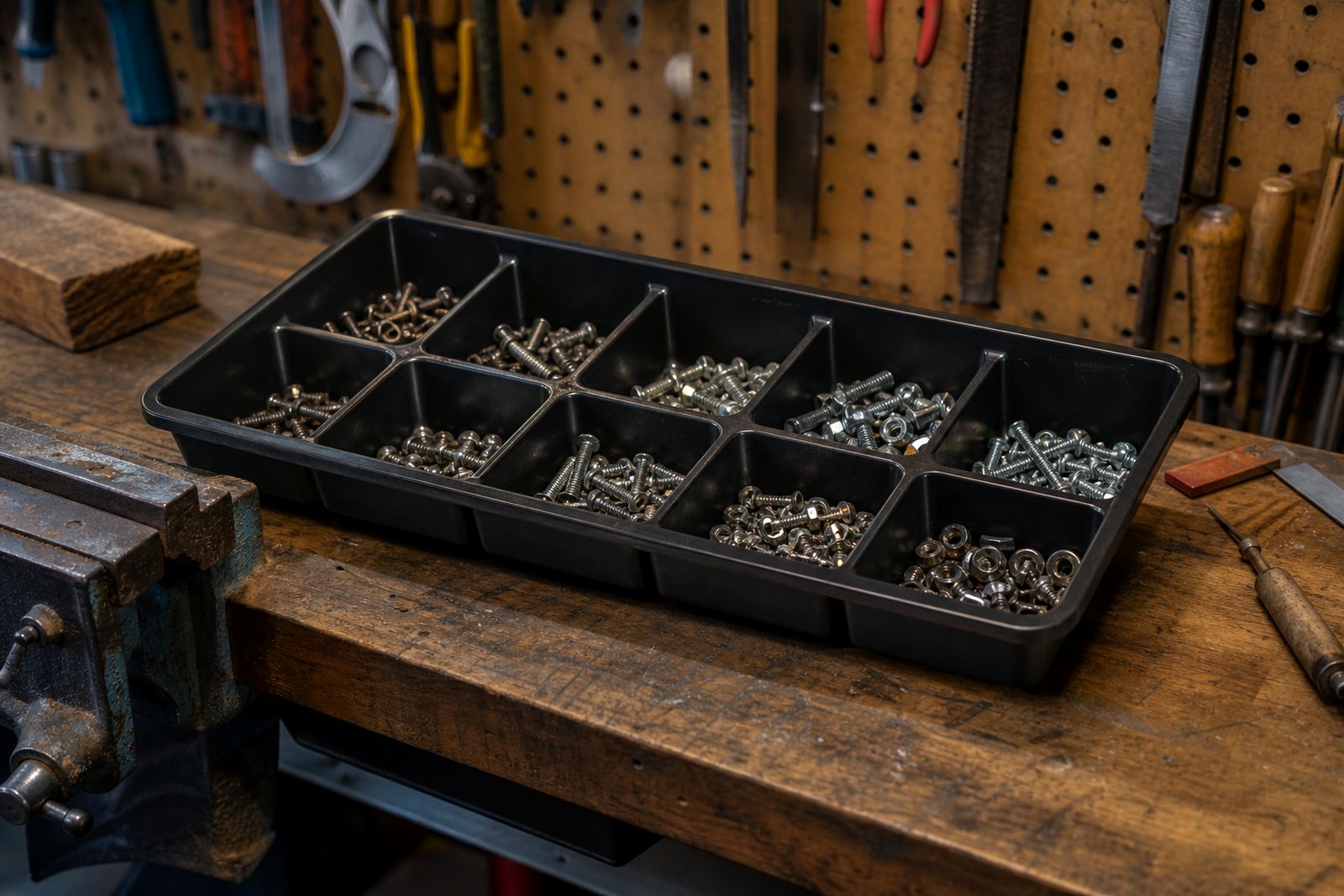
Fastener tray
Sorted screws with a map that matches the brief.
Read more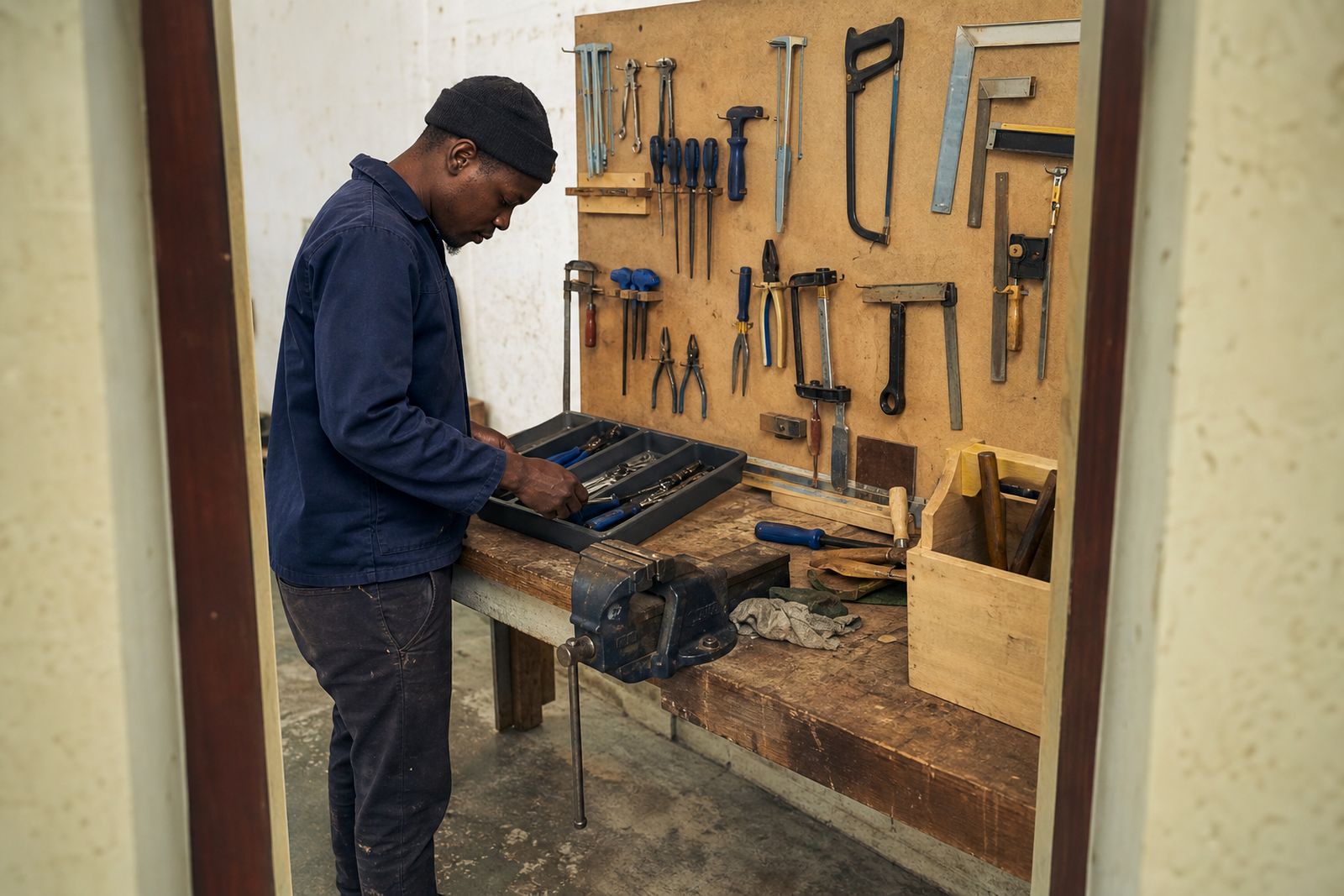
Hand tool tray
Peg-ready hand tools with labels that survive dust.
Read more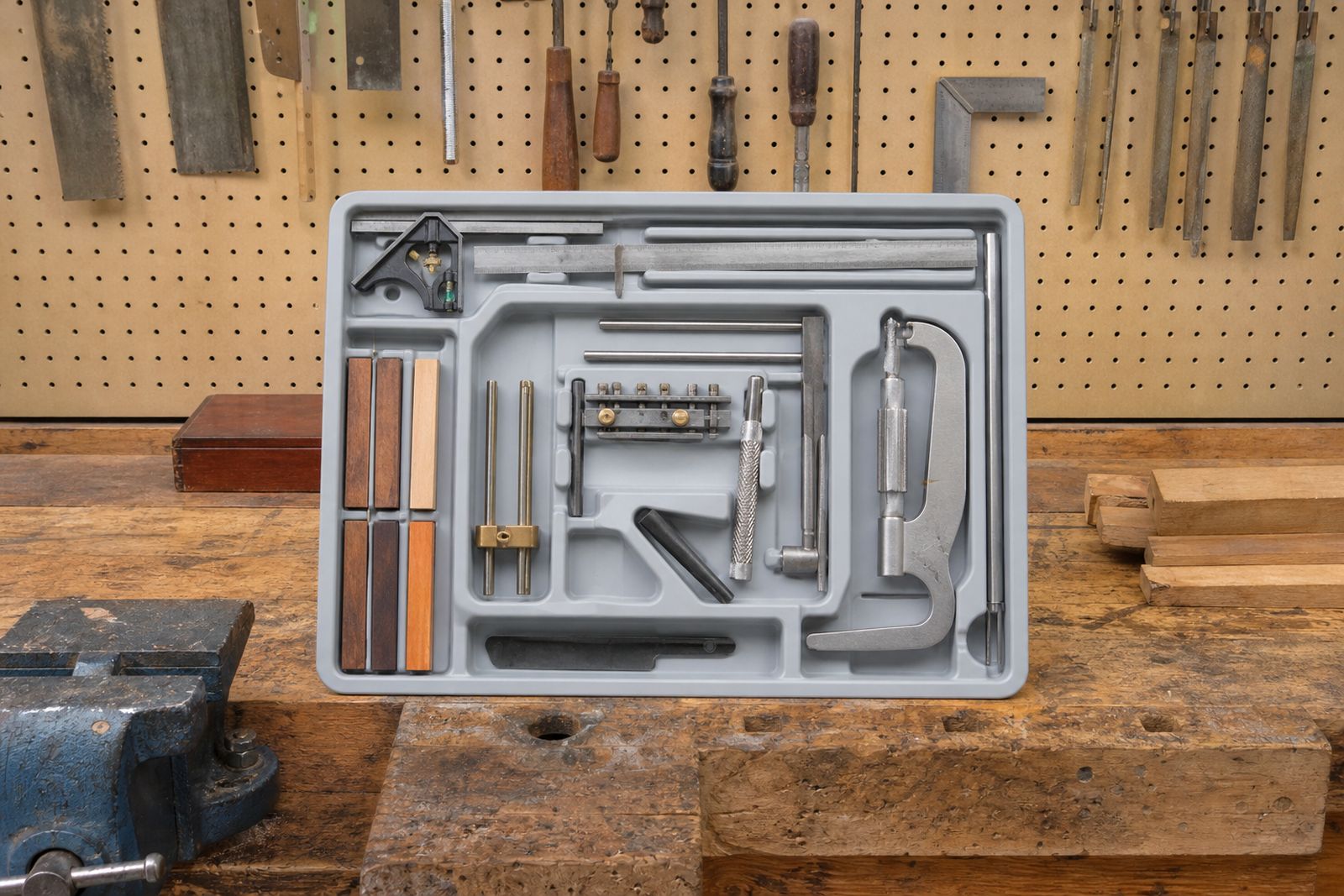
Layout tray
Gauges and sticks for cabinet weeks.
Read more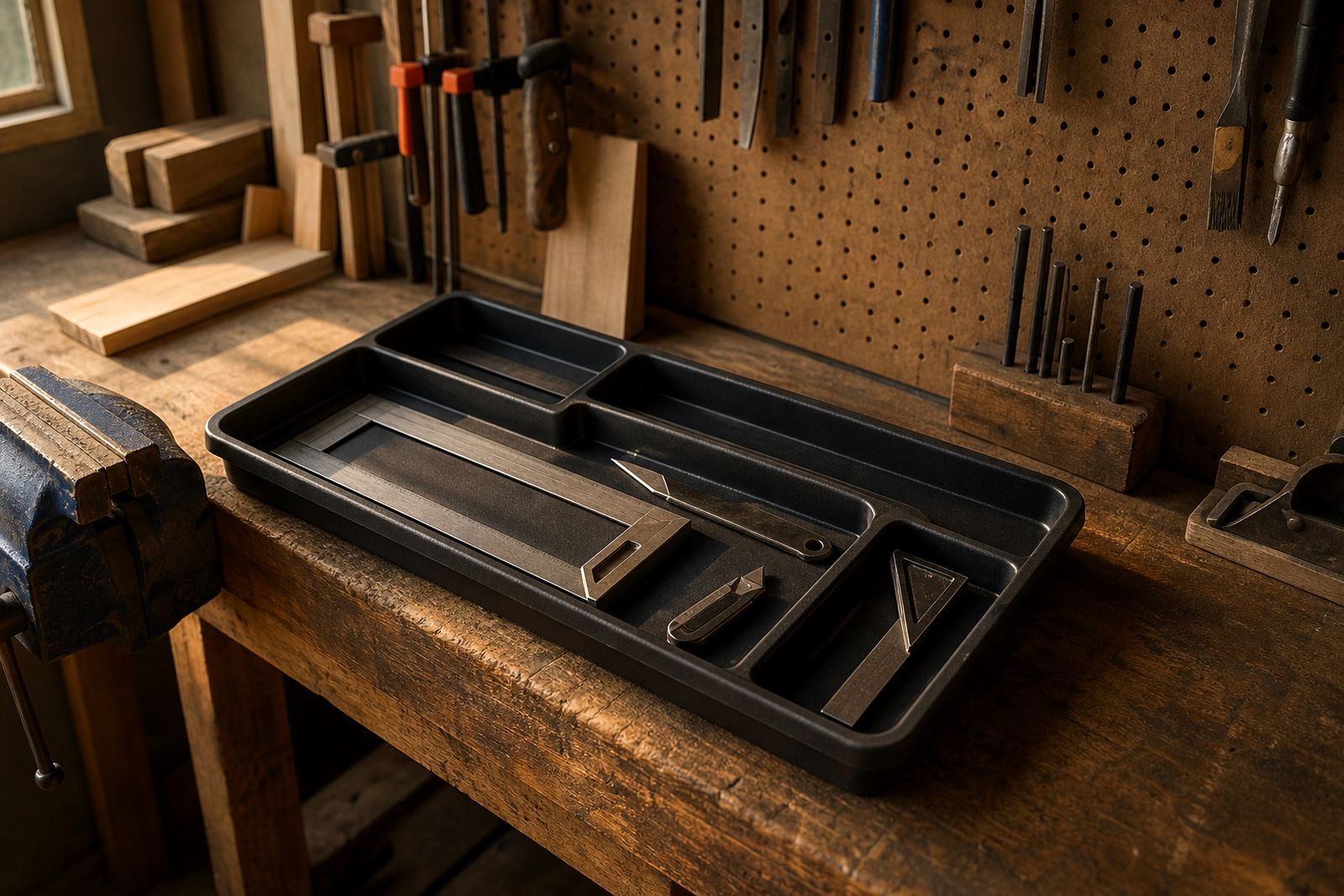
Measure tray
Rules, squares, and knives in one calm tray.
Read more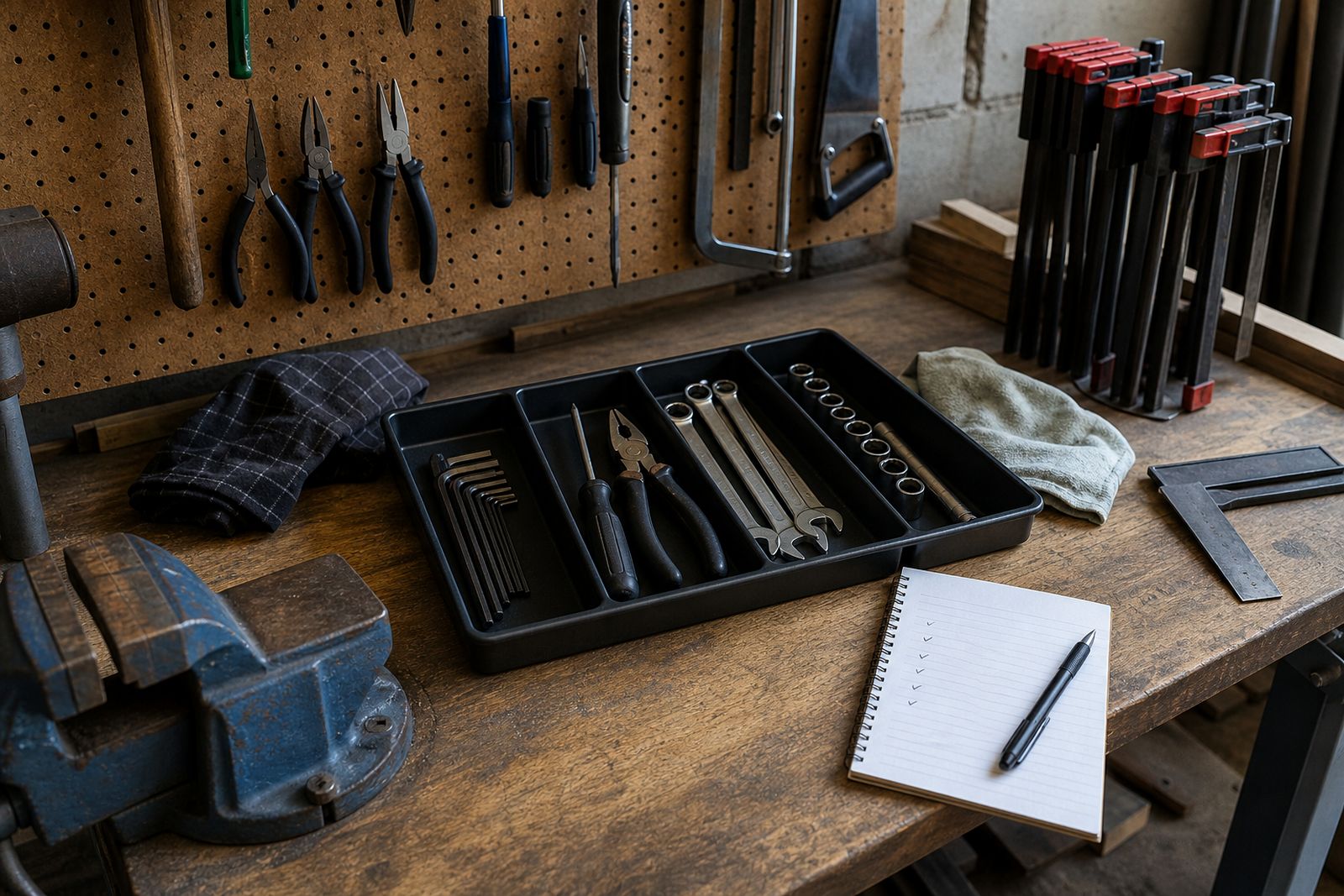
Reset tray
Friday labels, cloths, and a short checklist.
Read more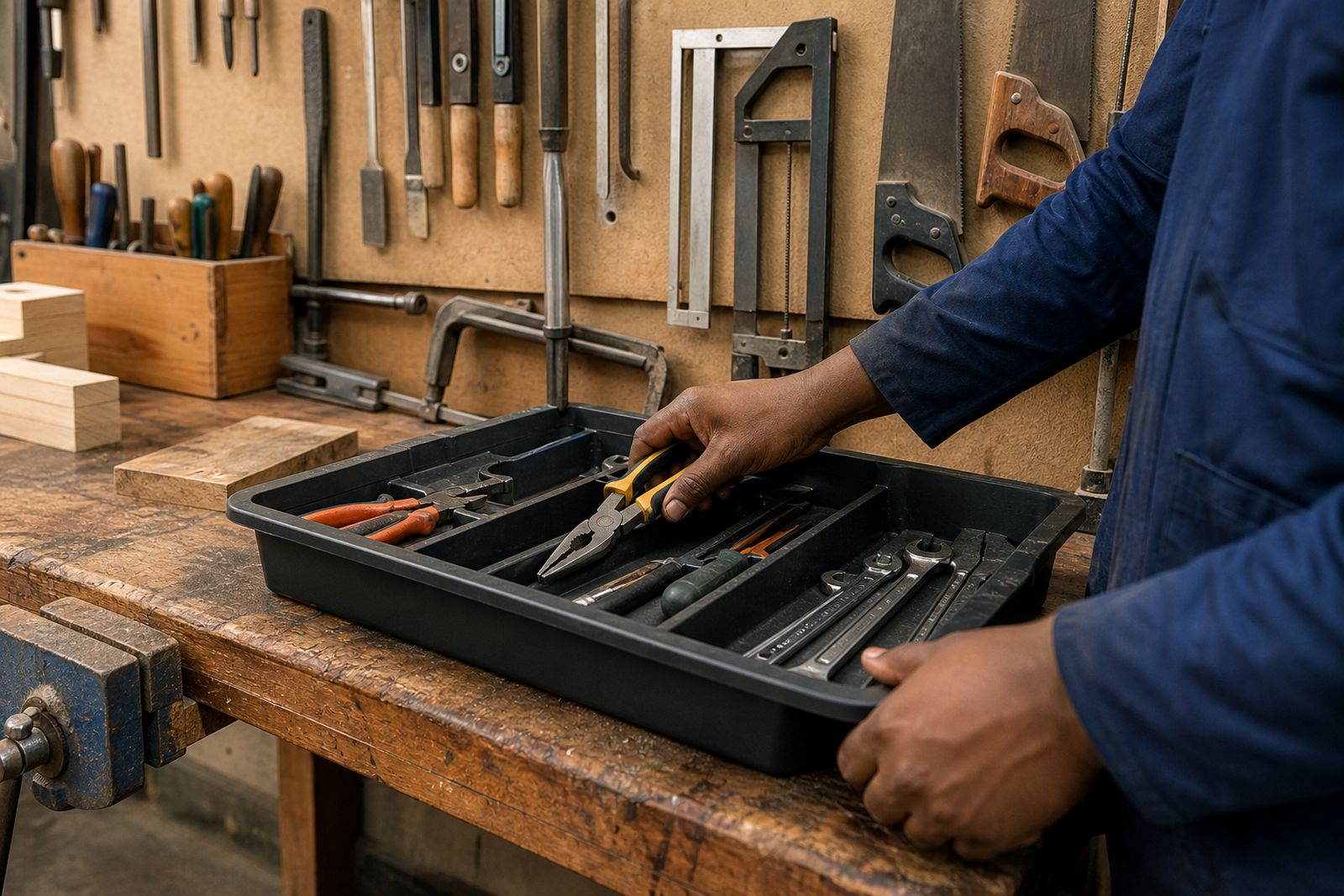
Safety tray
PPE that returns to labelled pegs.
Read moreWhat our Workshop Tool customers say
Verified Google reviews
Tell us about your bench
Send a note through our contact form with the work you do, your bench and wall space, the tools you already have and your town, and we will come back with a practical shortlist and a quote.
Open the contact form