

Bit life honesty
Record the first drift. Tool-life cards only help if somebody uses them.
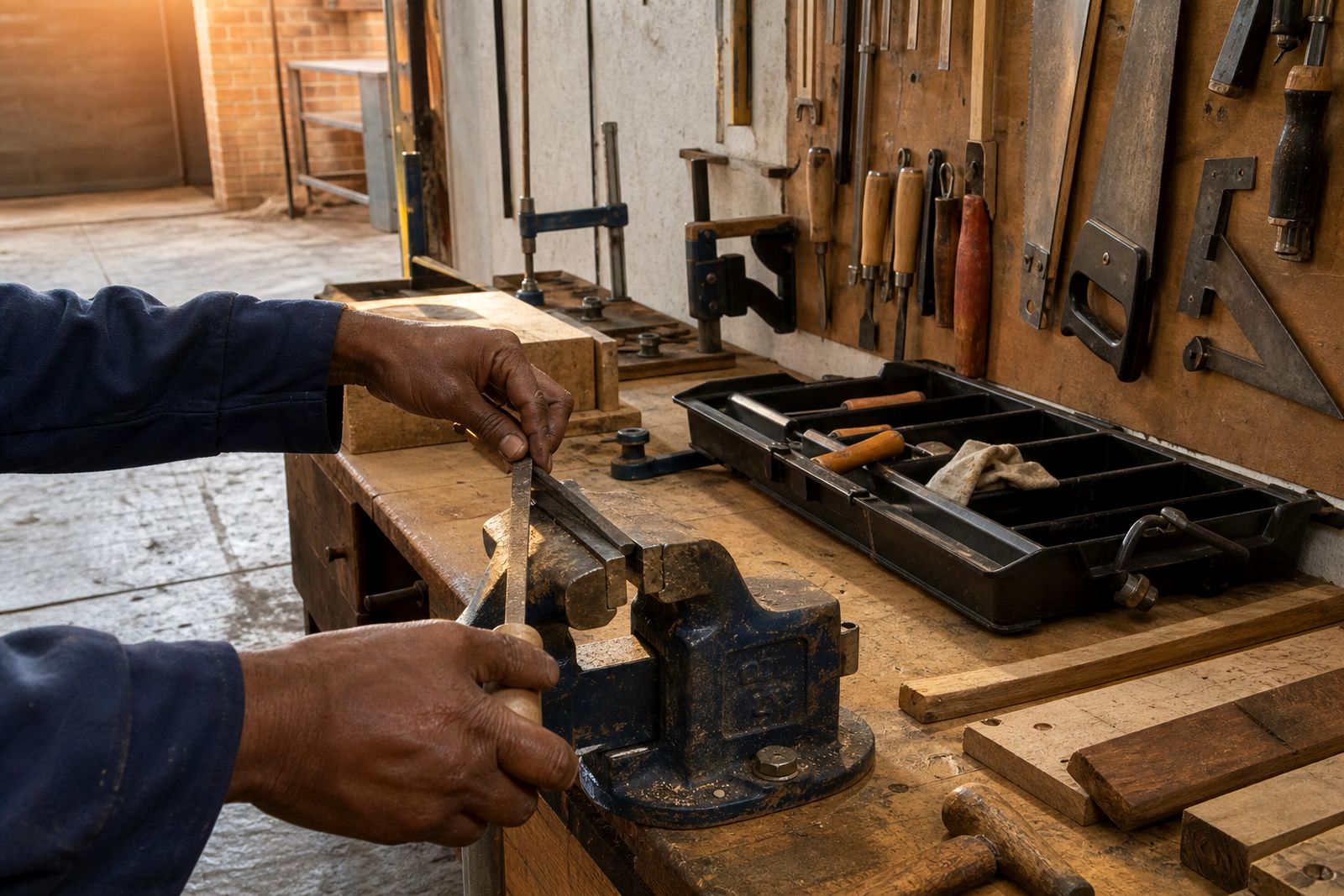
Bit cards at the bench
The first point is worth noting. Tool-life cards only help if somebody uses them. That means plain wording, countable steps, and a clear next move: a kit route, a bench, or a booked hour through the contact form.
First signs of a tired bit
A cutter rarely fails in one dramatic moment. More often the first warning is a wider groove, a fuzzy exit on melamine, or feed pressure that suddenly climbs on the same router table. In a small South African workshop, that change gets missed when one person is loading, cutting, and answering the phone. Bit life honesty means logging the first drift while the sample piece is still in hand, then tagging the bit before it goes back into the drawer.
What goes on the life card
Write the bit type, diameter, and first fault you saw. Add the material that showed it, whether that was birch ply, MDF, melamine, or solid pine, and note the machine or bench where it happened. Keep the note beside the holder, not buried in a laptop, and send the photo through our contact form when the pattern needs a second set of eyes. A short record beats a speech when three similar bits are in one tray.
Marks that must travel with the bit
Bit life usually turns on material, speed, and heat. Send the bit size, what you were drilling, and whether the edge went dull, blue, or chipped after a short run.
South African conditions that shorten cutter life
Highveld dust packs itself into collets and storage cups, while coastal air can leave light rust on edges that were put away dirty. Power cuts also change the day because a rushed restart often skips the test cut and sends a worn bit straight back into sheet stock. Shared benches in schools and community shops need clearer tags, because the next user may not know why one flute started burning on the previous job.
Next checks after the first drift
Move from the note to the storage habit that prevents repeat damage. Check /kit for holders and tray options, then see /benches for setups where test cuts and record cards can stay visible through the shift. If the bit history is messy, pair the card photo with the job material and send it through the contact form so the next step is based on evidence, not memory.
Go to kit, benches, or the contact form.
What our Workshop Tool customers say
Verified Google reviews
Tell us about your bench
Send a note through our contact form with the work you do, your bench and wall space, the tools you already have and your town, and we will come back with a practical shortlist and a quote.
Open the contact form