

Sharp before sand
Sanding a dull edge just makes pretty dust.
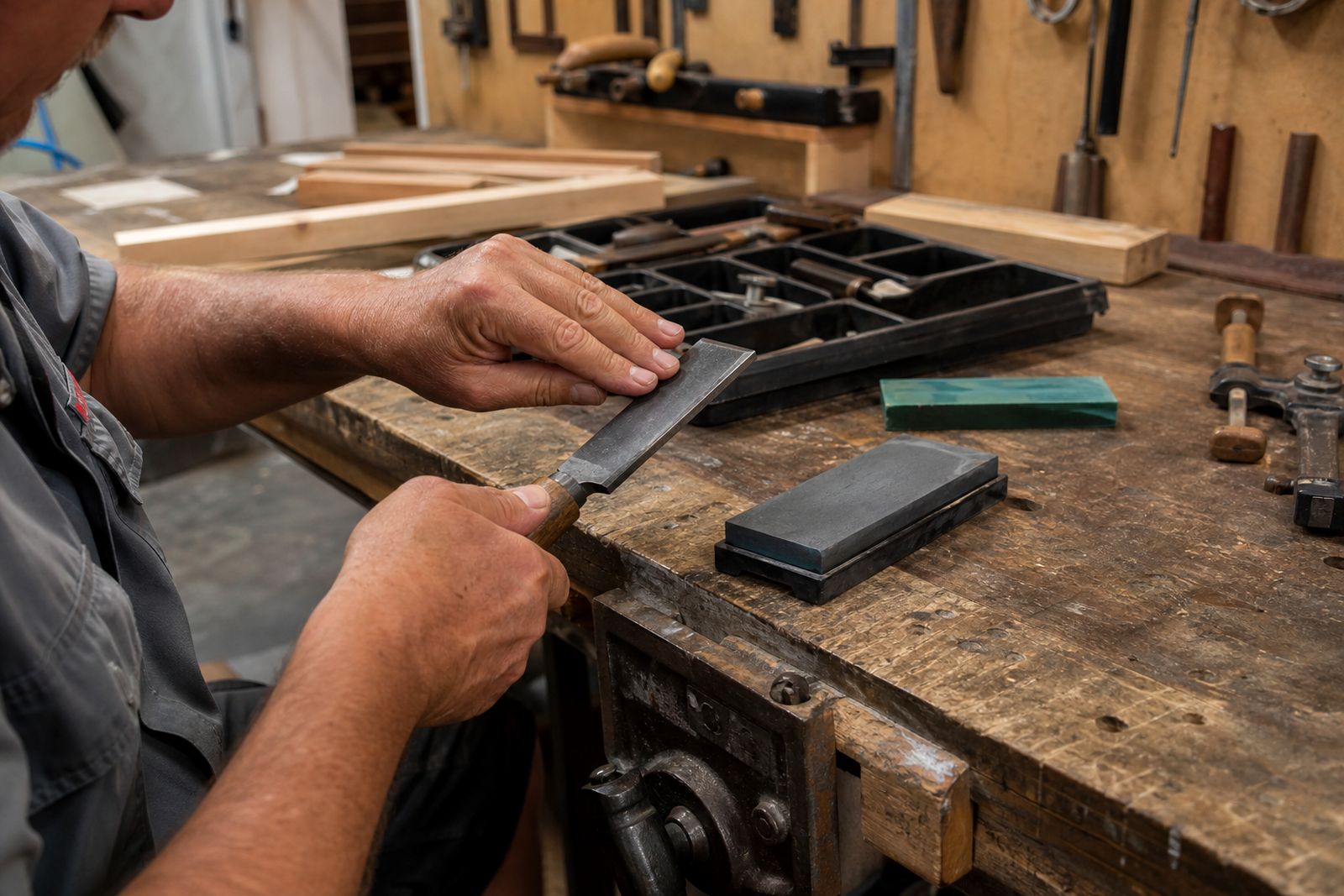
Sipho's edge-first rule
From Just Some Tools, that means plain wording, countable steps, and a clear next move: a kit route, a bench, or a booked hour through the contact form.
When sanding hides a blunt tool
In many small South African workshops, sanding starts too early because the chisel or block plane has gone off and nobody wants to stop the run. Then the paper loads up with resin, burn marks stay put, and the profile gets rounded before the scratch pattern is even sorted. Sharp before sand means checking the cutter first, then deciding whether the surface needs a fresh pass, a scraper, or only light paper.
Edge checks before abrasive
Mark the edge status on the tray card before the first sheet comes out. Check for nicks under the bench light, feel for drag on end grain, and note which stone or file was used. If the team needs help with the next step, use our contact form with the city, the bench name, and a photo of the edge check. Keep the note beside the job, not buried under sanding discs.
Bench card for dull-edge catches
If sanding is taking too long, stop and inspect the edge first for a dull blade, burn marks or torn grain from an earlier cut. Include the timber species and the grit you started with, because pine, saligna and plywood do not behave the same way.
Weather and grit checks
Dry Highveld air can make fine dust hang around the bench, which hides whether the tool is cutting cleanly or just polishing the surface. Along the coast, edge tools pick up light rust fast, so a plane iron that looked acceptable on Friday may drag by Monday morning. Power cuts matter here as well, because poor light and half-charged extractors make it easier to miss a blunt edge.
Next steps after honing
Use /kit when the sharpening stones, files, and marker need a dedicated tray instead of drifting between benches. Open /benches for layouts that keep edge tools, abrasives, and checks within arm's reach during prep. If the note needs a handover, send it with the fault, the timber species, and a photo through the contact form.
Move from the note into kit if the edge needs a tray and marking routine. Open benches when the issue sits with routine at a shared table. Use the contact form if you need to attach photos of the bevel, the stone, or the dust on the bench.
What our Workshop Tool customers say
Verified Google reviews
Also worth a look
Tell us about your bench
Send a note through our contact form with the work you do, your bench and wall space, the tools you already have and your town, and we will come back with a practical shortlist and a quote.
Open the contact form