

Kerf before force
Force does not fix a dull tooth. Kerf honesty does.
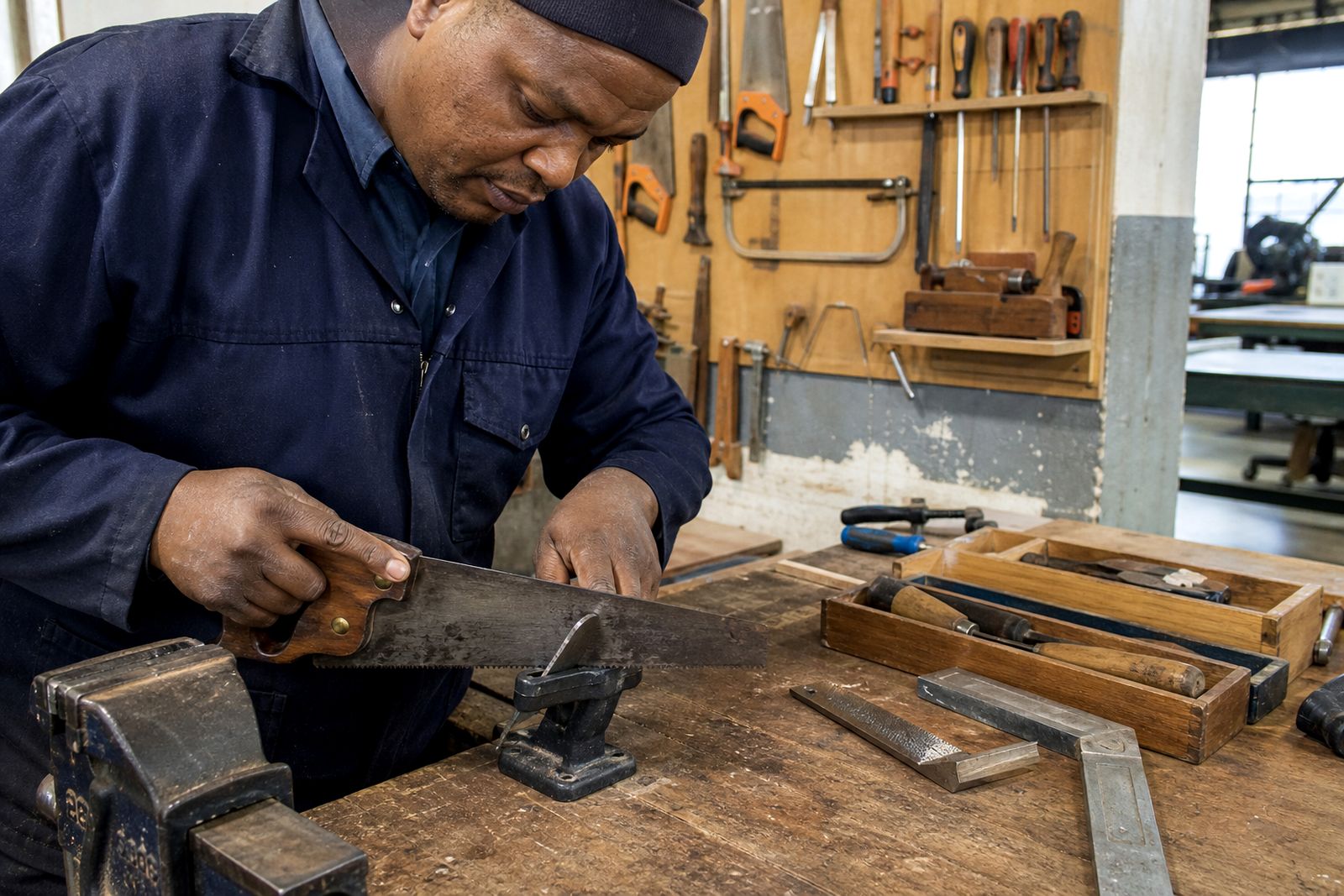
Before the saw starts
We write plainly for South African maker leads, with countable steps and a clear next move: a kit route, a bench, or a booked hour through the contact form.
When feed pressure lies
Kerf before force matters most when a rip cut starts to wander and the instinct is to lean harder on the handle. In a small SA workshop that usually means wasted board, a hot blade, and ten noisy minutes around the bench. This note asks for a stop, a look at the tooth line, and one written reason before another cut is tried. Pine from a builders' stack, melamine offcuts, and damp hardwood all tell on the kerf in different ways.
Checks that save blades
Mark the cut line twice, then watch whether the kerf tracks the waste side or hunts across the mark. Check pitch build-up, tooth damage, and fence truth before anyone adds body weight to the pass. If the stock came from a humid store room or a coastal delivery, note the movement on the job sheet and park the board if needed. For a bench decision or a booked hour, use our contact form with the bench name, the material, and one clear photo of the cut.
Bench card for bad cuts
Kerf before force is a check for binding, not brute effort. Tell us the saw, blade condition, and stock thickness, and note whether the cut closes up, wanders, or burns before you start pushing harder.
Humidity, dust, and blade drift
Dry Highveld timber can cut crisp in the morning and then bind after lunch once the stack has warmed up near a roller door. Coastal boards often carry extra moisture, so a straight fence setting can still pinch the blade halfway through the pass. Power cuts also change the order of work, which is why sharp hand saws, a square, and a marked reject spot earn their place on shared benches.
Next stop after the note
Use /kit when the problem is missing layout gear, tray control, or a saw that never returns with its guard and key. Go to /benches when the issue sits in the bench setup, stock support, or how cuts queue during a packed showroom week. Check /trays for small-part storage when broken teeth, dull blades, and fence shims keep disappearing between jobs.
Move from the note to kit when the saw, square, and tray need naming. Open benches if the issue follows one station more than one person. When the evidence is written and photographed, use the contact form.
What our Workshop Tool customers say
Verified Google reviews
Also worth a look
Tell us about your bench
Send a note through our contact form with the work you do, your bench and wall space, the tools you already have and your town, and we will come back with a practical shortlist and a quote.
Open the contact form