

Power Assist specs
Spec table and floor cues for Power Assist.
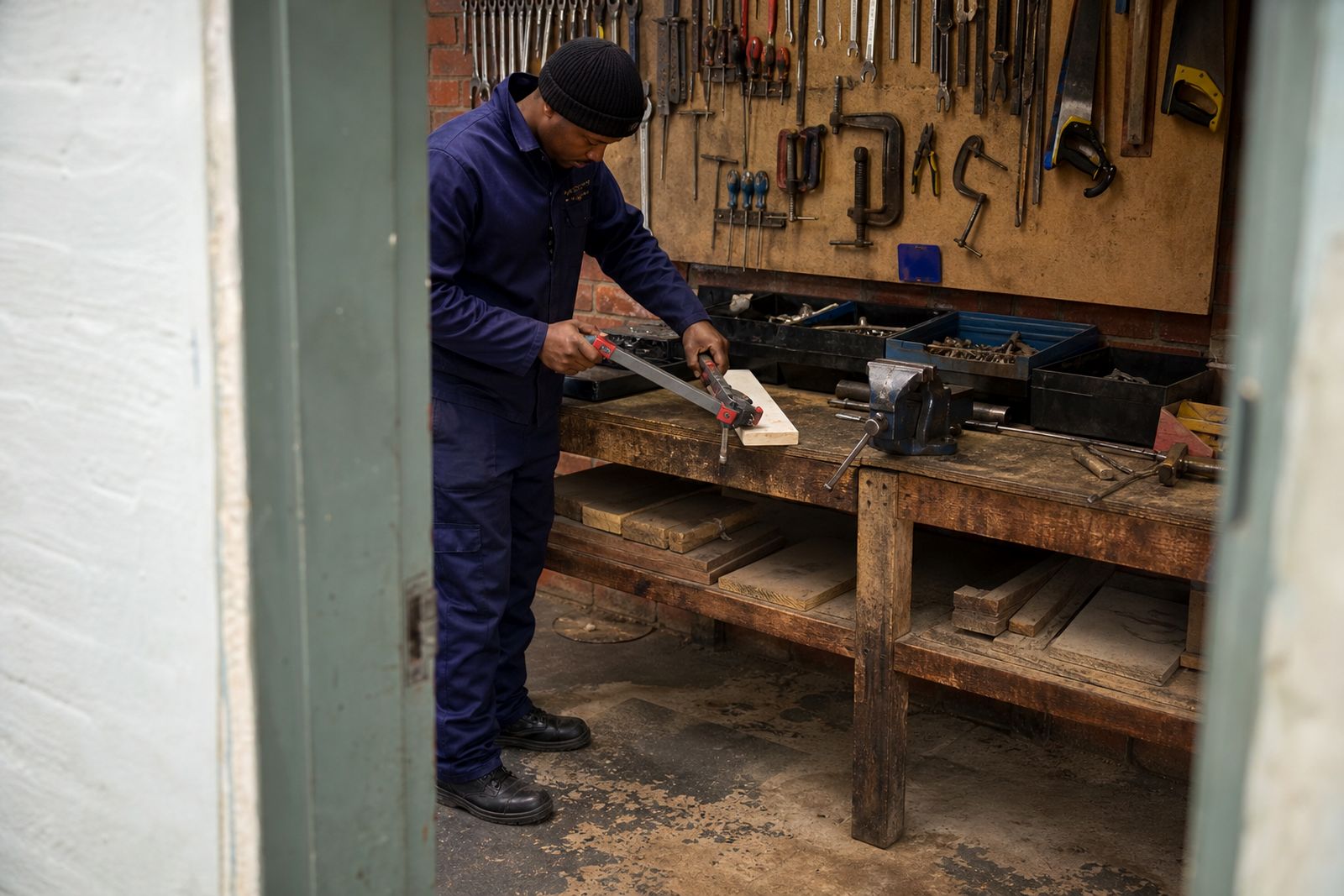
Power Assist on a real week
| Tools | Sander + driver |
|---|---|
| Battery | 18 V notes |
| Noise | PPE link |
| Ideal for | Busy sheds |
| Lead | Stock Gauteng |
| Care | Dust ports |
Use the contact form if you need the power assist specs laid out as a bench copy with the 18 V notes, PPE cue, and stock line for Gauteng on one sheet.
For setup examples, read the linked tip notes before setting battery rotation or dust-port cleaning. The projects pages show where Power Assist fits repeated sanding and driver work on shared benches.
Key tool details need to be visible before a tool lands on the bench. The important points sit in one place: the sander plus driver pairing, 18 V battery notes, noise and PPE prompts, and the care checks around dust ports. For busy sheds, that matters more than a long manual nobody opens once jobs stack up.
Check the battery platform first, then look at where the kit will actually run. On a shared bench, the useful questions are whether the driver and sander can stay on the same charging routine, whether noise needs hearing protection at that station, and whether dust extraction is close enough to keep ports from choking. Highveld dust and stop-start power days both affect how this setup gets used.
Before putting Power Assist into rotation, note who checks chargers, batteries, and dust-port condition at handover. That helps when a Gauteng stock item is replaced or when the next shift needs the same settings without hunting through messages.
Power Assist bench details
Expect a tight summary built for print or a quick phone check in the shed. These notes point to the tool combination, battery class, noise cue, PPE link, ideal use in busy sheds, and the care item most likely to be skipped, namely the dust ports. It is written for South African workshops where one bench may serve prep, fitting, and touch-up in the same shift.
Match Power Assist to the bench before adding extras around it. Read the paired note, check whether the driver and sander share the same 18 V battery routine, and confirm that the operator can reach extraction without stretching leads across the work area. If you send details through our contact form, include the city, the type of work on that bench, and whether you need guidance on specs, care, or stock in Gauteng.
- Sander and driver in one kit
- 18 V battery notes for shared use
- Dust-port checks before each shift
- PPE link plus matching tool notes
Workshop conditions assumed
Power Assist is listed with South African shop conditions in mind: dry inland dust, coastal moisture on fittings, and benches that do not stay dedicated to one trade all day. It does not replace manufacturer instructions or site safety sign-off. It gives the workshop enough context to place the kit correctly, maintain airflow through the dust ports, and set PPE expectations around noise.
Where teams share tools, battery discipline matters as much as the spec line itself. A charger tucked behind offcuts, a blocked extraction hose, or a missing hearing protector can slow a simple sanding and driving station fast. If the work is heavier than light bench fitting, cabinetry touch-ups, or general shed use, note that when you ask about these power assist notes so the setup is judged against the actual job.
What our Workshop Tool customers say
Verified Google reviews
Tell us about your bench
Send a note through our contact form with the work you do, your bench and wall space, the tools you already have and your town, and we will come back with a practical shortlist and a quote.
Open the contact form