

Drill Steady specs
Spec table and floor cues for Drill Steady.
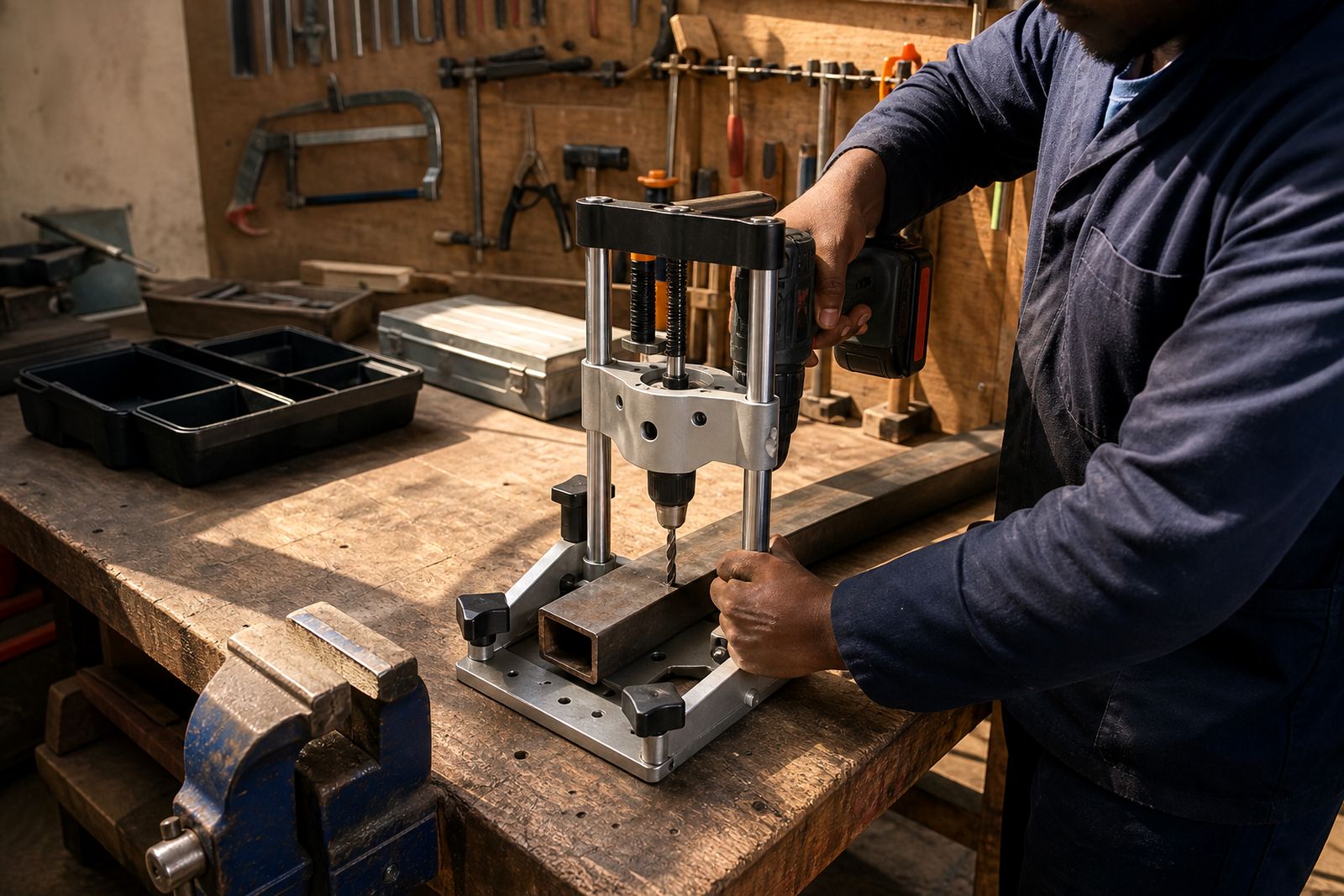
Drill Steady weekly check-in
| Bits | HSS + brad |
|---|---|
| Stop | Depth collar |
| Pack | Tray |
| Ideal for | Fixtures |
| Lead | Stock Gauteng |
| Care | Deburr |
If you need this spec sheet turned into a bench pack, send the drill sizes, stock thickness, and stop setting through the contact form. That lets the tray card match your bits, collars, and fixture spacing instead of using a generic drilling list.
For setup detail, read the paired tip notes and the related projects. They show where Drill Steady suits repeat drilling, small fixture work, and tray-based kit layouts.
The measurements that matter before the first hole is drilled centre on bit type, collar use, tray pack format, and fixture jobs that suit a repeatable setup. Gauteng stock matters here because many shops want one drilling aid they can keep beside the bench without adding a bulky stand.
Shared drill stations need a tighter spec than a single-user bench. Set out the bit range, the depth collar position, and the fixture type before the first hole goes in. Highveld dust and stop-start power make pre-drill checks worth writing down, especially where HSS and brad bits are stored in the same tray.
Keep a short record with the tray after the first production batch. Note the bit diameter, collar position, and material drilled so the next operator can repeat the setting without test pieces. If you send an update via the contact form, include those three details rather than a general request.
Bit and stop details
The spec table should stay close to the tool, not buried away. For Drill Steady, the useful sheet is a compact card listing HSS or brad selection, depth collar position, pack contents, and the fixture tasks the setup was proven on. Shops around Johannesburg and the East Rand often need something that can be read quickly during power interruptions and bench moves.
Use the specs together with the care notes before changing the tray layout. One person should own the collar setting, another should verify bit condition, and both should use the same naming shown on the card. If you send questions through our contact form, include the city, material, and whether you are checking specs, care, or stock in Gauteng.
- HSS and brad bit guidance
- Depth collar check points
- Tray pack for repeat drilling
- Related: fixture notes and bench uses
Workshop conditions this spec covers
Drill Steady specs need to make sense in dusty inland shops and humid coastal rooms alike. Bit choice, collar grip, and deburring notes are more useful than decorative diagrams when steel filings, MDF dust, or soft pine offcuts share one bench. Machine manuals and site safety requirements still apply, and a sound setup cuts down avoidable errors.
Shared benches change how drilling aids are used, especially in school rooms, starter shops, and busy fixture corners. Short spec lines work better there: which bit, what depth, what pack, and what to deburr before parts go out. If your work has moved beyond entry-level jigs, say whether you are drilling metal fixtures, timber components, or mixed material so the right notes can be matched.
What our Workshop Tool customers say
Verified Google reviews
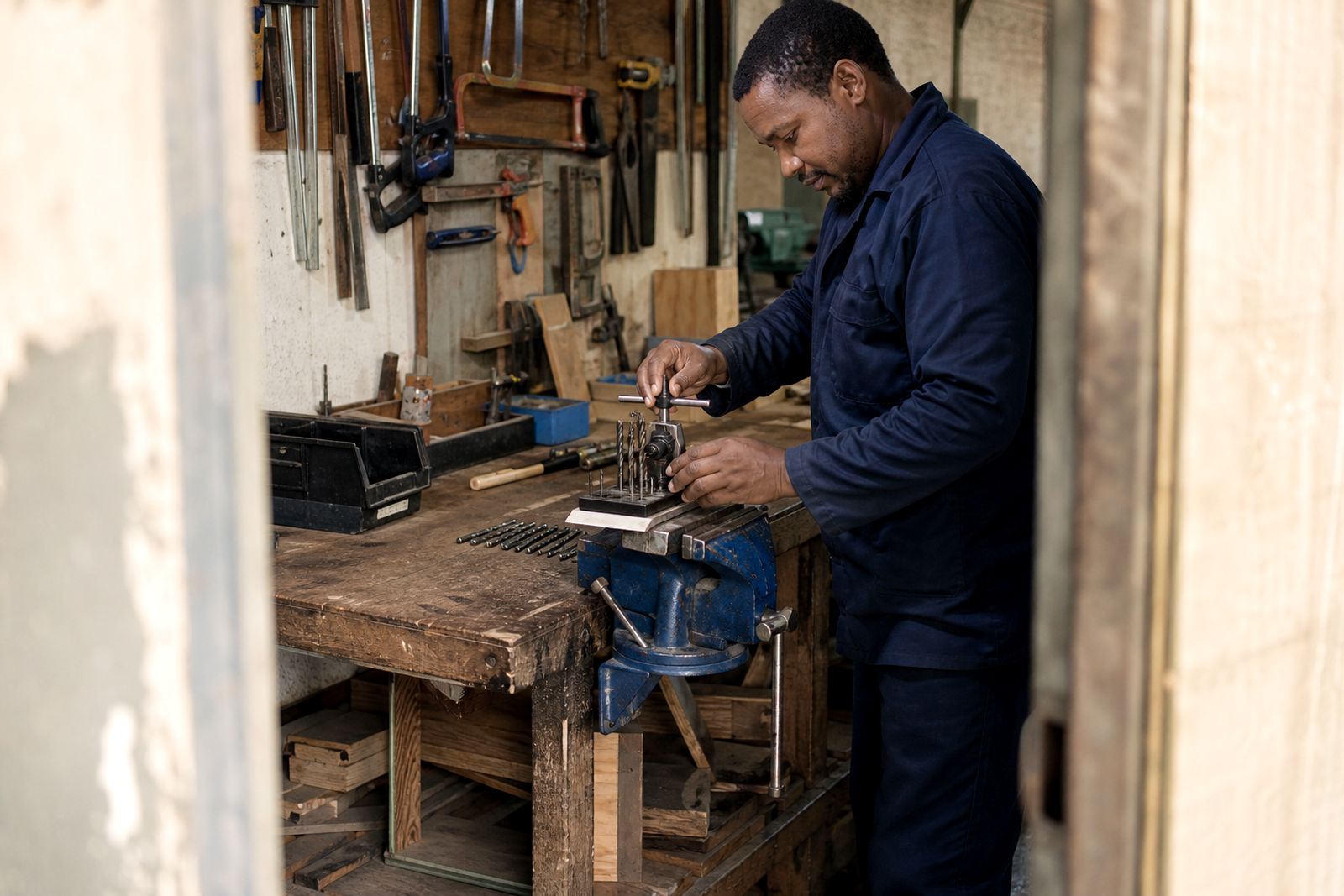

Tell us about your bench
Send a note through our contact form with the work you do, your bench and wall space, the tools you already have and your town, and we will come back with a practical shortlist and a quote.
Open the contact form