

Drill Steady
Hand and cordless drilling trays with bit life cues for shared sheds.
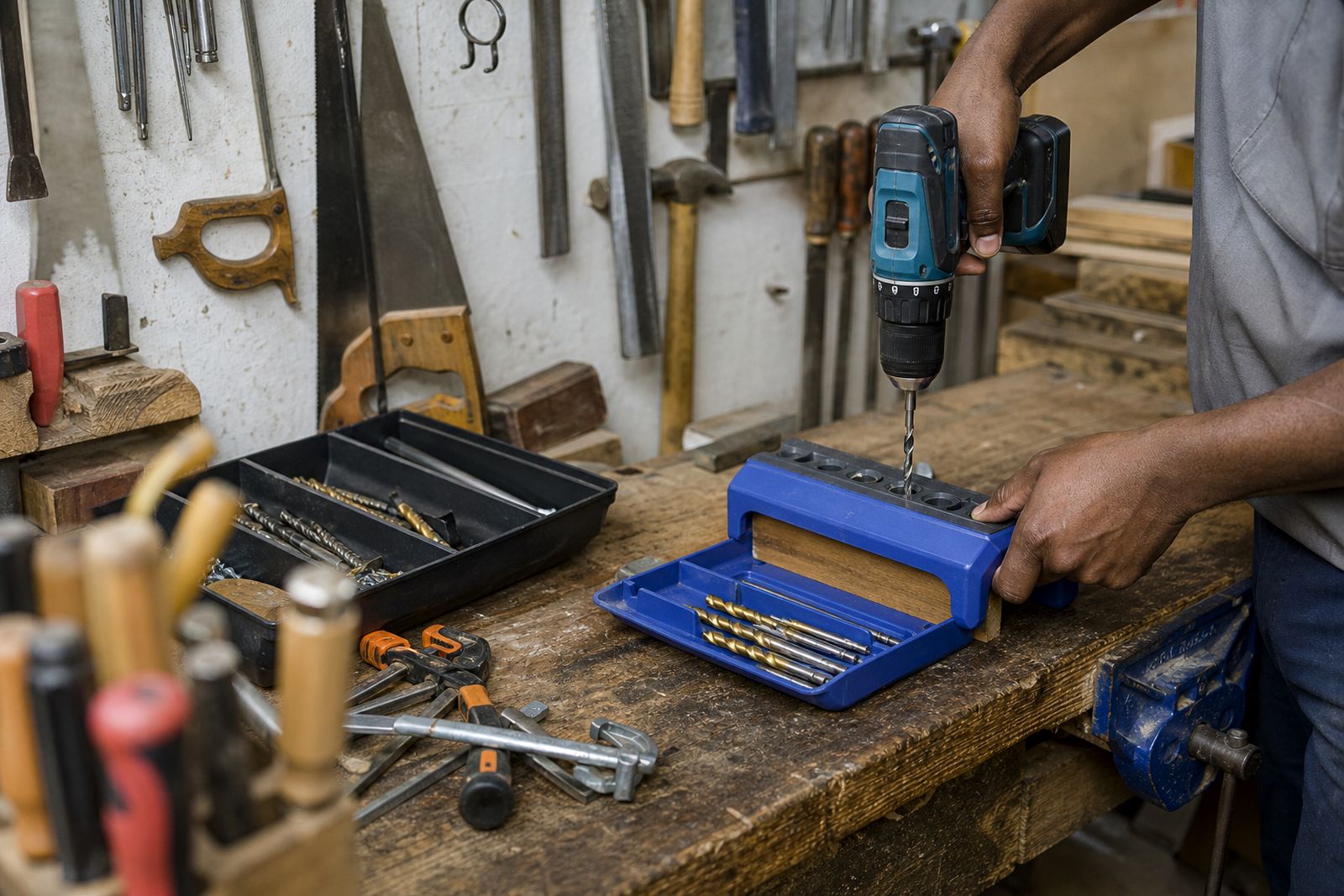
Drill steady for accurate drilling
Maintenance and maker counters pick Drill Steady when bits wander and batteries die mid-hole.
- Brad point and HSS sets
- Depth stop notes
- Battery window cues
- Bit life card
| Bits | HSS + brad |
|---|---|
| Stop | Depth collar |
| Pack | Tray |
| Ideal for | Fixtures |
| Lead | Stock Gauteng |
| Care | Deburr |
Bit control at shared benches
Drill Steady is set up for hand drills and cordless units that move between several users in one workshop. The tray groups brad point and HSS bits so timber, plastics, and light steel jobs do not get mixed in the same rush. Depth-stop notes and a visible battery check point help the next person pick up drilling without guessing what was used last.
On maker counters and maintenance benches, hole quality usually slips when bits blunt, pilot sizes get skipped, or the chuck changes hands too often. Drill Steady puts the commonly paired sizes together, with a bit life card that makes replacement decisions easier to call. Gauteng dust, shared storage, and mid-task battery swaps are treated as normal conditions, not edge cases.
Start by marking which drill is assigned to the tray and which materials it is touching most often. Then note the collar sizes kept with it, the battery count, and where worn bits are parked for deburring or discard. That record matters when a school workshop, repair counter, or site box is being handed over between shifts.
Bit sets, stops and battery cues
Expect a compact layout built around drilling accuracy rather than general hardware storage. The card supports bit grouping, depth-stop use, battery window checks, and a simple card for tracking bit wear. Wording stays plain and workshop-ready, with terms that fit South African benches, stores, and shared tool cupboards.
Match Drill Steady with the bench where drilling actually happens before adding extra kit. A maker using soft pine needs different bit discipline from a maintenance counter drilling brackets and thin plate, so the tray should reflect that. If you use our contact form, send the drill type, the material, and whether you need help with specs, care, or service.
- Bit groups split by drilling material
- Battery check point before deep holes
- Depth collar notes kept with bits
- Tip notes for drilling accuracy and bit wear
Workshop conditions this tray suits
Drill Steady suits benches where one cordless drill can serve many hands over a day, especially in dusty inland workshops and humid coastal stores. Steel parts can flash-rust, timber chips can clog trays, and batteries often return half charged after shared use. The layout keeps the drilling setup readable when power interruptions break the flow of a job.
Training rooms, school shops, fixture assembly benches, and light maintenance stations all benefit from a tray that shows the right bit before the chuck is tightened. Short jobs on plywood, melamine, softwood, and thin metal sheet call for quick checks more than long written procedures. Where the bench has moved beyond starter use, pair Drill Steady with the relevant tray or tip page for fixtures, layout, or power support.

What our Workshop Tool customers say
Verified Google reviews
Tell us about your bench
Send a note through our contact form with the work you do, your bench and wall space, the tools you already have and your town, and we will come back with a practical shortlist and a quote.
Open the contact form