

Drill Steady service
Yard handoff and service prep for Drill Steady.
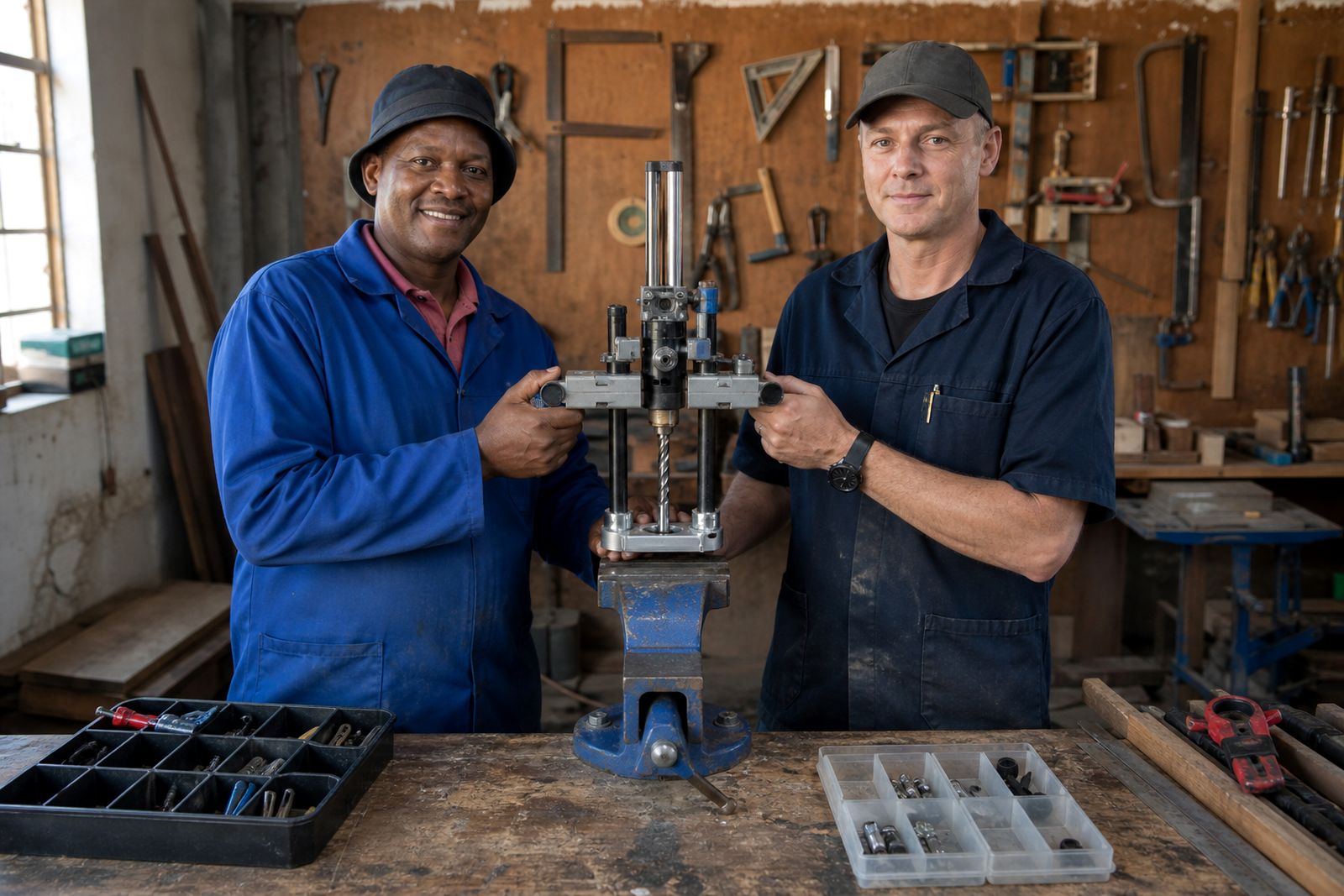
Drill Steady weekly check-in
For service prep, start with the support page, then complete the contact form with the Drill Steady serial, chuck issue, and any wobble you noticed under load. If photos of the base, column, or switch help explain the fault, send them through the contact form with the machine location and whether it is for yard handoff or bench collection prep.
If you are checking setup before booking service, read the matching tip notes and compare your bench arrangement with related projects. Those pages cover hold-downs, bit storage, and drill press habits that often explain chatter, drift, or repeat inaccuracy.
Drill Steady service is for the part between workshop use and safe handoff. We focus on the machine details that matter in a South African shop, such as chuck run-out, table lock wear, belt condition, cable damage, and rust from coastal air.
Start by naming the fault exactly as it shows up at the machine. If the bit wanders, note the material, bit size, and whether the table was square when it happened. Where the motor strains or trips, record the extension lead, plug point, and any power cut restart issue, because those details change the service check.
Before handoff, wipe off swarf, remove loose accessories, and list anything not travelling with the unit. A short note on the last job helps more than a long description, especially if the problem only appears in hardwood, mild steel, or repeated pilot drilling. Include the operator name or workshop contact on the service note so the machine history stays attached to the correct unit.
Handoff details for Drill Steady
Know what to send with the drill press and what to keep back at the shop. That normally means the fault summary, service contact, machine ID, and any key used to remove the chuck or adjust the table stop. Printed notes work well here because grease, dust, and transport handling are hard on phones and verbal messages.
Check the service page before stripping parts off the machine. The goal is to hand over a complete Drill Steady with the fault clearly described, not a half-dismantled press with missing fasteners and unlabeled accessories. When you use our contact form, include the town, whether the unit is bench-mounted or on a stand, and if the issue is electrical, mechanical, or accuracy-related.
- Fault note with serial and contact
- Chuck, table, and belt condition listed
- Yard handoff details for the correct unit
- Related: drill press tip notes and projects
Workshop conditions that affect service
Service prep changes with where the machine has been working. Highveld dust gets into slides and pulleys, while coastal moisture shows up first on bare steel, fasteners, and table surfaces. We also account for machines that share a bench, move between sites, or run from extension leads in garages, school workshops, and small fabrication spaces.
A drill steady used on pine and MDF often comes in with packed dust around the motor cover and depth stop. Units from metalworking benches may show cutting fluid residue, chipped paint near the vice area, and more wear on the chuck jaws. If the machine was part of a training room or shared makerspace, mention that too, because repeated setup changes can explain alignment complaints better than a single fault guess.
What our Workshop Tool customers say
Verified Google reviews
Tell us about your bench
Send a note through our contact form with the work you do, your bench and wall space, the tools you already have and your town, and we will come back with a practical shortlist and a quote.
Open the contact form