

Weekend polish prep
Abrasives and dust habits before the weekend polish rush.
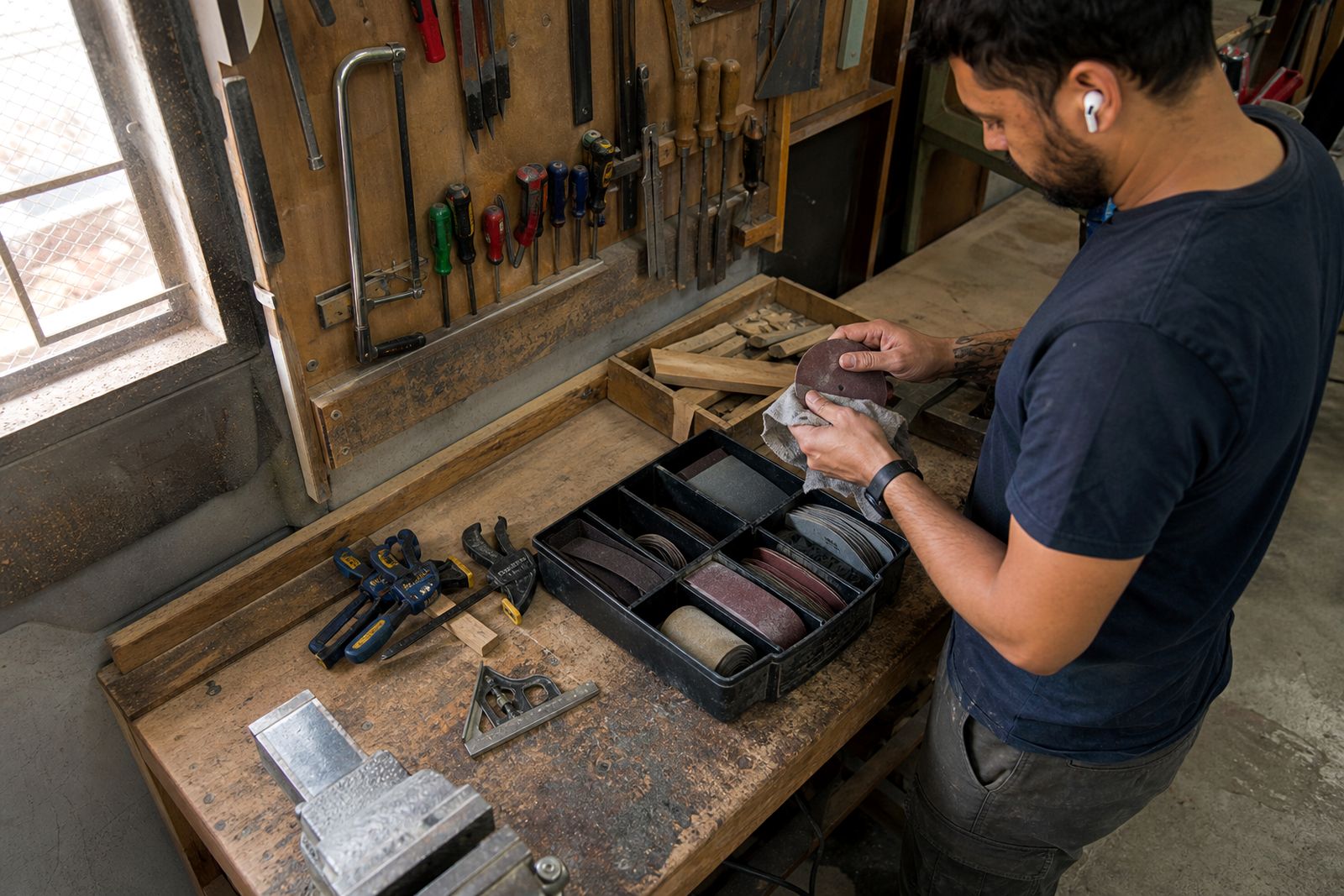
Polish rush bench order
Finish supplier Friday is about getting consumables and checks lined up before the last spray, wipe, or buff of the week. Start with the coating system being used, then match abrasives, thinners, masking, and cloths to that finish. On a shared bench, this avoids silicone contamination, mixed grit marks, and dusty top coats on Friday afternoon.
Begin by checking what finish is actually going on the piece: water-based lacquer, oil, wax, shellac, or a 2K product. Next, count sanding discs and sheets by grit so the team does not jump from rough prep straight to polish. Before lunch, inspect tack rags, mixing cups, strainers, gloves, and clean rags, then note anything missing for the final push. Late in the day, confirm extraction bags, vacuum filters, and a clear area for curing.
Many SA workshops lose time on Friday because the shiny tin is in the cupboard but the support items are finished. Gauteng dust, coastal humidity, and power cuts each change how a finish behaves on timber and board. Keep the prep strict when power windows are short: sand properly, clean thoroughly, and only then move to stain, sealer, or top coat.
Checks before the last coat
Each Friday bench should tie one product decision to at least one repeatable check. Link the chosen finish to a grit range, drying space, and cleaning method so nobody guesses at the end of the week. When sending details through our contact form, include the finish type, your town, and what stock or bench conditions are causing trouble.
- Correct grit sequence set out
- Finish system named and separated
- Clean rags and tack cloths ready
- Extraction and vacuum checked
- Curing space kept dust-free
If you are collecting from trade areas around Germiston or planning a run through Johannesburg retailers, keep mixed products clearly marked and lids wiped before transport. A Friday bench falls apart quickly when hardener ratios, thinner choice, or sheen levels get muddled between jobs.
Common finish bench snags
This bench usually goes wrong when prep is rushed to get to the glossy part. Another common miss is mixing incompatible products on one trolley, such as solvent materials near water-based touch-up work. Keep one finishing sequence on the bench at a time, and park extra experiments for another day.
Weather and power matter more than most makers admit. Highveld dust can settle into open coats, while Durban humidity can slow curing and change flash-off times. Good sanding and PPE habits matter when extraction is weak, the compressor is cycling badly, or the vacuum has lost suction.
Send a note through our contact form with the bench name and the finish issue you are dealing with. A phone photo of the surface and three short points on product, timber, and weather are usually enough to explain the problem.
What our Workshop Tool customers say
Verified Google reviews
Also worth a look
Tell us about your bench
Send a note through our contact form with the work you do, your bench and wall space, the tools you already have and your town, and we will come back with a practical shortlist and a quote.
Open the contact form