

Cabinet run week
Layout boards and clamps for a cabinet run that must stay square.
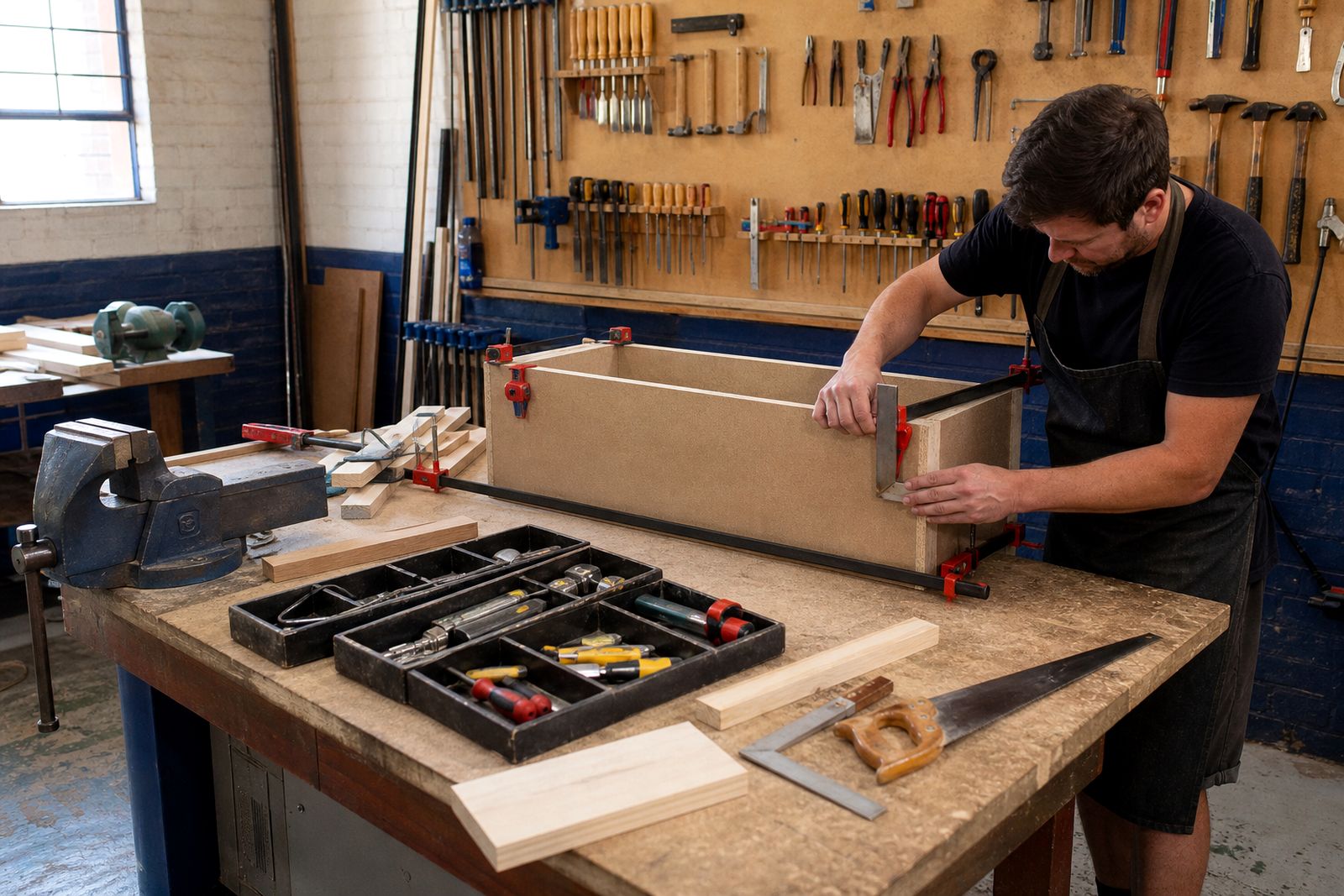
Cabinet run setup board
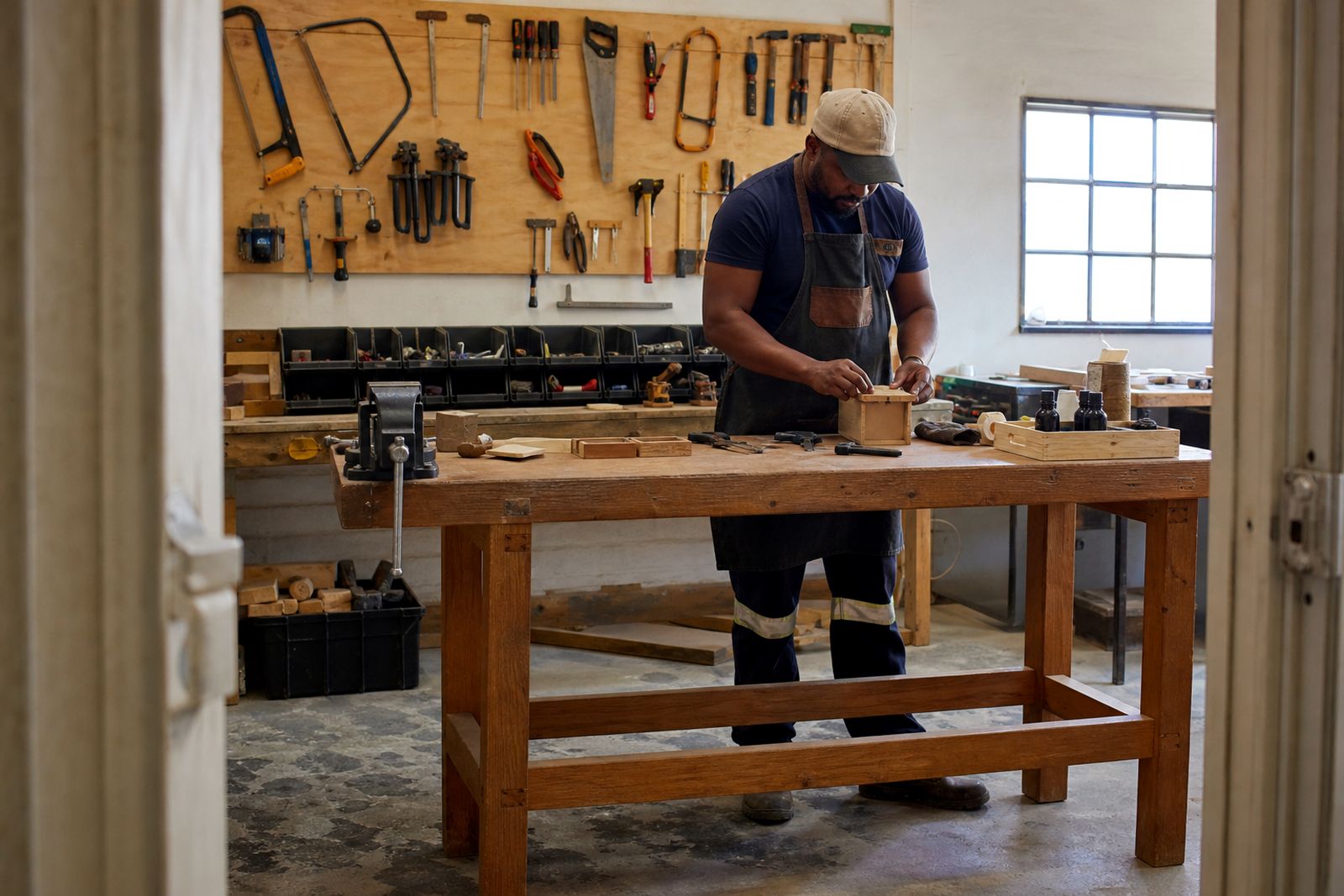
This bench page suits a week where carcasses, doors, and fillers must move through the shop without losing size control. We use layout boards for each cabinet section, mark clamp positions before glue-up, and keep diagonals recorded so boxes stay square from first assembly to final fitting. In a small South African workshop, that order matters when one saw, one edge treatment step, and a shared assembly table must carry the whole run.
Monday is for confirming site measurements, material thickness, and the order of cuts from full sheets. Tuesday usually carries panel sizing, edge marking, and boring checks while labels are still clean and readable. Midweek is when dry assemblies and square checks catch trouble before glue goes on. Friday is better used for matching parts to rooms, packing hardware, and noting any pieces that wait for transport or installation.
Warm afternoons and damp coastal air can shift sheet goods and slow glue behaviour, so cabinet run week needs repeated checks instead of one early measurement. During power cut windows, move noisy machining first and leave hinge plates, shelf pins, and hand sanding for dead power periods. If melamine chips at the saw, stop and reset the blade or scoring method before the whole batch carries the same damage.
Checks before glue and screws
Each cabinet group should have a board with part names, room marks, and the final outside dimensions written large enough to read across the bench. Add one tip notes printout for common squaring checks and keep supporting resources close to the cutting list, not buried in a drawer. When you use our contact form, send the bench name, your town, and the stage where the run is stuck.
- Cut list matched to site measurements
- Sheet labels marked before first rip
- Clamp positions set on assembly board
- Diagonal measurements written on each carcass
- Hardware packed by cabinet section
Runs heading to Sunnyrock, Clearwater, Cresta, Pavilion, Tyger Valley, Baywest, Mimosa, or Riverside need clear room labels before loading. A cabinet side with no mark can waste fitting time fast, especially when similar white melamine units travel together in one bakkie or van.
Where cabinet runs go out of square
Most trouble starts when the week mixes custom changes, rushed cutting, and unmarked stacks of parts on the same bench. One altered width can then carry through shelving, backs, and drawer fronts before anyone notices. Keep change notes separate from the original cutting list and sign off revised sizes before the next sheet is touched.
Humidity, blunt blades, and rushed clamp-up are the usual reasons a neat drawing becomes a crooked bank of cabinets. Pair this bench with clamp lane when glue-up pressure needs sorting, and use measure right when repeated width checks start drifting. bench start helps when the shop must reset after transport delays, material shortages, or half a day lost to power cuts.
Use our contact form with the bench name and a short status note for the run. One photo of the layout board, plus three lines on materials, box count, and the snag, is usually enough to show where the hold-up sits.
What our Workshop Tool customers say
Verified Google reviews
Also worth a look
Tell us about your bench
Send a note through our contact form with the work you do, your bench and wall space, the tools you already have and your town, and we will come back with a practical shortlist and a quote.
Open the contact form