

Gift build sprint
Use this guide to build clean gift items from stock on hand, keeping edges neat and the finished pieces ready to wrap.
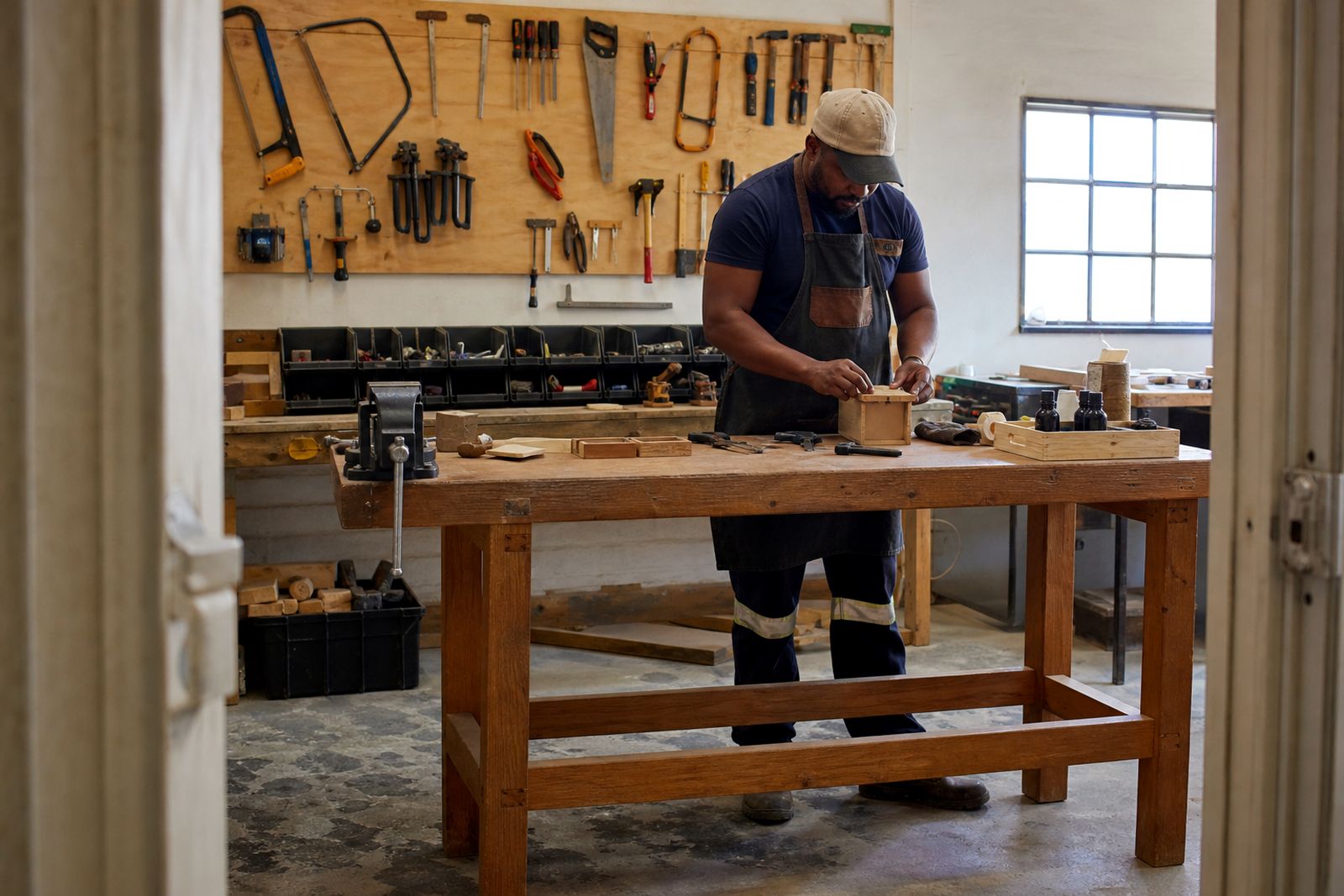
Five-day gift bench rhythm
Gift build sprint suits chopping boards, small shelves, keepsake boxes, mallets, and other workshop gifts that need tidy joinery without turning into a custom project. Start by fixing the quantity, timber choice, and finish standard so the bench does not drift into one-off requests. In a South African shop, that usually means choosing cuts that can be machined inside the power window and hand-sanded when supply drops.
Monday is for picking the gift item, confirming dimensions, and marking which faces must stay presentation clean. On Tuesday, break material down and sticker the parts so pine, saligna, and plywood do not get mixed in the rush. Midweek is for joinery, dry fits, and edge easing, while the last stretch is reserved for finish cure time, packing, and name tags if the gifts are going to a school, church, or office handover.
Workshops here often lose time when finish is chosen too late or someone adds engraving after glue-up. Gift build sprint puts those calls up front, because varnish, oil, and paint all behave differently in coastal damp and Highveld dryness. If power cuts cut machine time, move straight to the handwork that protects corners, cleans squeeze-out, and keeps matching sets looking like a set.
Checks before ribbon and wrap
Each run needs one build sheet, one cut list, and one finish note that stays on the bench until packing is done. Count parts before glue, then count again before final sanding so no lid, handle, or base goes missing into the offcut pile. When you send details through the contact page, include the bench name, your town, and the stage where the batch is sitting.
- Gift type, quantity, and final dimensions
- Timber, board thickness, and spare stock
- Finish sample approved on scrap
- Packing method noted before assembly
- Recipient names checked for spelling
Collection points in Sunnyrock, Clearwater, Cresta, Pavilion, Tyger Valley, Baywest, Mimosa, and Riverside benefit from clearly marked batches. A simple note on species, finish date, and fragile edges helps the gifts move from bench to vehicle without confusion or scuffed corners.
Common snags in gift batches
This sprint usually slips when the gift starts small and then grows into a full furniture brief with extra storage, branding, or metalwork. It also goes wrong when every item is treated as unique, because repeat cuts and repeat checks are what save the batch. Hold the line on one pattern, one hardware choice, and one finish schedule for the week.
Humidity can raise grain overnight, especially after rain, so final sanding should happen close to finishing and packing. If glue-ups start stacking, move the batch alongside the clamping area for clamp planning, and pull in measuring tools when lids, mitres, or paired parts need tighter repeatability. Safety first matters here too, because quick gift runs tempt people to skip hearing and eye protection during repetitive cuts.
Send it through our contact form and name the bench as the gift build sprint. A photo of the current batch, the item count, and a short note on timber and finish are enough for a useful review.
What our Workshop Tool customers say
Verified Google reviews
Also worth a look
Tell us about your bench
Send a note through our contact form with the work you do, your bench and wall space, the tools you already have and your town, and we will come back with a practical shortlist and a quote.
Open the contact form