

Shared shed reset
Labels and trays that make Friday readable again.
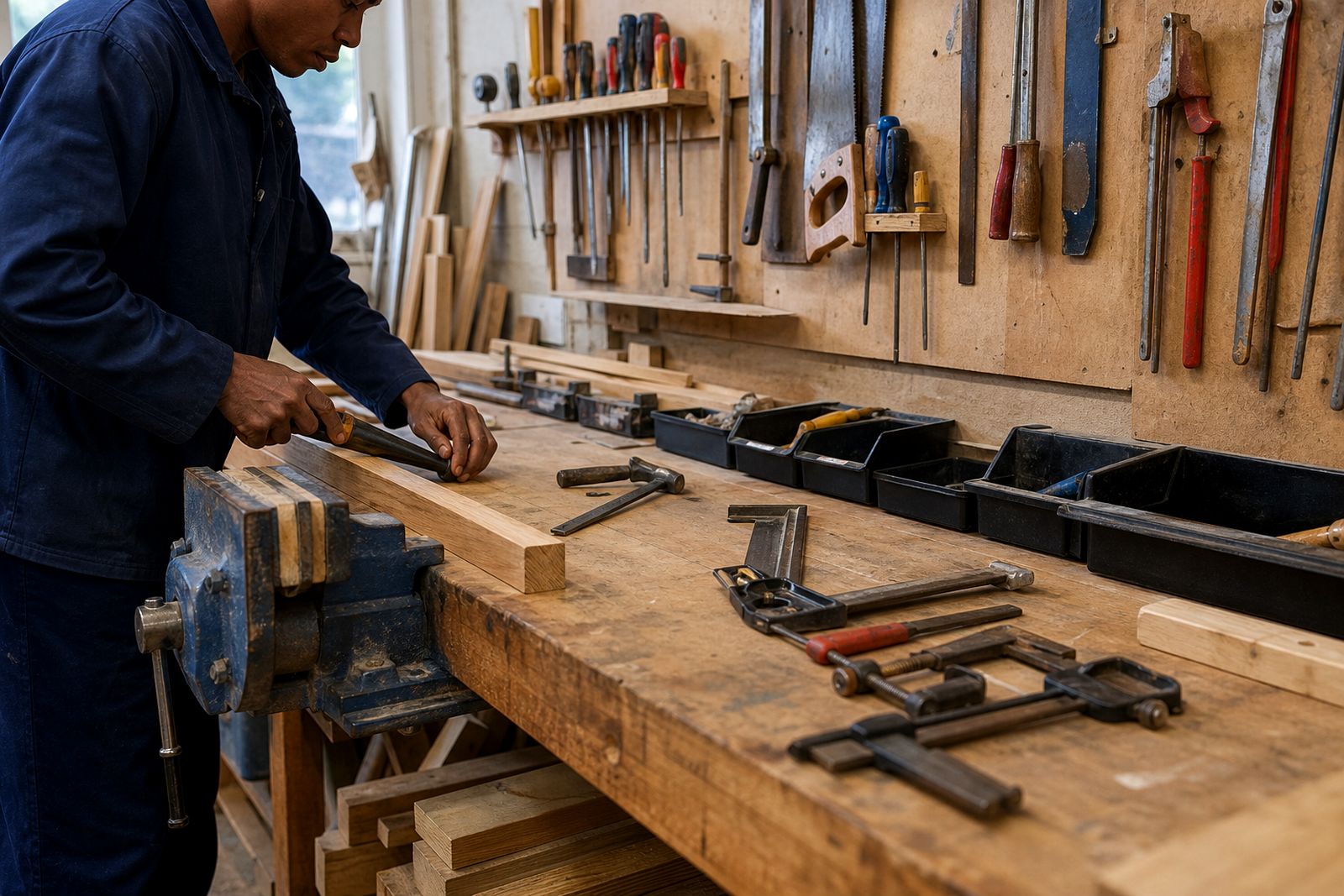
What goes back where
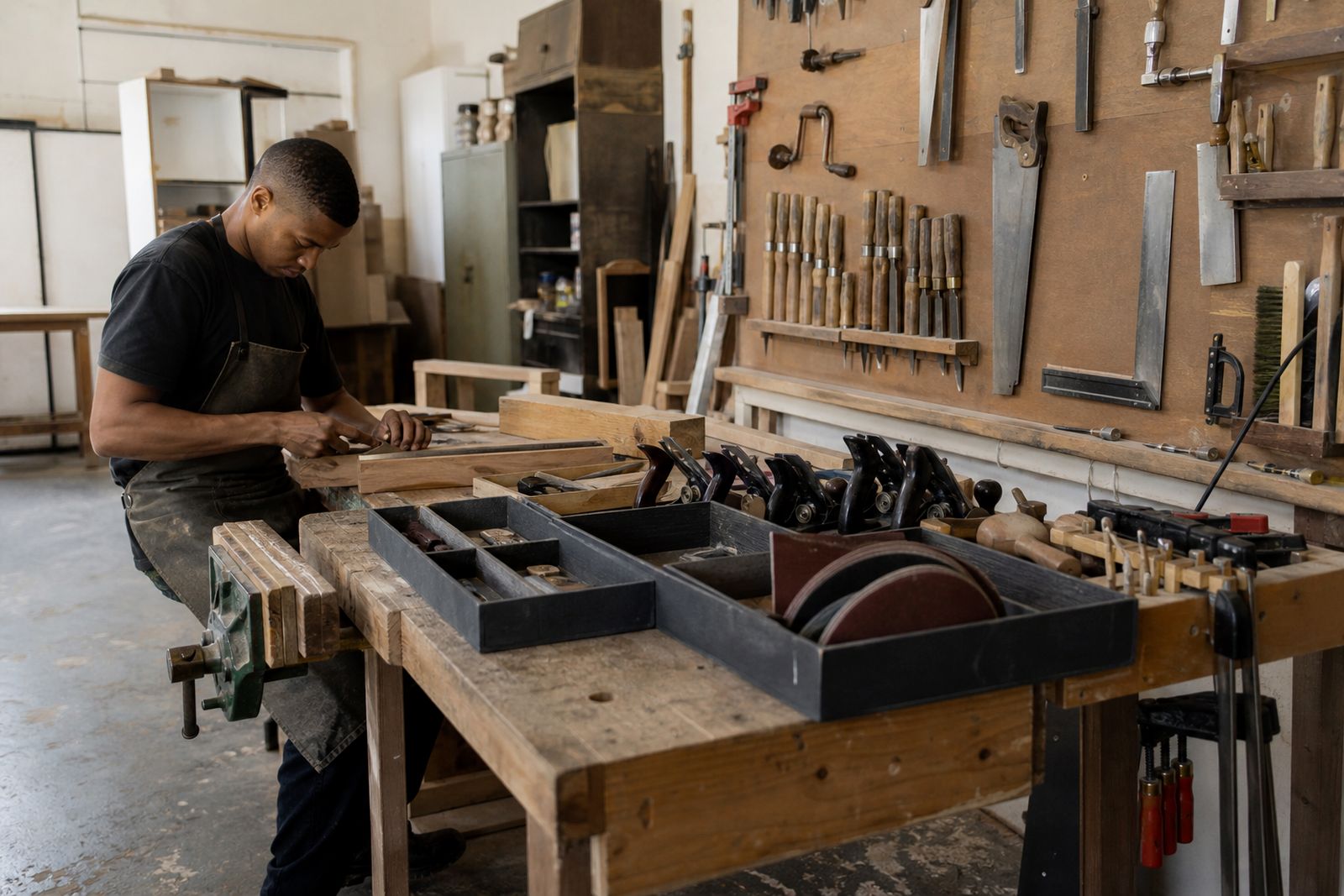
Shared shed reset is built for workshops where several people borrow the same surface, clamps, and small tooling. The work centres on labelled trays, a simple return spot for common items, and a visible note that shows what must stay on the bench until signed off. In a South African shed, that usually means planning around short powered windows, dusty corners, and tools moving between welding, timber, and repair work.
Begin by clearing one bench at a time, not the whole shed, and separate live jobs from abandoned bits. Next, group hand tools, measuring gear, fixings, and consumables into trays that can be lifted without spilling. End by marking what belongs on the wall, what lives in a drawer, and what needs replacement before the next shared session.
Many workshop resets fail when useful items get packed away with scrap, or when nobody records missing pieces. In power cut periods, do the paper checks and tray labels while the lights are out, then use powered time for testing chargers, checking extension leads, and confirming bench lights still work. Coastal humidity and Highveld dust both matter here, so wipe steel items down and keep abrasive grit out of measuring trays.
Tray labels that survive use
Each tray should name the contents, the home spot, and the quick count that tells the next person something is missing. Use card, vinyl, or a marker on plastic that can handle glue smears, oily fingers, and sun near an open roller door. When you send details through our contact form, include the bench name, your town, and whether the issue is storage, missing kit, or muddled handover between users.
- One bench cleared and sorted fully
- Shared tools grouped by actual use
- Return trays marked with simple counts
- Broken or blunt items logged aside
- Open jobs kept separate from scrap
This kind of reset suits school maker rooms, estate maintenance sheds, church workshops, and family garages where several people dip into the same stock. It also helps before a market build, a community repair day, or a weekend cabinet push when borrowed tools tend to wander.
Common snags in shared sheds
Trouble starts when every spare screw gets saved, damaged tools go back into circulation, or personal kit is mixed with communal stock. Another common problem is using one tray for unlike items, such as drill bits, masonry plugs, and hinge screws, which looks tidy for a day and causes hunting by Friday. Keep categories tight and mark exceptions clearly.
Check battery chargers, multi-plugs, and task lights before closing the reset, especially where outages interrupt charging cycles. If glue, paint, or cutting discs are shared, note open packets and remaining quantities so the next user does not discover shortages halfway through a job. A small quarantine tray for repairs, blunt blades, and mystery parts prevents the main bench from clogging again.
Send a short note via our contact form with the kind of shed and the part of the reset that keeps failing. A few clear photos of trays, wall storage, or the main bench are enough for context.
What our Workshop Tool customers say
Verified Google reviews
Also worth a look
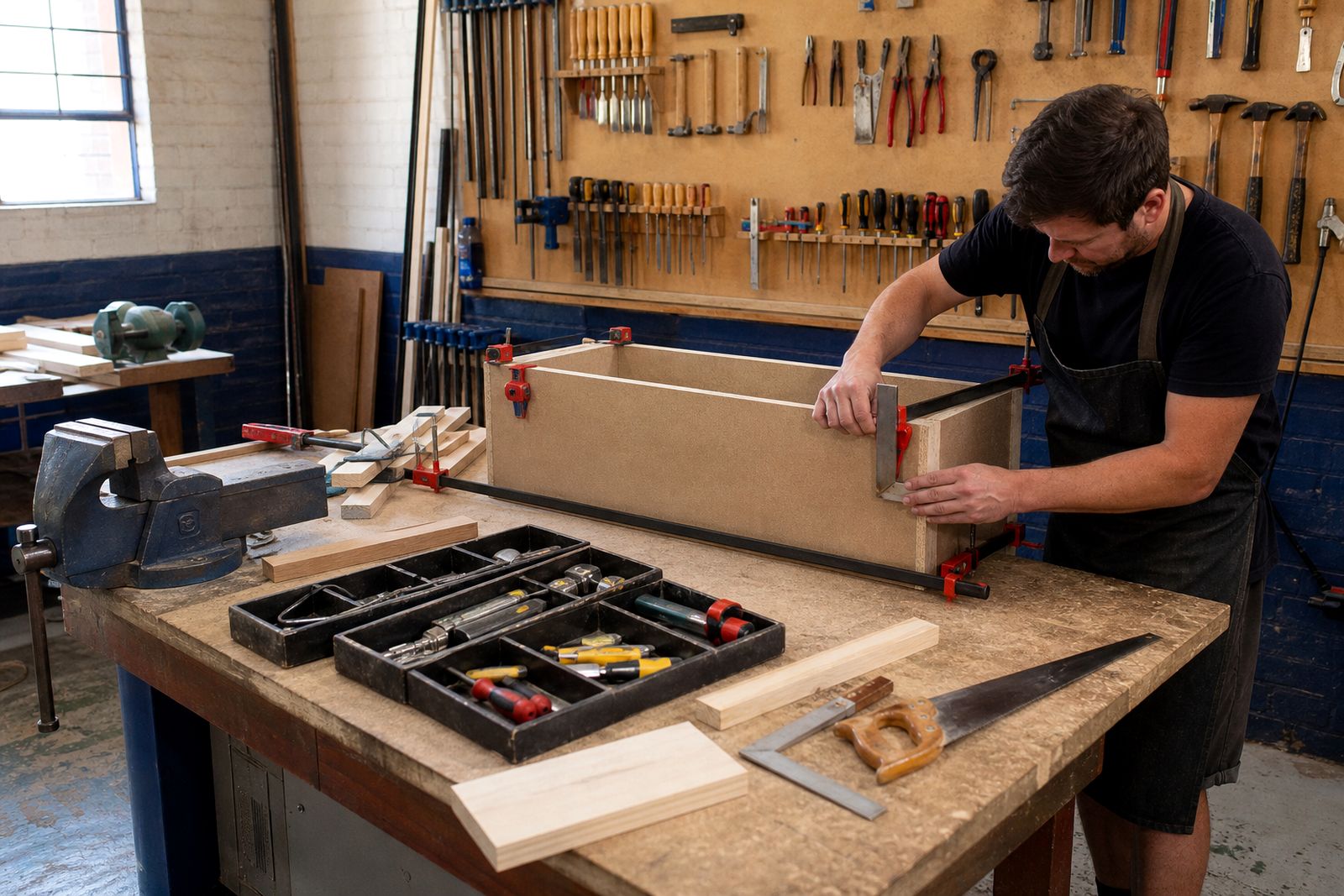
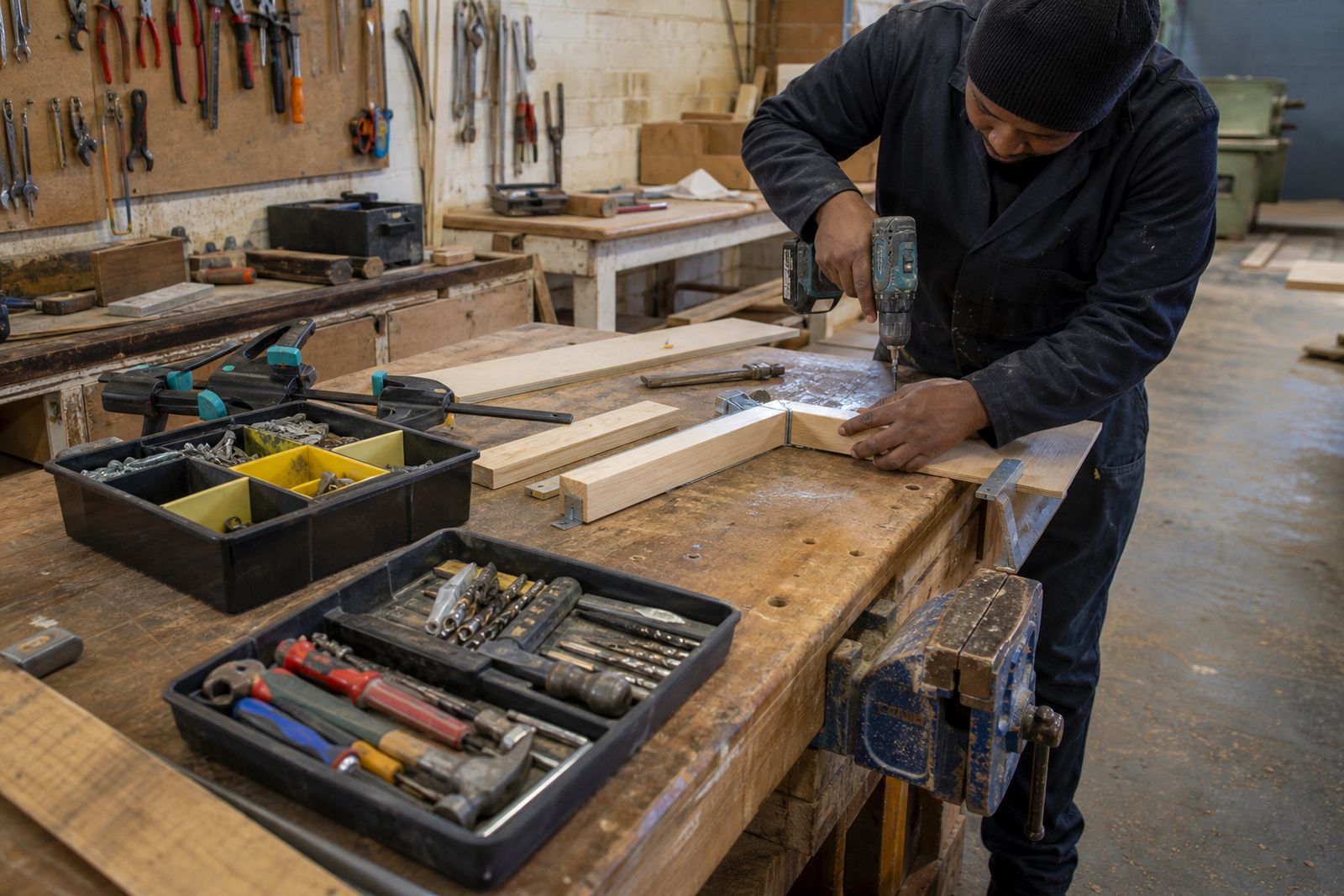
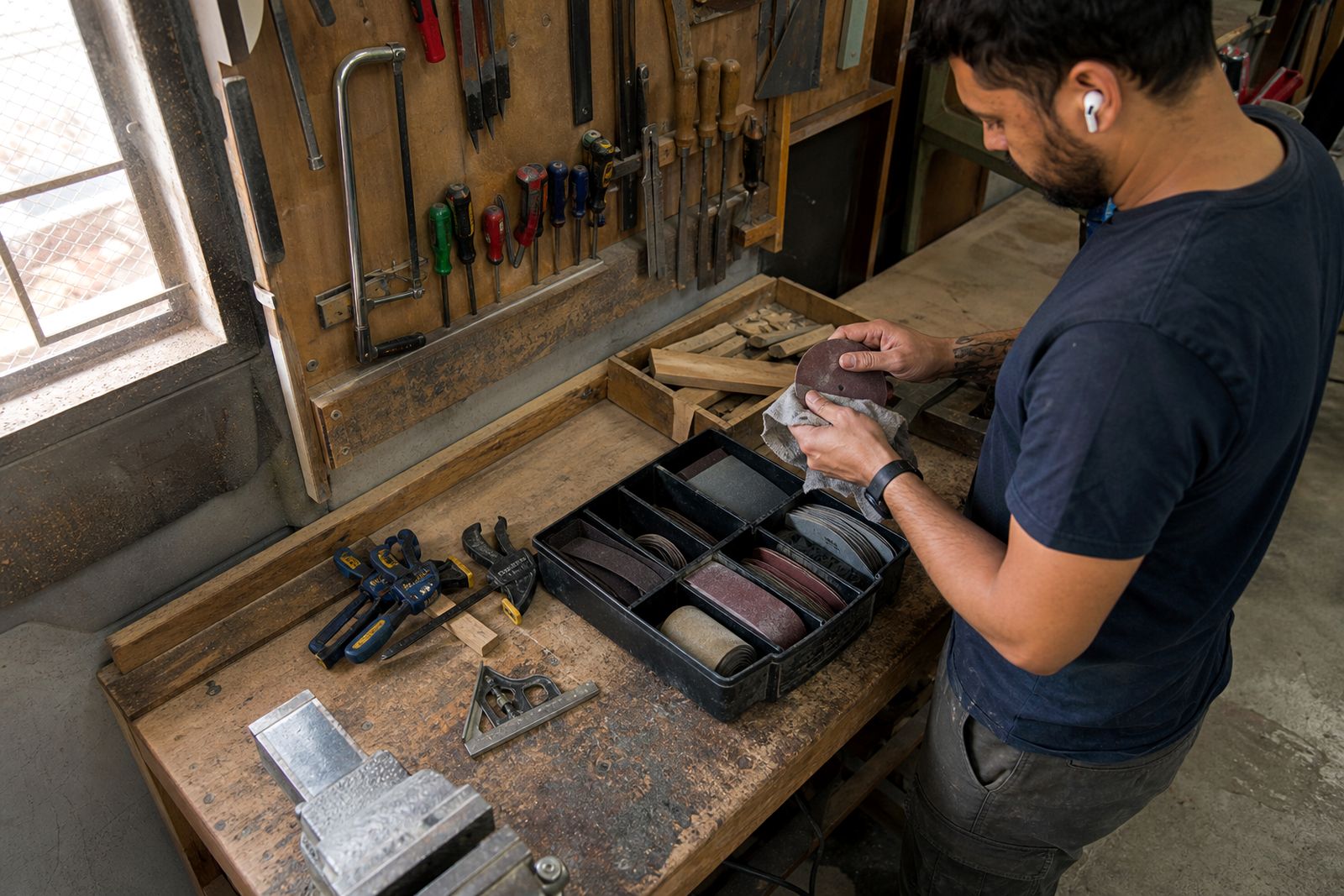
Tell us about your bench
Send a note through our contact form with the work you do, your bench and wall space, the tools you already have and your town, and we will come back with a practical shortlist and a quote.
Open the contact form