

Site kit card
What leaves for site and what stays.

Site departure card routine
Use the card before the bakkie or van leaves the yard. It separates site-only gear from bench stock so clamps, batteries, leads and small fixings do not vanish into the wrong job. Mark quantities by hand, then have one person do the final tick-off at the gate.
When the layout changes, ask for the current PDF through our contact form. The file is kept to a single page so it can ride in a clipboard, bakkie door pocket, or workshop folder without extra sheets going missing.
Lines worth checking twice
Keep the card to one page so it can ride in a clipboard, sleeve or vehicle cubby. Include the job name, area, access notes, power needed, consumables count and what must return to the workshop that same day. For South African site work, it also helps to note extension lead length, plug type and whether water is available nearby.
Germiston pickup and return notes
For a fresh copy, use our contact form. Collection point details are listed as Sunnyrock, Germiston, which helps when a runner is fetching printed cards or matching a returned kit sheet to the right workshop batch.
What the card should carry
A good site kit card keeps the handover plain and quick. It should show what leaves the workshop, what stays behind, and what must come back before the next job starts. That helps when the vehicle is being packed for a garage shed, a school workshop, or a small production floor.
Keep the wording simple and repeat the same order every time so the person loading the kit can spot gaps fast. For tools that move often, note the count, the size, and any matching parts that must travel together. That matters for clamps and glue-ups, drills and bits, fasteners and consumables, and small measuring and marking kits that are easy to misplace.
When you need a fresh copy, use the contact form and ask for the current PDF.
Checks before the vehicle leaves
Before the bakkie or van pulls out, do a final walk around the site kit and compare it with the card. The aim is not paperwork for its own sake. It is to stop useful tools from disappearing into the wrong job or staying in the wrong place overnight.
- Count the listed items against the card and mark missing pieces clearly.
- Check that site-only gear is packed separately from bench stock.
- Confirm power leads, batteries, chargers and extension cords are assigned to the right job.
- Look for PPE, fixings and consumables that are easy to overlook.
- Make sure return items are obvious, especially when several trades are sharing one load.
For workshops dealing with Highveld dust or coastal rust, it also helps to keep the card with the kit so care notes travel with the tools.
Keep it useful in real workshops
The best cards work in plain conditions, with dirty hands, changing crews and no time to guess. That is why a single page works so well. It fits in a clipboard, a bakkie door pocket, or a workshop folder, and it can move between the counter in Sunnyrock, Germiston, and the tool showrooms at Tyger Valley, Clearwater, Cresta, Pavilion, Baywest, Mimosa and Riverside.
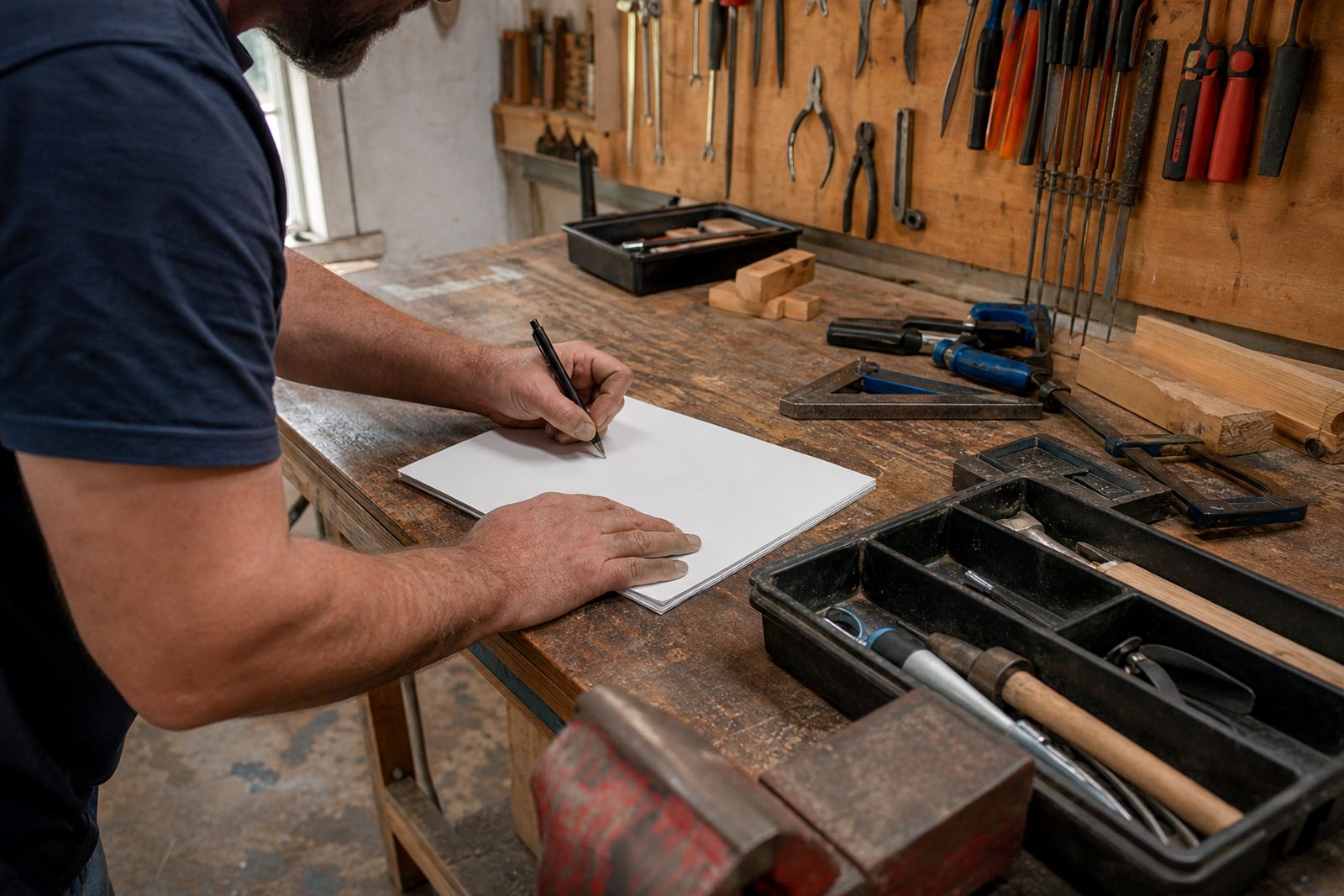
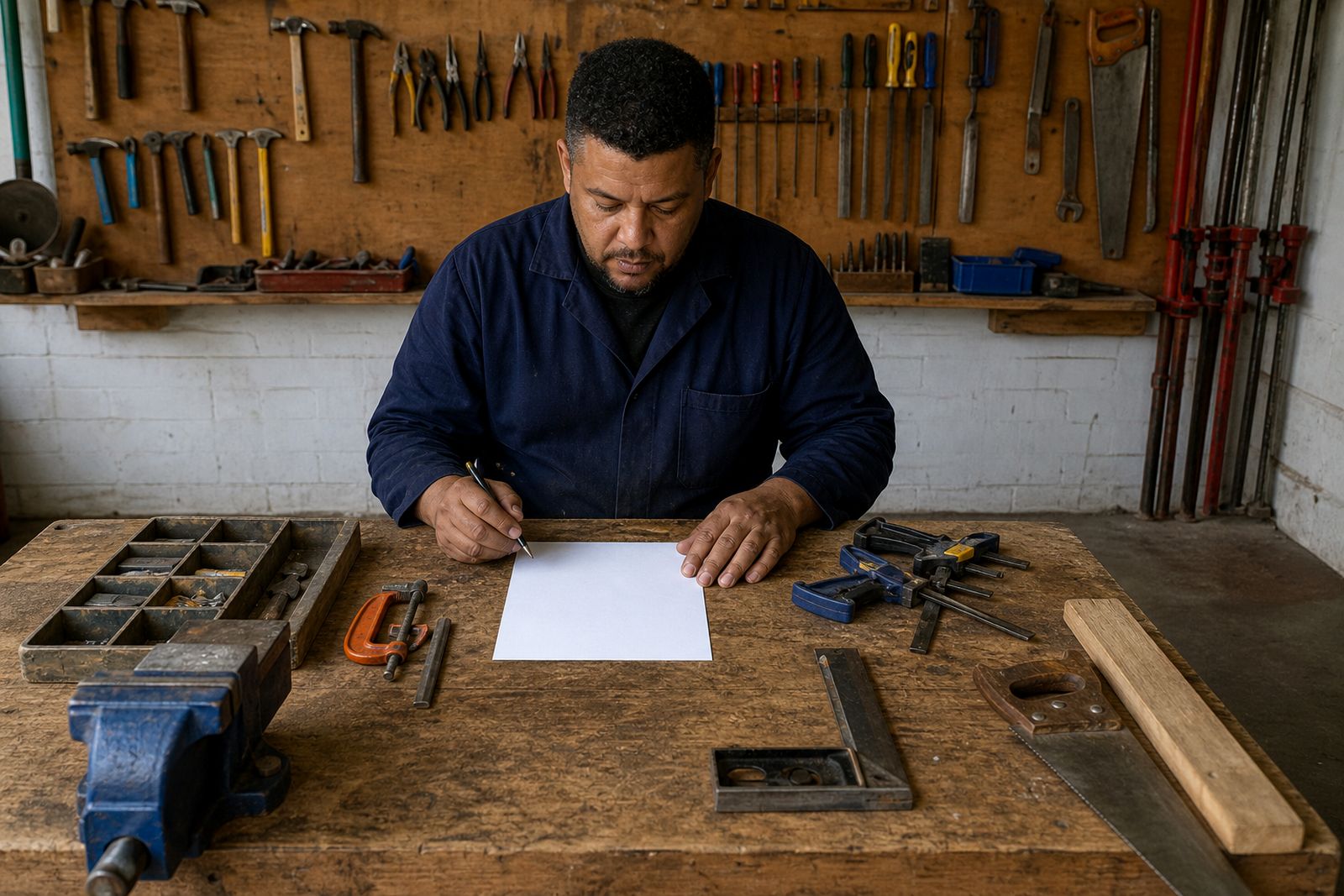
Use it alongside tidy tool trays, clear pegboard layouts and a sensible workbench setup so the kit list matches the way the tools are stored. If the job changes, update the card before loading starts, not after the gear has already left.
That simple habit saves time, keeps workshop stock visible, and makes site work easier to manage with practical hand and bench tools.
What our Workshop Tool customers say
Verified Google reviews


Tell us about your bench
Send a note through our contact form with the work you do, your bench and wall space, the tools you already have and your town, and we will come back with a practical shortlist and a quote.
Open the contact form