

Bit life log
Log wander and replacements without drama.
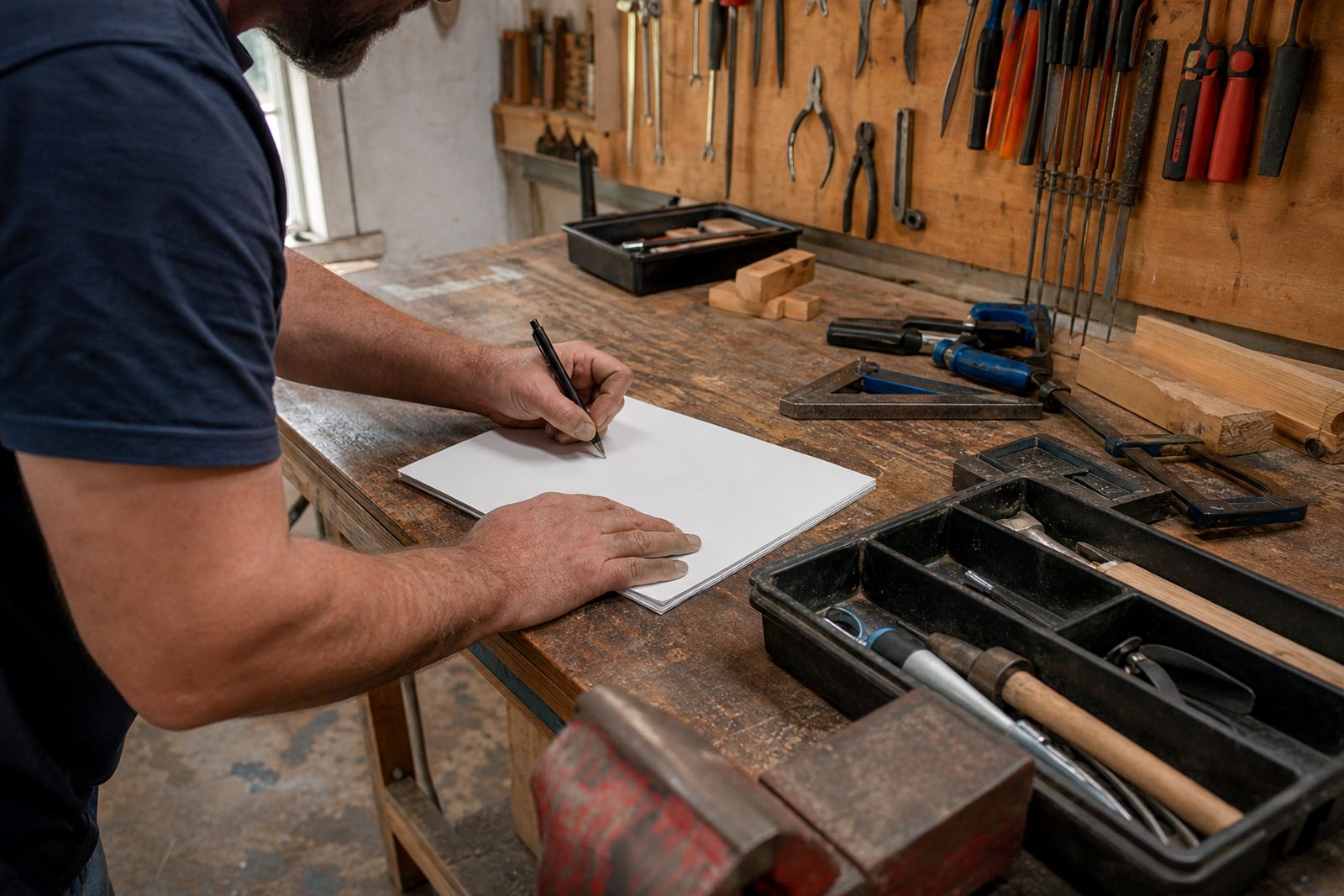
Tracking router and drill bits
Use this sheet beside the drill press, trim router, or impact case where bits actually get swapped. Record the bit size, material cut, and the first sign of wear such as burning on pine, chipped carbide, or extra force needed in steel. Add the replacement date and a quick note on whether it was blunted by MDF dust, rusty fasteners, or a bad pilot hole.
If you need the current PDF, send a note through our contact form. Ask for the bit life log and mention whether you want an A4 print copy for the wall or a digital file to fill in before printing.
Entries worth writing down
Keep each line to the checks that help on the next job: diameter, shank size, cutter type, date fitted, and what stock it touched. For a small workshop in Gauteng or the coast, humidity, MDF resin, and brick dust from mixed jobs can shorten bit life in different ways. Mark if a bit was sharpened, binned, or moved to rough work only so nobody grabs it for a clean finish pass.
Where this log earns its keep
For an updated copy or a print issue, use our contact form and mention bit life log. We work from Sunnyrock, Germiston, where workshop notes often need to survive dust, oily hands, and quick checks at the drill press.
Track bit wear before it slows the job
A simple bit log helps you spot patterns before they turn into burnt edges, split timber, or ragged holes. Keep it beside the drill press, impact case, or trim router so the note is made while the job is still fresh. That small habit is useful in garage sheds, school workshops, and small production floors where bits get used on different materials in the same week.
Write down what the bit cut, where it started to struggle, and whether the issue came from MDF dust, rusty fasteners, or a poor pilot hole. If a bit is still usable for rough work, mark it clearly so it does not end up back in a clean finish job by mistake.
What to note each time
Keep the record plain and repeatable. The aim is not a long story, only enough detail to make the next job easier and safer. That also helps when the workshop mixes softwood, hardwood, sheet goods, and metal work in the same day.
- Bit size and shank so the right fit goes back in the right holder.
- Material cut such as pine, MDF, steel, or mixed stock.
- First wear sign like burning, extra pressure, chatter, or chipped edges.
- Status now sharpened, binned, or kept for rough work only.
If you keep a tool tray or pegboard layout, leave space for the log nearby so the note is easy to reach when bits are swapped.
Keep the record useful in real workshops
In South African workshops, dust, humidity, and mixed materials all affect bit life in different ways. Coastal rust can shorten storage life, while Highveld dust and resin build-up can make a bit feel blunt before the cutting edge is truly worn. A short log makes those causes easier to spot.
Use the notes to guide sharpening, replacement, and storage care. If a bit is moved to rough work, keep it separate from your clean-cut set. If you need to update a workshop record or ask for a quote via the contact form, send a note through our contact form. For more practical workshop ideas, see tips and kit.
What our Workshop Tool customers say
Verified Google reviews




Tell us about your bench
Send a note through our contact form with the work you do, your bench and wall space, the tools you already have and your town, and we will come back with a practical shortlist and a quote.
Open the contact form