

Workshop handoff form
A quick form for workshop notes, tray ideas and bench fixes.
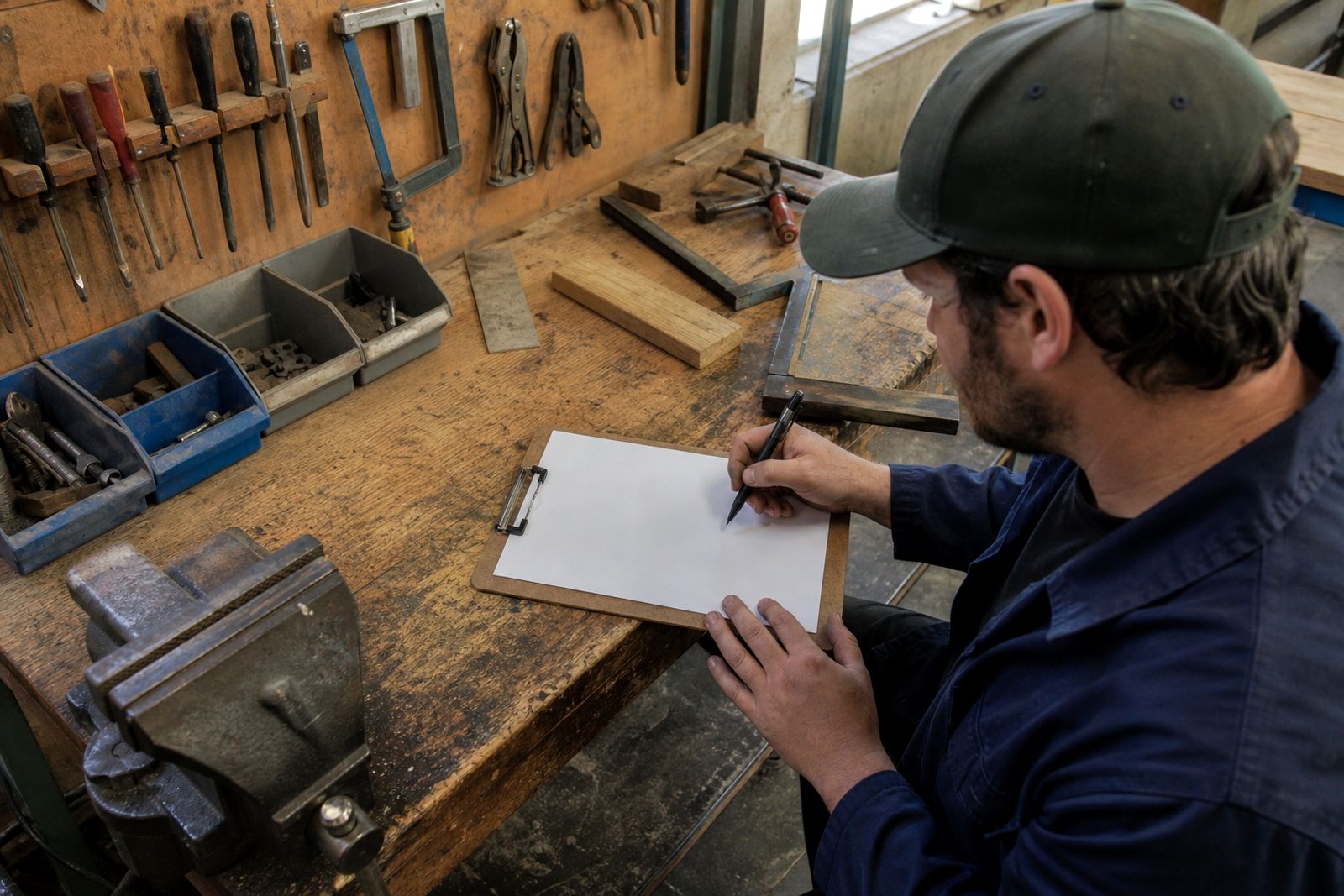
What goes on the handoff sheet
Use this form when one person leaves a bench and the next person must pick up without guessing. Record the job name, tray number, parts still missing, and any setting that must not be changed before the next shift. In a South African workshop, that often includes cutter size, steel thickness, paint code, or where the stock was moved after power cut interruptions.
For the latest PDF, use our contact form and mention whether you want an A4 printout or a phone-friendly copy. Include the kind of handover you do, such as machine setup, stock counts, or tray refills, so the notes fit the way your workshop runs. Dated versions help teams track which sheet is current on the bench.
Checks before the next pair of hands
A useful handoff form leaves space for the small details that stop rework. Note whether measurements were checked in millimetres, whether fixings were counted back into the tray, and whether photos were taken before stripping a fitting or jig. Add where the work is waiting, such as welding table, spray area, or bakkie for site fitment.
Workshop details worth writing down
For updates to the printable or questions about using it on the bench, use our contact form and mention the handoff form. Sunnyrock, Germiston is the reference point for the workshop examples and tray layouts used with this sheet.
What to capture before the next shift
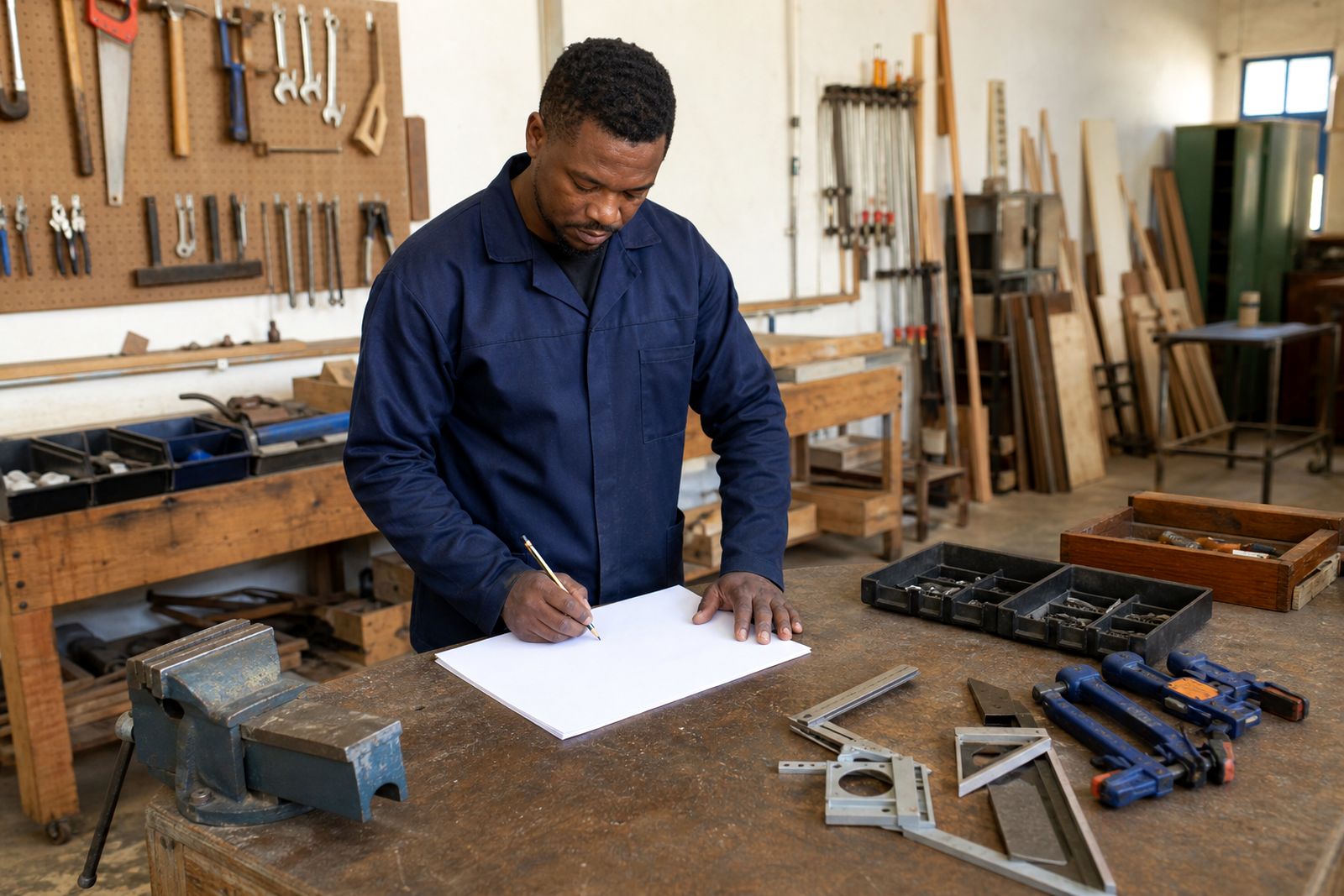
Keep the handoff sheet close to the bench so the next person does not have to guess what changed. The best notes are plain, specific, and tied to the actual setup in front of you, whether it is a starter workbench, a vice, a tray layout, or a small production run. If a tool or fitting was moved, say where it went and why.
For South African workshops, that often means making room for the real interruptions too. Power cuts, dust, coastal rust, and mixed-use spaces all affect what should stay set, what should be checked again, and what can safely wait until the next shift. If you need a fresh copy or a printable version, use the contact form.
Use the form with clear bench checks
A good handoff note should help someone pick up the work quickly, without opening every tray or remeasuring from scratch. Keep it short enough to read at a glance, but detailed enough to protect the setup. Think in terms of what must not move, what must be counted, and what still needs attention.
- Record the job name, tray number, and current bench position.
- Note any setting that must stay fixed, such as cutter size or marked dimensions.
- List parts still missing, plus any fixings returned to the tray.
- Add where the work is waiting, such as welding table, spray area, or site-fit load-up.
If your workshop uses pegboards, labelled trays, or shared measuring and marking kit, mention that in the notes so the next person can find everything fast.
Keep the handover useful in real workshop conditions
This form works best when it matches the way your team already runs the bench. It can support machine setup, stock counts, tray refills, glue-up timing, sharpening notes, PPE reminders, and the small checks that stop rework later on. In garage sheds, school workshops, and smaller production floors, that kind of clarity saves time and keeps the work moving.
For workshop planning around trays, benches, clamps, saws, chisels, drills, bits, fasteners, or consumables, see our tips and trays sections. Just Some Tools works from Sunnyrock, Germiston, and also serves tool shoppers through showrooms in Tyger Valley, Clearwater, Cresta, Pavilion, Baywest, Mimosa, and Riverside.
What our Workshop Tool customers say
Verified Google reviews
Tell us about your bench
Send a note through our contact form with the work you do, your bench and wall space, the tools you already have and your town, and we will come back with a practical shortlist and a quote.
Open the contact form