

Clamp Lane care
Clamp care covers the checks that keep clamps square, threads moving, and glue squeeze-out from building up where it should not. It focuses on bar clamps, F-clamps, quick-release units, and tray habits that stop one sticky jaw from slowing an entire glue-up.
How clamp lane runs on a real week
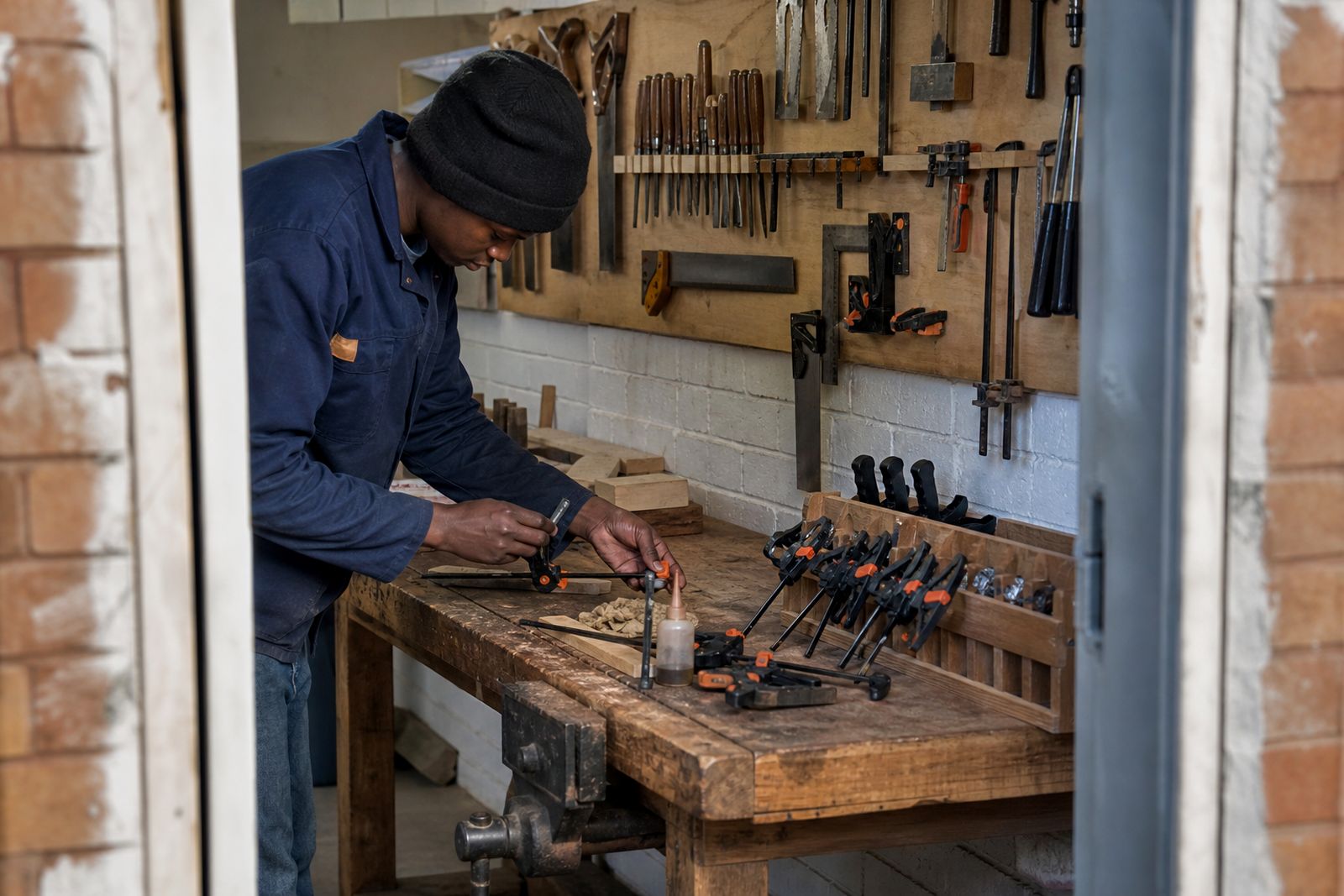
Use the matching trays to separate clean clamping gear from gluey returns and damaged pieces. That split matters in busy South African workshops where clamps travel between assembly benches, vehicle loads, and storage racks in the same day.
- Care cues
- Tray pairing
- Consumable windows
Use it alongside tip notes on glue handling and projects that rely on repeatable panel and frame clamping. The care steps make more sense when you can see where pressure, alignment, and cleanup usually go wrong.
Clamp care is about keeping pressure tools usable, not polished for display. Resin on the bar, dents on the pad, and bent clutch plates all change how a clamp lands on timber during cabinet work, frame glue-ups, and repair jobs. On a crowded bench, the useful routine is simple: wipe off wet glue, check the moving jaw, and return each clamp before the next setup starts. That matters more in small Gauteng and coastal shops where the same set of clamps is handling several jobs in one shift.
Start with what causes slips and marks. If pads are missing, timber bruises quickly on soft pine and veneered board, so replacement pads or sacrificial blocks need to sit in the same tray. When the screw feels gritty, dust and dried adhesive are usually the cause, especially in Highveld air, and a light clean-out does more than forcing the handle harder. For steel bars near the coast, a quick rust check belongs on the weekly list because surface corrosion changes how smoothly the head travels.
Put the first condition check in after the second or third glue-up, not months later. That is usually when bent bars, chipped plastic feet, and sticky threads show themselves. A short handover note beside the lane helps the next person see which clamps are ready, which need cleaning, and which must stay out of a pressure job until they are sorted.
Checks for bars and jaws
A short care rhythm keeps daily wipe-downs, weekly inspection, and simple storage rules clear for mixed clamp types. The aim is to keep bars straight, faces clean, and moving parts free enough that pressure can be applied evenly without guesswork. Printed notes work best when they can hang near the rack and survive glue splashes, pencil marks, and workshop dust. Keep the wording plain so any helper or student can follow the sequence without reading a manual.
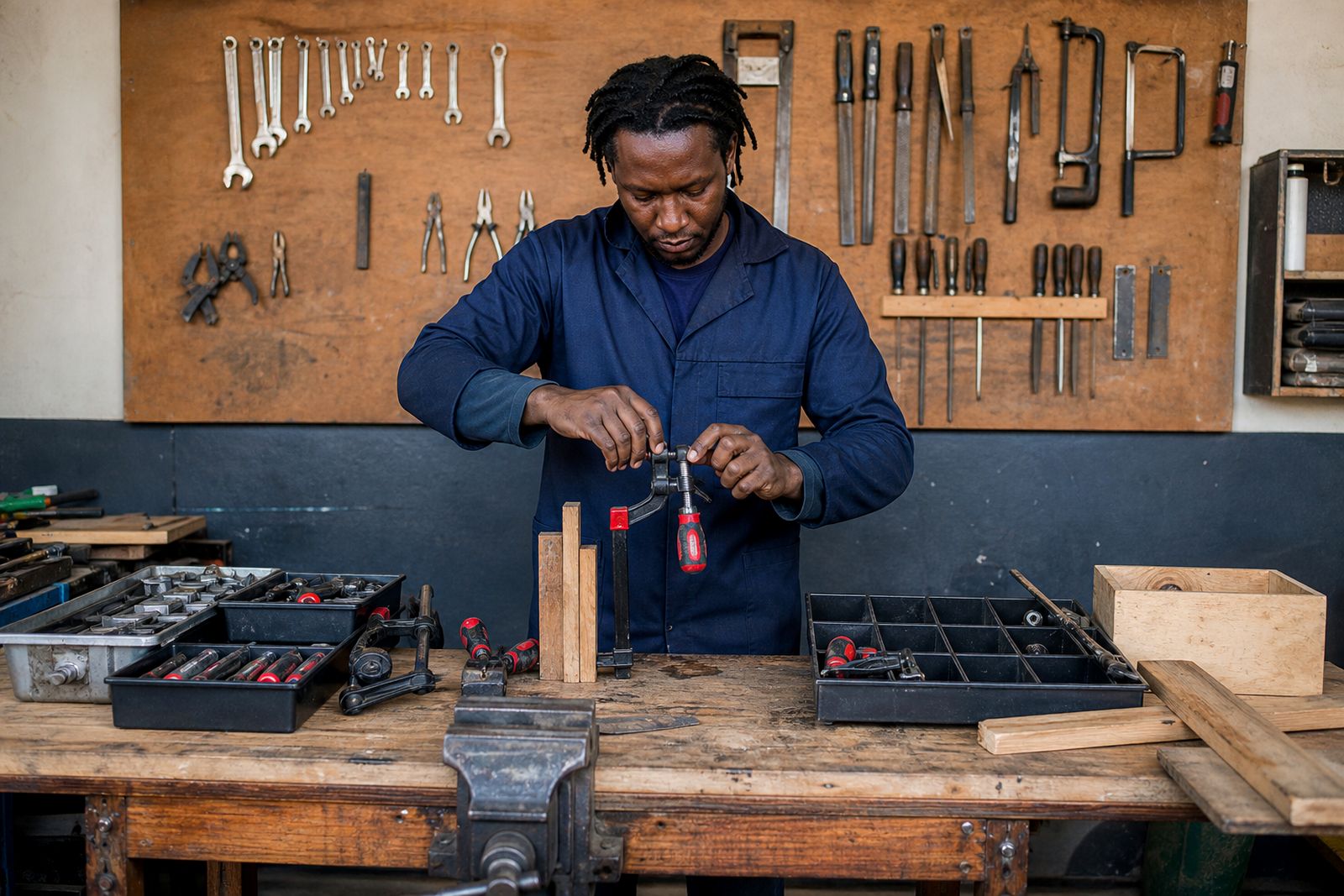
Link the care card to the bench where glue-ups actually happen, then keep the storage spot close enough that clamps get returned instead of piled in a corner. Read the paired tip note before changing your lane layout, because bar length, jaw style, and pad condition affect how the set should be grouped. If you send details through our contact form, include the clamp types you use most, your city, and whether the trouble is sticking threads, rust, lost pads, or marking on workpieces. A clear note on the lane owner also helps when several people share one assembly area.
- Daily wipe for glue and sawdust
- Weekly check for bent bars and pads
- Set aside damaged clamps for inspection
- Related: tray layouts and glue-up tips
Workshop conditions that change care
Clamp care shifts with local conditions. Highveld dust works into screws and release mechanisms, while coastal moisture can put light rust on steel parts if clamps are left near open doors or unsealed windows. Heat also matters because glue residue sets differently on tools left in the sun or packed into a bakkie after site work. These cues are written for working spaces where storage is tight, benches are shared, and maintenance has to fit between paying jobs.
School shops, starter garages, and growing production spaces all misuse clamps in slightly different ways. In one place the problem is over-tightening on soft board, in another it is returning wet clamps to a rack where glue hardens on every contact point. Care notes call out those patterns so the storage area supports better habits instead of becoming a pile of mixed lengths and jammed mechanisms. If your setup uses sash clamps, one-hand clamps, and F-clamps together, label the storage positions clearly so the right tool is grabbed for the right pressure job.
What our Workshop Tool customers say
Verified Google reviews
Tell us about your bench
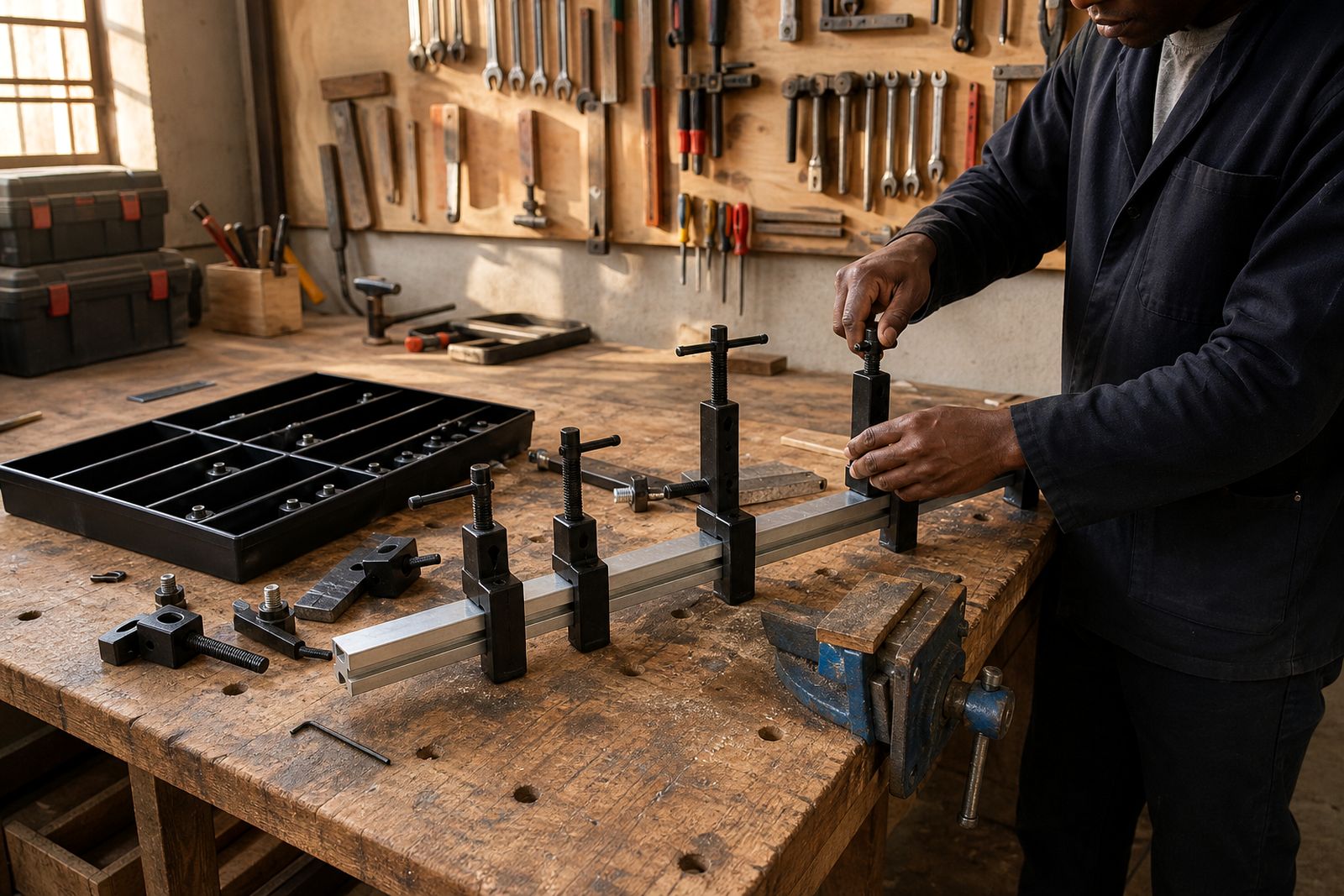
Send a note through our contact form with the work you do, your bench and wall space, the tools you already have and your town, and we will come back with a practical shortlist and a quote.
Open the contact form