

Care and sharpening
Stone, oil, and bit care notes.

Stone and bit care queries
Send it through the contact form and put “support leaf” in the subject line. We reply by email.
- City and preferred showroom
- Problem line
- Checklist photo if relevant
- Power window preferences
What these notes exclude
These notes deal with care and sharpening methods, not damaged tools that need repair work. Include the steel type, stone grit, honing oil used, and whether the tool works in coastal humidity, Highveld dust, or resin-heavy pine.
Where to buy stones and oil
For stone wear, oil type, or router bit edge issues, send clear details through our contact form. Add your city, the showroom you prefer around Sunnyrock, Germiston if relevant, and a photo of the stone face, chipped carbide, or loading on the abrasive. Include whether you use water, honing oil, or dry diamonds, plus the steel or cutter material you are sharpening.
Keep cutting edges sharp
Sharp tools cut cleaner, need less force, and give better control in a garage shed, school workshop, or small production floor. For chisels, hand saws, plane irons, drills, and router bits, start by cleaning off dust, resin, oil, and rust before you sharpen. A clean edge lets you see the real wear instead of guessing.
Use a stone, file, or diamond face that suits the tool and the job. Keep the angle steady, remove only enough metal to restore the edge, and finish with a light hone. If you work in Highveld dust or coastal rust, wipe tools down after use and store them dry. For sticky resin or glue residue, clean the tool before it goes near the stone.
When you contact support through the contact form, send clear photos and note:
- the tool name and what it is used for
- what went wrong, such as dulling, chipping, glazing, rust, or poor cut quality
- the steel type, cutter material, or bit type if known
- the sharpening method, stone grit, oil, water, or dry diamond setup used
What to include with a care query
For care questions, the more practical detail you give, the faster support can help. Tell us whether the issue is with a single tool, a set, or a tray of mixed items from the bench. If a saw, chisel, drill, or bit is no longer behaving as expected, say what job it was doing and what changed.
Useful details include how often the tool is used, what material it meets, and whether the problem shows up in dry indoor work, Highveld dust, or coastal humidity. If a blade is binding, a bit is burning, or an edge is rolling over, note the cut quality, the material being worked, and any wear you can see on the teeth or cutting face.
Send photos that show the whole tool first, then close-ups of the edge, teeth, coating, or damaged area. If relevant, add the tray or storage setup as well, because poor storage can be part of the problem. If you need help choosing a better storage or care routine, ask through the contact form and include a short description of your workshop setup.
Simple habits that extend tool life
Good tool care is mostly routine. Put tools back clean, dry, and in the right place after use. Use a tray, pegboard, drawer insert, or wall hook so sharp edges do not knock together. In damp coastal air, give metal parts a light wipe before storage. In dusty spaces, brush off grit before it can grind into moving parts or cutting edges.
Keep fasteners, clamps, glue-up gear, measuring tools, and hand cutting tools separated so they do not rub or chip each other. If a vice, saw, chisel, or drill bit is wearing faster than expected, include a photo of how it is stored and handled. That often helps spot the cause.
If you are unsure what needs care and what may need replacement, send a short note through the contact form with:
- the tool or tray
- what it is used for
- what went wrong
- photos of the wear, rust, or damage
For a wider look at workshop setup and tool storage, see tool trays and workbenches.
What our Workshop Tool customers say
Verified Google reviews
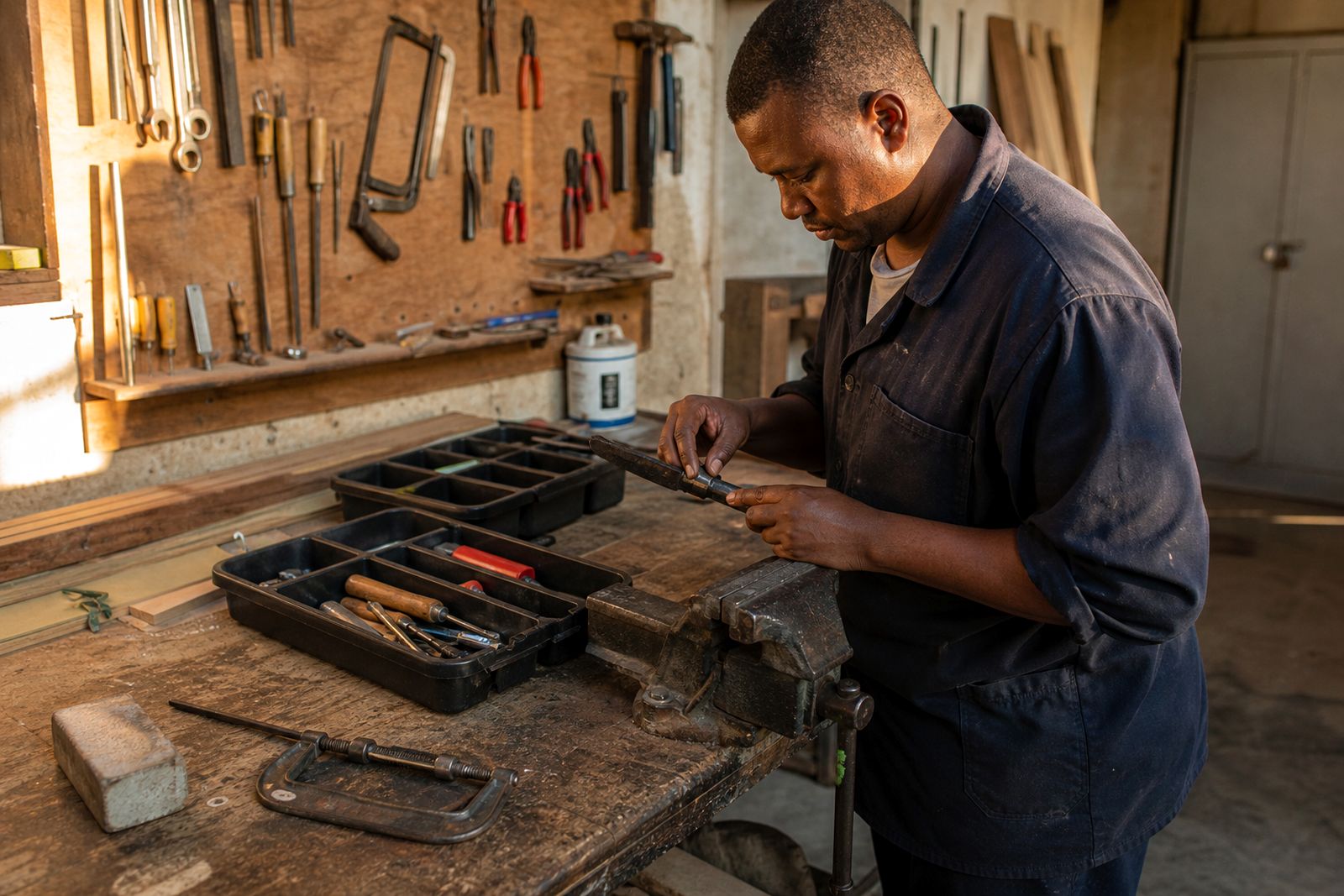
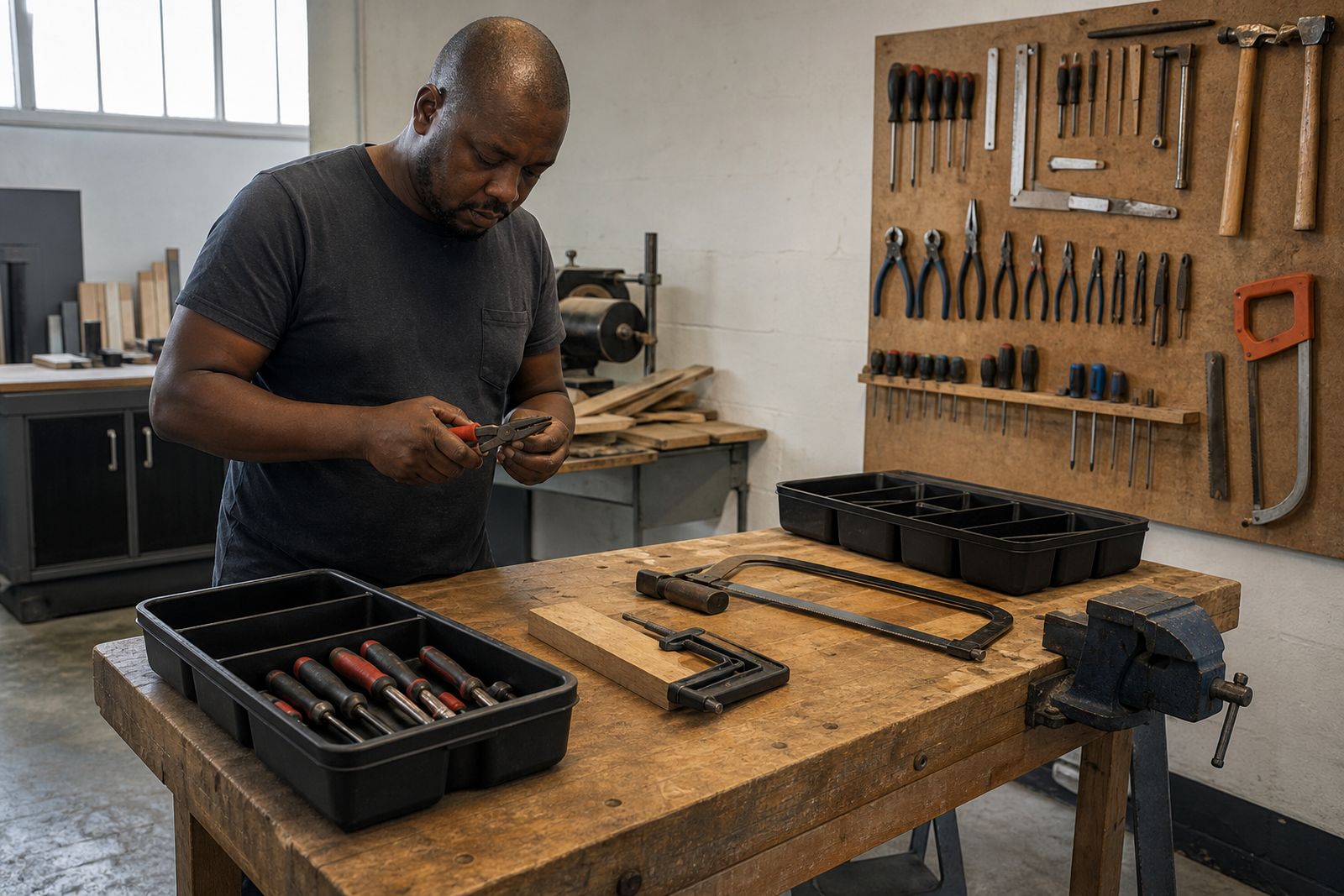

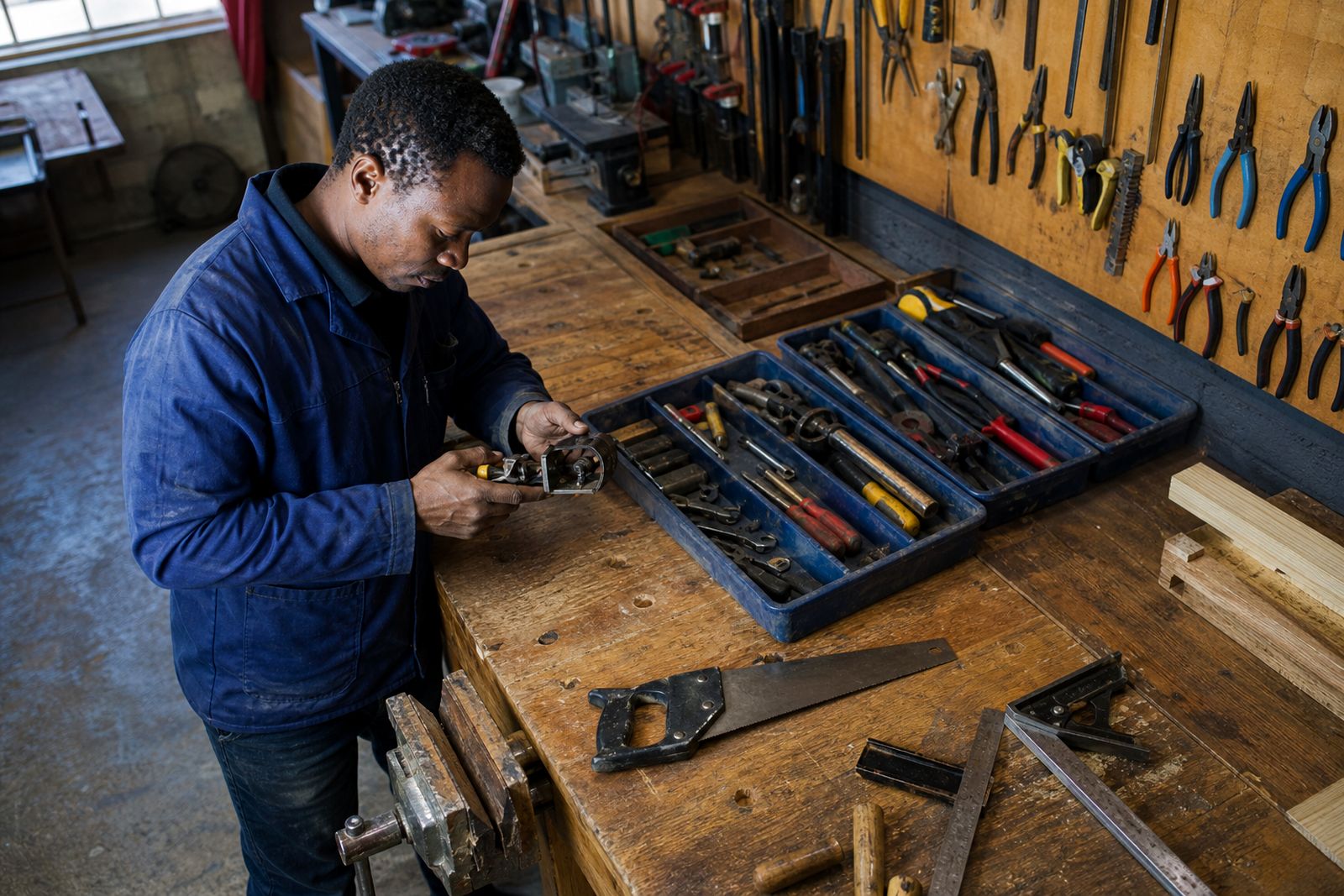
Tell us about your bench
Send a note through our contact form with the work you do, your bench and wall space, the tools you already have and your town, and we will come back with a practical shortlist and a quote.
Open the contact form