

Storage Shed
Pegboards, trays, and labels that keep the shed readable after Friday.
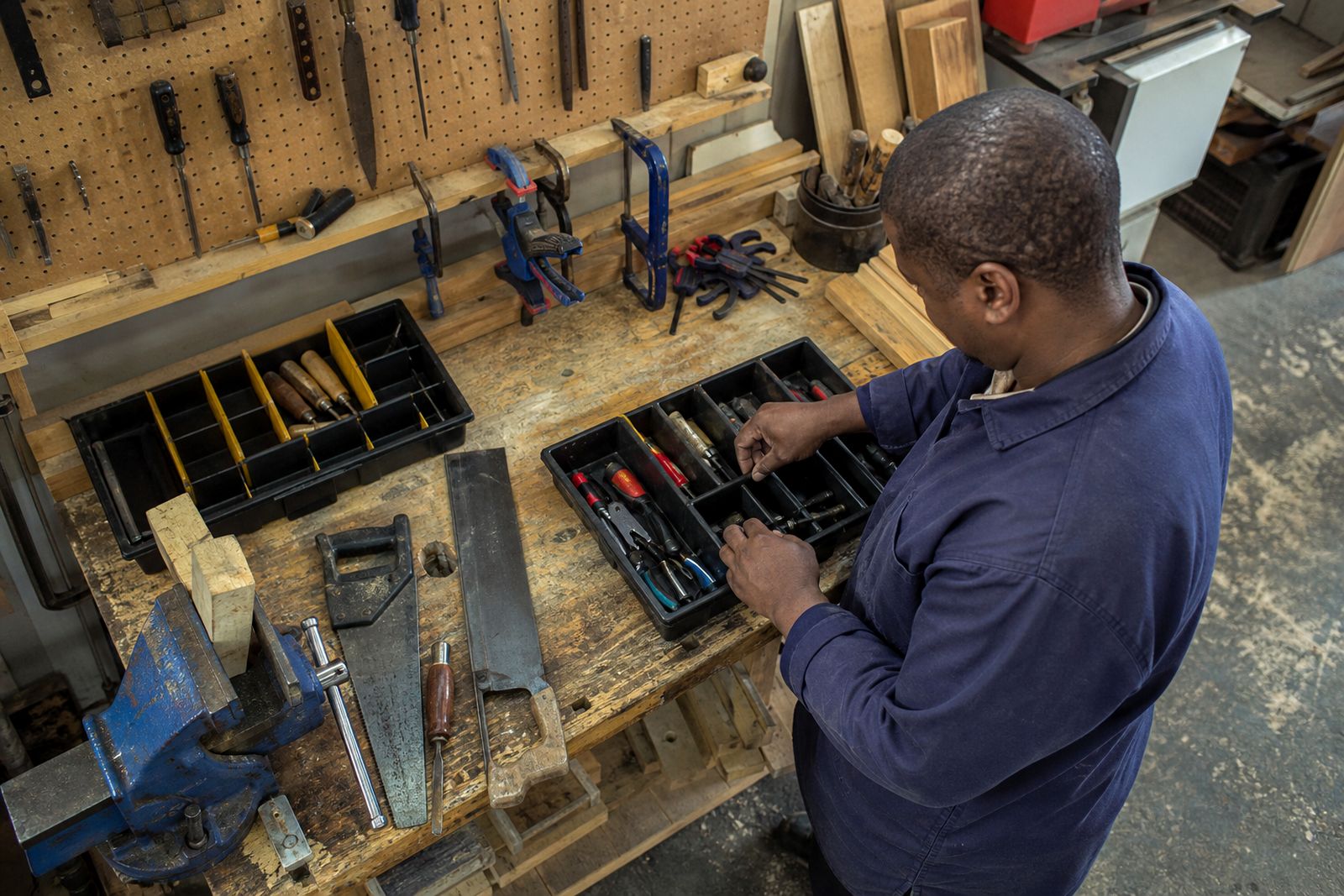
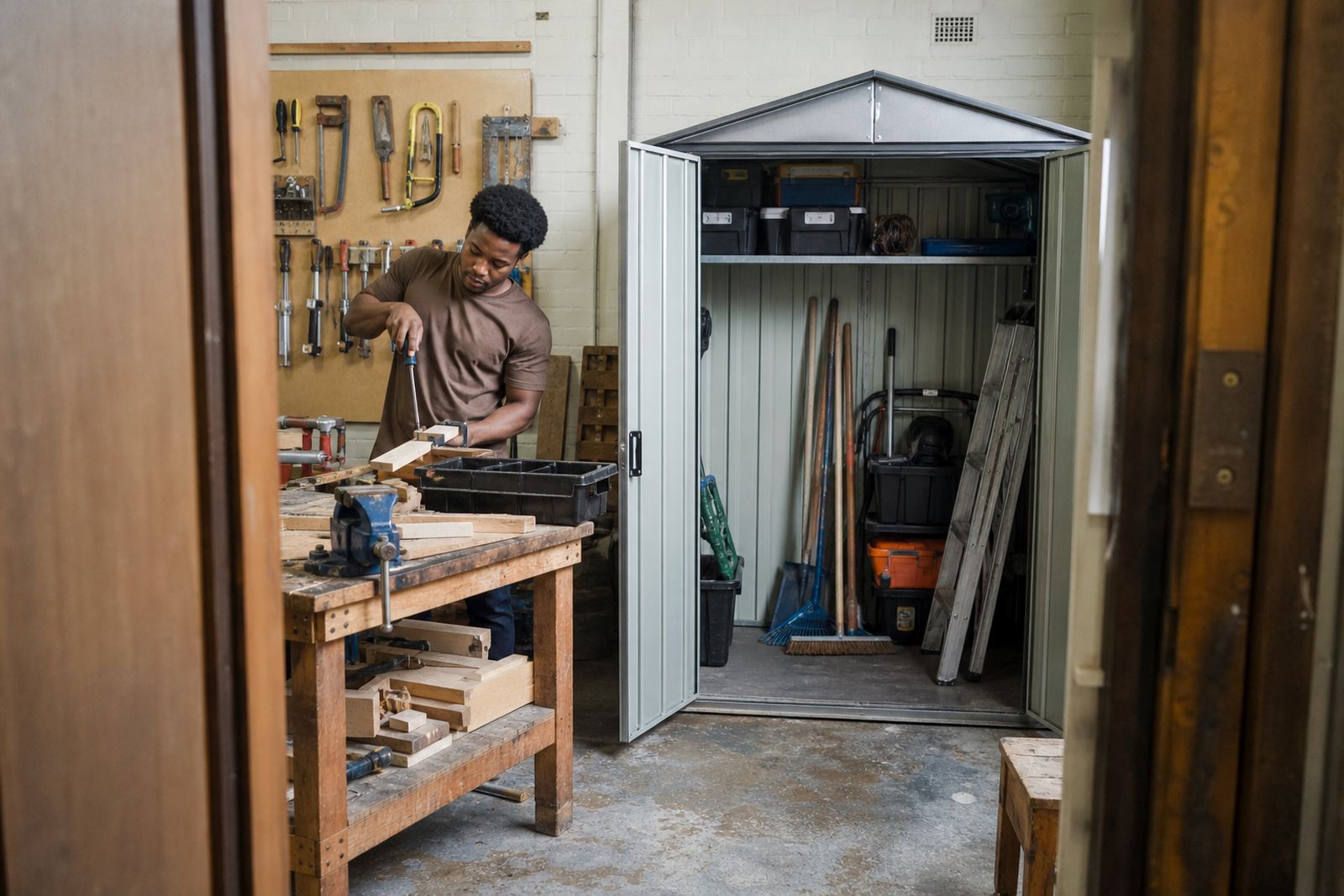
Storage shed for sorted gear
Shared shops choose storage shed when tools disappear into unnamed drawers.
- Pegboard map
- Tray labels
- Shadow cues
- Friday reset card
Specs cover peg spacing, tray sizes, and label stock. Care notes focus on dust, damp, and marker fade in a working shed. Use Service when a shared workshop needs matching packs or replacement parts.
| Pegs | Map pack |
|---|---|
| Trays | 3 sizes |
| Labels | en-ZA |
| Ideal for | Shared sheds |
| Lead | Stock Gauteng |
| Care | Wipe |
Friday reset for shared sheds
Storage shed is set up for the spots where order usually collapses: the wall by the drill, the drawer under the vice, and the tray nobody relabels after a rush job. Pegboard positions, tray names, and shadow cues give each hand tool a fixed home that can be checked at a glance. In Gauteng sheds, that matters when dust settles fast and several people use the same wall through the day.
Start with the tools that disappear first, not the whole room. Put drivers, tapes, squares, PPE, and knife sets onto mapped positions, then label the trays below with the names your team actually uses. Where humidity or grime loosens ordinary stickers, use tougher labels and keep the reset card near the door so the last shift can run a quick check.
The first count works best after a normal day, not after a big clean-up. Walk the pegboard, compare each outline to the tools on hand, and fix names that are too vague such as bits, spares, or misc. If the shed serves more than one bench, note which zone owns each tray before anything starts migrating again.
What sits on the wall
A pegboard map, labelled trays, and a simple card keep the end-of-week reset straightforward. Tray options are listed in three sizes so fasteners, blades, marking gear, and safety items do not get lumped together. Wording stays in plain en-ZA English for school shops, home sheds, and shared maker spaces around South Africa.
Pair storage shed with a bench setup when the same tools move between stations. The wall map keeps storage readable, while the bench side decides what must stay within arm's reach for the current job. If you use our contact form, mention the city, whether the shed is shared, and which items disappear most often.
- Pegboard map for high-use hand tools
- Label stock suited to dusty shed use
- Reset card for end-of-week checks
- Matches trays, labels, and shared bench use
Conditions common in SA sheds
Storage shed is written for places where steel can spot near the coast, marker ink fades in heat, and fine dust gathers on every horizontal surface. Access rules in estates and industrial parks also affect how often parts and consumables get topped up. Those conditions shape the advice on tray naming, wipe-down routines, and where to mount the board.
School workshops, family sheds, and small production spaces all lose time when nobody knows where the countersink bits or earmuffs belong. A mapped wall helps when staff change, learners borrow tools, or weekend jobs leave mixed hardware behind. If your setup is larger, split storage by zone rather than forcing one board to serve cutting, assembly, and finishing at once.

What our Workshop Tool customers say
Verified Google reviews
Tell us about your bench
Send a note through our contact form with the work you do, your bench and wall space, the tools you already have and your town, and we will come back with a practical shortlist and a quote.
Open the contact form