
Safety First care
Safety First care covers the upkeep that keeps PPE and small safety gear usable at the bench. Expect wipe-down cues, replacement checks, and simple storage notes for items that pick up dust, sweat, glue and grinding grit in South African workshops.
Safety First for a working week
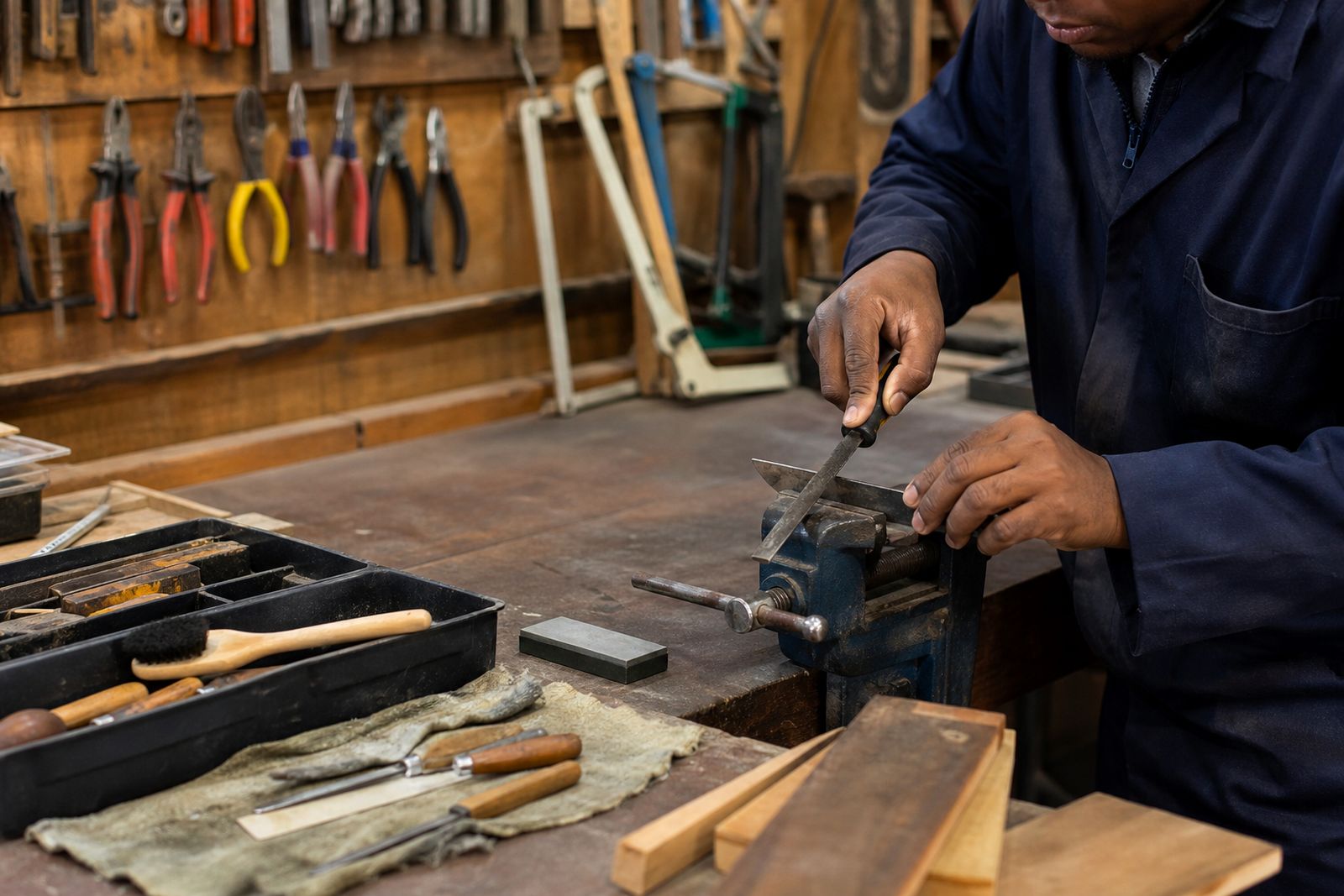
Use the matching trays to keep gloves, glasses and hearing protection in one visible spot. The care notes make more sense when the kit is laid out by task, especially on shared benches and training tables.
- Care cues
- Tray pairing
- Consumable windows
For setup and daily use, pair Safety First with tip notes and workshop projects. They show where Safety First fits beside cutting, sanding, spraying and clean-up jobs.
Safety gear gets ignored when it lives under offcuts, behind clamps, or inside mixed hardware bins. Safety First care focuses on the pieces that need frequent handling, like eye protection, earmuffs, dust masks and first-aid basics, so they stay clean, visible and worth using. In a small SA shop, that usually matters more than adding another poster to the wall.
Start with the items that touch skin and face. Lenses need a soft wipe so scratches do not build up, earmuff cushions should be checked for cracking, and disposable masks need a dry place away from grinding dust and overspray. Hot afternoons, fine pine dust and shared use all shorten the life of safety kit if nobody checks it properly.
Put a date on the first care card and keep it with the tray from the start. When someone uses our contact form for a workshop query, it helps to note which items are wearing out, what trade is being done, and whether the shop is in a dry inland area or near the coast. That gives context for Safety First without retelling the whole setup.
Safety kit care points
Print the card, clip it near the PPE tray, and mark the items that need weekly cleaning, monthly inspection or simple replacement. Coastal rust, Highveld dust and glue or solvent exposure can all change how often those checks need doing.
Pair this kit with the bench routine before adding more gear. Read the related note, then send details through our contact form if you need help matching Safety First to a school workshop, cabinet bench or fabrication corner. Include the town, the main dust source, and whether the issue is storage, cleaning or replacement control.
- Lens wipe and scratch check
- Dry storage for masks and plugs
- Inspection notes for shared PPE
- Related trays and safety tip notes
Workshop conditions Safety First covers
Safety First care needs to account for inland dust, coastal moisture and power cuts that interrupt extraction fans. Steel parts on goggles, scissors or small first-aid tools can spot with rust near the coast, while dry workshops often struggle more with packed dust in hinges, straps and foam edges. Safety First care helps with upkeep, but it does not replace site rules or formal safety oversight where that is required.
School rooms, starter garages and busy joinery spaces do not treat safety kit the same way. In a teaching space, items need clear labels and quick counting at the end of a session, while a production bench may need a stricter replacement rhythm for masks, gloves and hearing protection. If your setup uses welding, heavy grinding or chemical finishing, say that clearly in the message so the safety guidance is read in the right context.
What our Workshop Tool customers say
Verified Google reviews
Tell us about your bench
Send a note through our contact form with the work you do, your bench and wall space, the tools you already have and your town, and we will come back with a practical shortlist and a quote.
Open the contact form