

Measure Right care
Keep Measure Right accurate with simple checks for tape edges, square faces, marking points, and storage between jobs. The bits that drift first in a South African workshop need regular checks, especially where dust, heat, and shared benches knock measuring gear out of line.

Measure Right weekly check-in
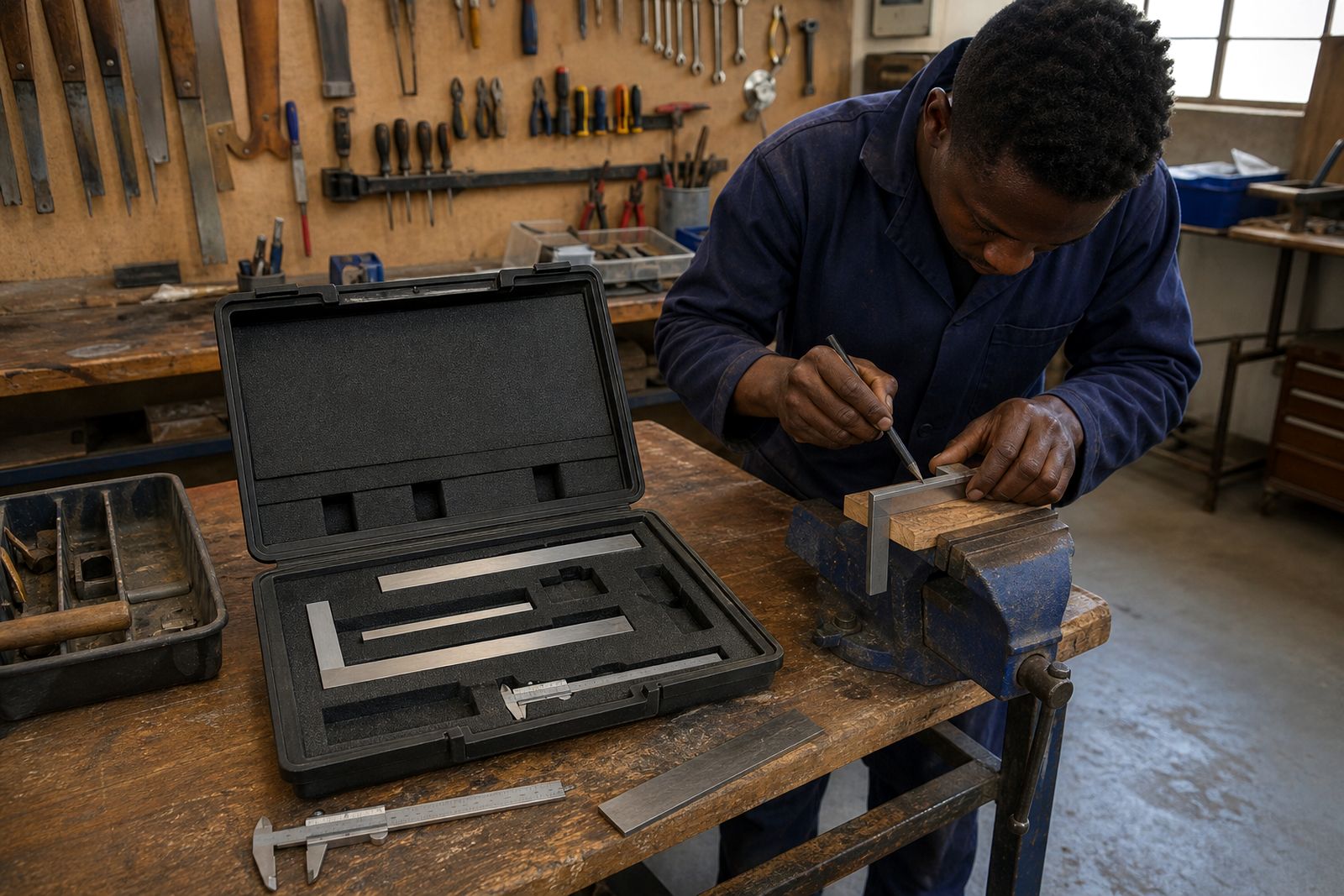
Use the matching trays to keep tapes, rules, pencils, and the check block together. When the measuring set lives in one spot, daily wipe-downs and quick accuracy checks actually happen.
- Care cues
- Tray pairing
- Consumable windows
Pair this care guidance with tip notes on layout habits and with projects that need repeatable marks. The care routine matters most on cabinet runs, jigs, and any batch work where one bad reading gets copied all afternoon.
Measure Right care is less about polish and more about trust in every mark. Resin on a rule, a bent tape hook, or a square dropped onto concrete can shift cuts by enough to spoil a hinge line or drawer front. In a small shop, the fix is a short routine: clean after dusty work, compare against a known straight edge, and keep marking tools capped or sheathed when they go back into the tray.
Start with the pieces that touch the workpiece first. Wipe steel rules and combination square blades with a dry cloth, then remove glue spots with a light solvent that will not damage printed graduations. On the Highveld, fine dust packs into locking screws and sliding heads, while coastal air can leave light surface rust if tools are put away damp.
Put a date on the first accuracy check card and keep it with the kit. A simple note of which tape, square, and marking gauge were checked makes handovers easier when more than one person uses the bench. That record is useful in Sunnyrock visits or workshop reviews because it shows whether the problem sits with the tool, the storage habit, or the job setup.
Checks for marking accuracy
A good measure right routine fits on one sheet near the bench. Include a tape hook check, a square flip test, a rule edge inspection, and a note on when to replace blunt pencil leads or damaged scribers. Printed in plain South African English, the list sits beside sheet goods, solid timber, or steel sections, not for sorting away in an office folder.
Match the care card to the bench before adding more tools. Keep the reference square, rule, and one known straight sample in the same tray so the check method stays consistent between users. If you need help sorting the kit, send the bench type, your city, and the current issue through our contact form, whether that is drifting tape readings, rust on rules, or marking knives being put away loose.
- Tape hook check against fixed stop
- Square flip test for edge trust
- Rust wipe note for coastal shops
- Related: tray pairings and marking notes
Conditions that throw measurements off
Measure Right assumes workshop conditions that are not gentle on layout tools. Gauteng dust settles into tape returns and square heads, while coastal moisture can stain steel if the tray is closed before tools are dry. Shared benches, site visits, and power cuts also mean measuring gear gets moved often, so storage matters nearly as much as the tool itself.
School shops and starter spaces usually need simpler control points. One decent reference square, one steel rule, and a labelled tray beat a mixed pile of lookalike tools with worn markings. If your workshop has moved beyond basic setup, note whether you are checking cabinetry, welding layout, or machine setup so these care notes can line up with Clamp Lane, Layout Board, or Power Assist where needed.
What our Workshop Tool customers say
Verified Google reviews

Tell us about your bench
Send a note through our contact form with the work you do, your bench and wall space, the tools you already have and your town, and we will come back with a practical shortlist and a quote.
Open the contact form