

Layout Board
Squares, gauges, and layout sticks for cabinets and signs that must line up.
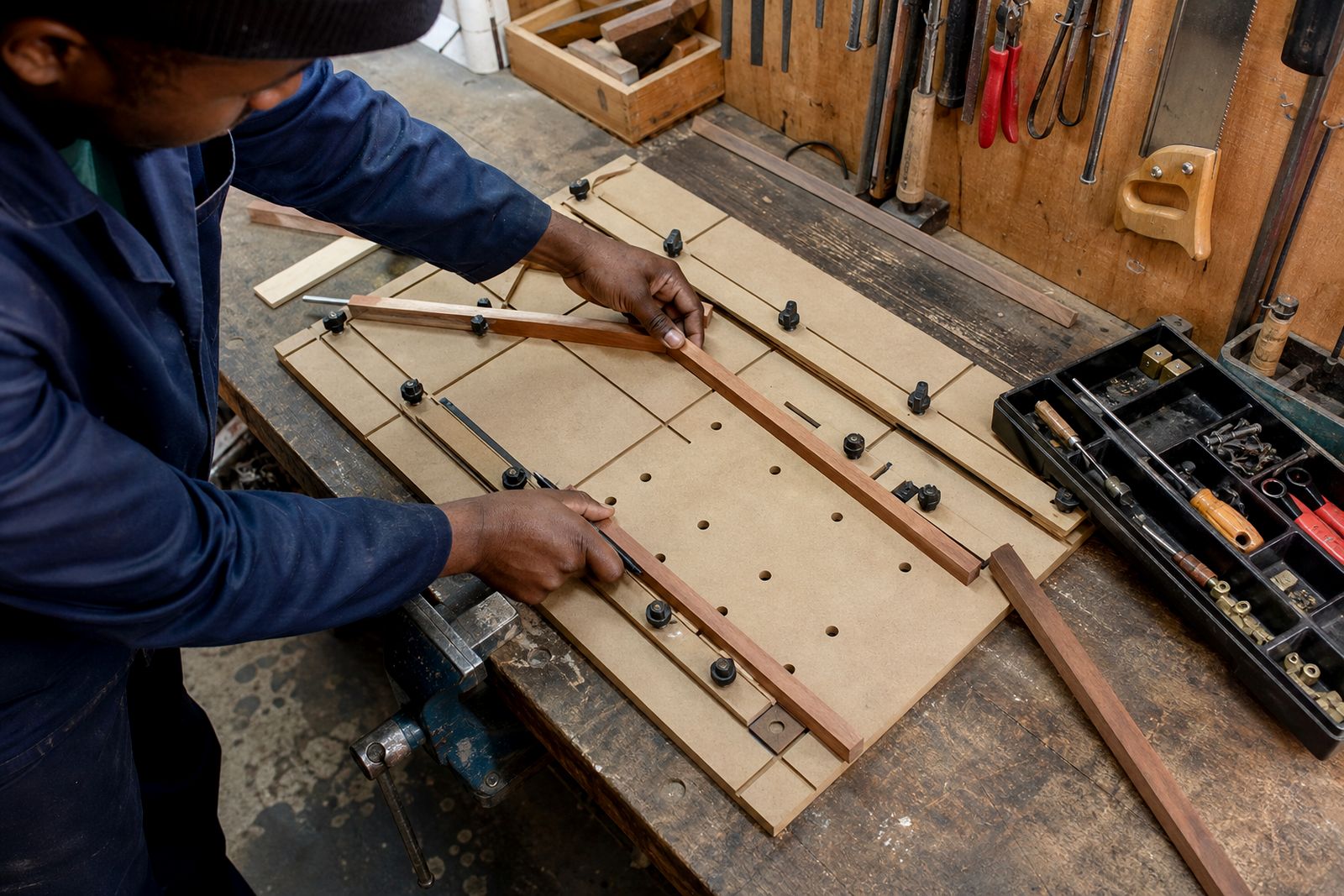
Layout board for clear planning
Cabinet and sign counters pick layout board when panels fight and letters drift.
- Marking gauges
- Story sticks
- Panel square cues
- Layout card
Check Specs for board size and marking options. Use Care for wiping MDF faces and keeping edges dry. Service covers stock handling and workshop supply queries.
| Gauges | Wheel + pin |
|---|---|
| Sticks | Story set |
| Square | Panel |
| Ideal for | Cabinets |
| Lead | Stock Gauteng |
| Care | Wipe |
Layout checks before first cut
Layout board gives cabinet shops and sign makers a fixed place to sort alignment before material is marked. On one board you can park story sticks, a square, gauge settings, and panel references so repeated work stays consistent. It suits counters where drawer fronts, door gaps, or letter spacing need visual checking before the saw starts.
Start by setting one true edge and one reference corner on the board. From there, mark gauge offsets for hinge lines, shelf pin runs, or sign margins where repeats matter more than speed. Gauteng dust can blur pencil work quickly, so bold labels and a wipe-clean surface help when several people share the same bench.
A layout board earns its place when the same dimensions must survive tea breaks, phone calls, and material changes. Keep panel names, face directions, and finished sizes on the board instead of loose scraps around the vice. That way a cabinet carcass or sign panel can be checked again before drilling, routing, or paint prep.
What sits on the board
Expect space for squares, marking gauges, story sticks, and card notes tied to one job. Most teams use it to hold repeat measurements for cabinets, panel spacing for doors, or letter baselines for signs. A simple board is often easier to trust than a phone photo when power cuts interrupt the day.
Pair layout board with a bench routine that names the reference face, top edge, and finished side before marking starts. Read the matching tip note if your workshop swaps between cabinetry and sign work, because each trade checks alignment differently. If you write through our contact form, include the material, panel size, and whether you need help with specs, care, or service.
- Reference area for repeated panel marks
- Wipe-clean face for pencil and chalk
- Space for sticks, squares, and gauges
- Useful with cabinet and sign bench notes
Workshop conditions that affect marking
Dry Highveld air, coastal moisture, and shared benches all change how marking tools behave through a shift. Steel rules can flash-rust near the coast, while MDF dust settles over lines and hides light pencil work inland. A dedicated layout surface helps the team separate measured references from offcuts, glue squeeze-out, and packing debris.
In school shops and starter garages, the biggest issue is often mixed reference points rather than bad tools. One person measures from the left, another from the finished edge, and the error only shows at assembly. Layout board works best when every panel note, square check, and story stick starts from the same named edge.
What our Workshop Tool customers say
Verified Google reviews
Tell us about your bench
Send a note through our contact form with the work you do, your bench and wall space, the tools you already have and your town, and we will come back with a practical shortlist and a quote.
Open the contact form