

Abrasive Calm care
Use these upkeep notes to keep abrasive sheets, pads, and backing plates working cleanly in the tray. They focus on dust control, storage, and wear checks that matter in South African garages, school shops, and small fabrication spaces.
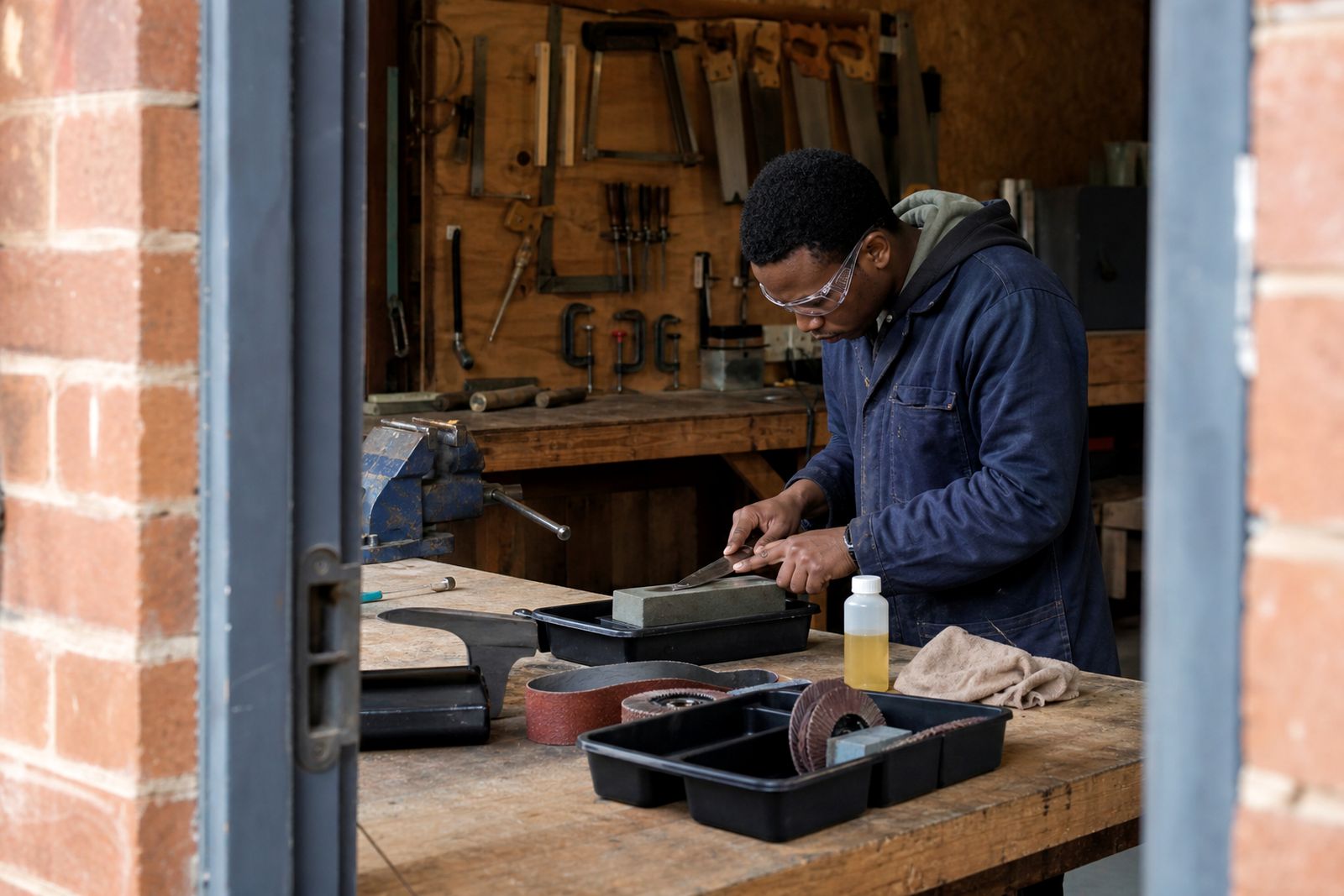
How abrasive care runs through a real week
Pair this care page with the matching trays so used discs, fresh stock, and backing pads do not end up mixed in one tin. A separated layout makes grit changes quicker and helps you spot when fine grades are being wasted on rough prep.
- Care cues
- Tray pairing
- Consumable windows
For setup ideas around sanding jobs, see tip notes and projects. Those pages show where this kit fits at the bench, from paint prep to timber edge cleanup and light metal de-burring.
Abrasives go wrong in ordinary ways. Discs clog with resin, hook-and-loop backs fill with dust, and damp air curls loose sheets at the corners. Keep the tray useful between one repair job and the next by watching storage, cleaning, and replacement points.
Start with the material in front of you. Pine pitch, body filler dust, rust scale, and old varnish all load paper differently, so the care routine cannot be the same for every packet. In Gauteng dust, a quick blow-out of the tray and machine vents often matters as much as the grit choice.
After the first day, mark what is wearing out too fast. A simple note on disc size, grit used most, and whether the sander is leaving swirls makes the next restock less of a guess. If you need to pass that on, use the handover space on our contact form with the tool type and workshop suburb.
Disc, sheet, and pad routine
A printable sanding check sheet, a tray card for discs and sheets, and a short list of wear checks belong in this pack. Most workshops need one page near the bench, not a thick file that goes missing after tea. Where a template appears, the wording uses South African English, common abrasive sizes, and conditions makers recognise from Gauteng dust, coastal moisture, and shared school or small-factory benches.
Check the tray against the bench task before adding more stock. If fine discs are being used for filler knockdown, the issue is usually sequence, not quantity. When you write through our contact form, include the machine size, the main material, and whether the problem shows up in storage, cut speed, or finish quality.
- Separate fresh discs from loaded discs
- Brush dust from hook-and-loop faces
- Note pad wear before edges fray
- Related: sanding setups and tip notes
Humidity, dust, and power cuts
These care notes assume Highveld dust, coastal moisture, and workshops that stop and start with power cuts. Loose abrasive packs left open on a shelf pull in grime quickly, while steel-backed accessories can spot-rust near the coast. Store stock closed, off the concrete, and away from overspray, thinners, and grinding sparks.
Shared machines need stricter checks. A school orbital sander, a panel shop DA, and a home bench setup can all burn through discs for different reasons, from hard pad edges to poor extraction or the wrong pressure. If your workshop has moved beyond starter habits, sort the tray by abrasive type, common grit steps, and machine fit so replacement buying stays sensible.
What our Workshop Tool customers say
Verified Google reviews
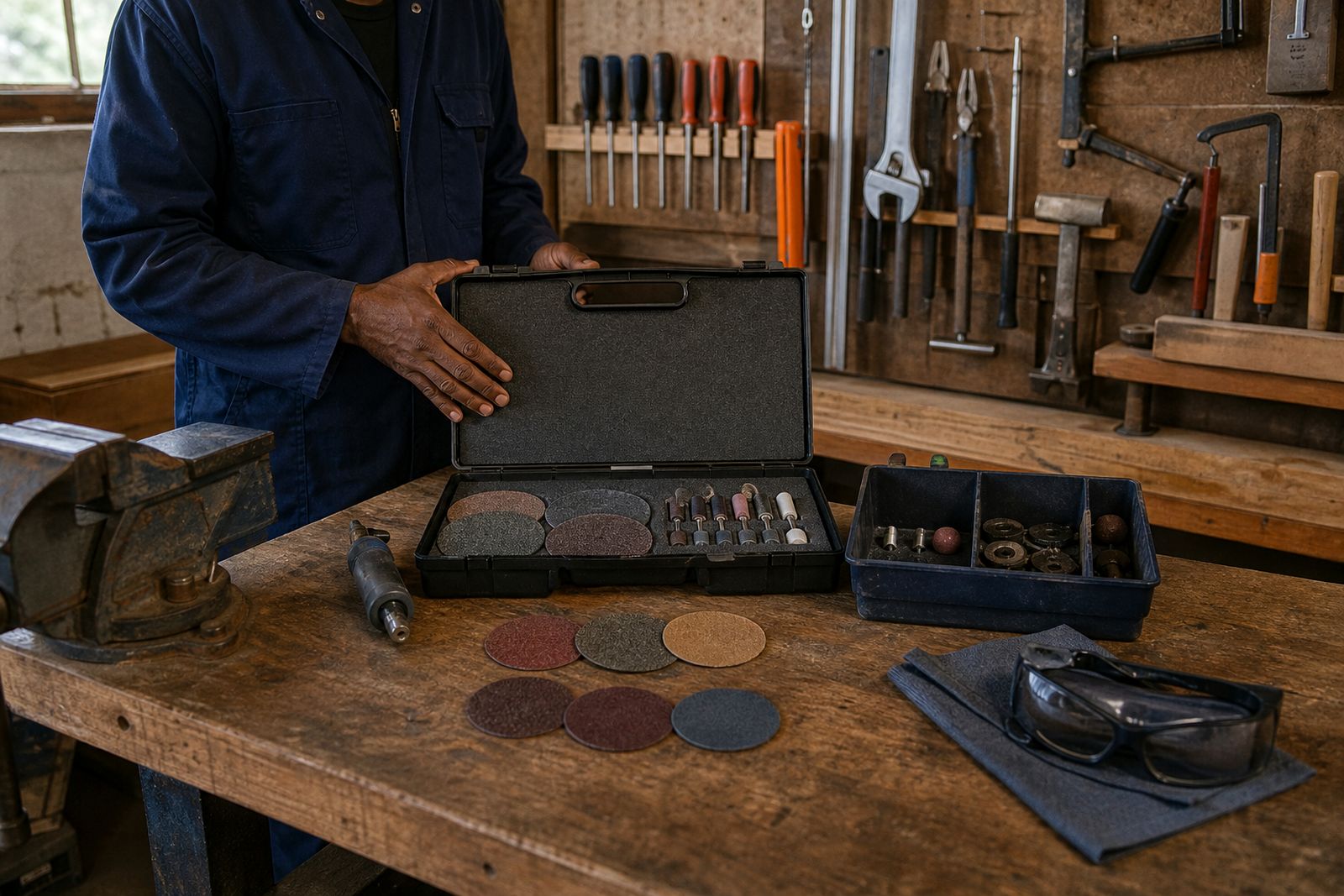
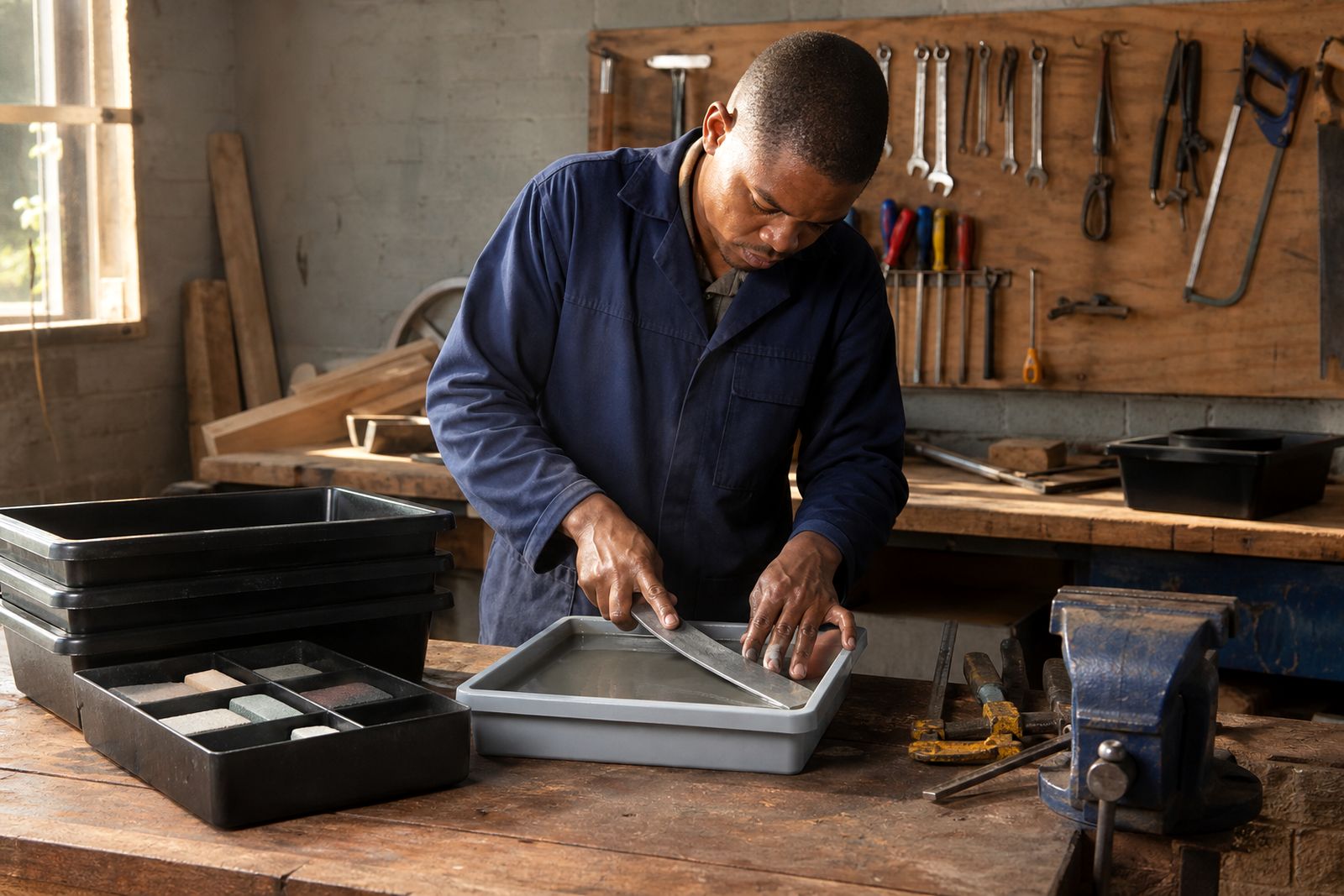
Tell us about your bench
Send a note through our contact form with the work you do, your bench and wall space, the tools you already have and your town, and we will come back with a practical shortlist and a quote.
Open the contact form